

The referral period for Gifted and Talented Services is now closed. Please contact the Site Leader or GT Teacher at your school if you have further questions.
Gifted and Talented Referral Form
Gifted and Talented Services Vision and Mission
We envision schools where giftedness and high potential are recognized, valued, and nurtured in children from all backgrounds, and where these individuals develop their potential to become creative, well-adjusted, productive citizens.
Our Mission:
- Access to gifted identification pathways and talent building for students from all backgrounds
- High quality programming with appropriate rigor and engagement, resulting in growth and achievement commensurate with the gifted student’s abilities and interests.
- Social emotional support that empowers students to self-advocate for their unique strengths and needs
- Rigorous and targeted professional development that builds individual educator learning as well as district capacity to provide for the academic and social emotional needs of gifted and talented students
- Family engagement and collaboration around gifted characteristics, supporting social and emotional needs, and appropriate academic challenge
Program Overview
The Gifted Education Department is responsible for the following:
- Develop and support implementation of the District’s Program Plan for Gifted Education in the SVVSD
- Provide training and support to staff that instruct gifted students
- Offer opportunities for parents to partner with the SVVSD to improve programming and opportunities available to gifted students
- Offer enrichment opportunities for advanced students in the SVVSD
- Train and support staff to assure compliance with state law in regards to gifted education
- Support buildings in identification, programming, and Advanced Learning Plan development through training and coaching
- Manage and account for the Gifted Education grant funds received annually to fund gifted programming and services
- Communicate with and report to the Colorado Department of Education on programming, services, and professional development related to gifted education.
Meet the Gifted and Talented Services Team

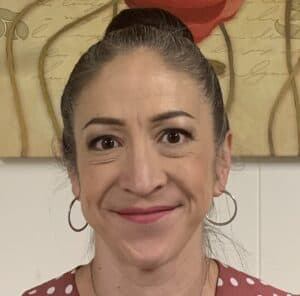
Jennifer Mayer
Gifted Coordinator-Elementary (including K through 8 schools)


Parent Resources
Programming for Academic Challenge
Definition of Gifted Children
The Exceptional Children’s Educational Act (ECEA) defines gifted children as:
Those persons between the ages of four and twenty-one whose aptitude or competence in abilities, talents, and potential for accomplishment in one or more domains are so exceptional or developmentally advanced that they require special provisions to meet their educational programming needs. Gifted children are hereafter referred to as gifted students. Children under five who are gifted may also be provided with early childhood special educational services. Gifted students include gifted students with disabilities (i.e. twice exceptional) and students with exceptional abilities or potential from all socio-economic, ethnic, and cultural populations. Gifted students are capable of high performance, exceptional production, or exceptional learning behavior by virtue of any or a combination of these areas of giftedness:
- General or specific intellectual ability
- Specific academic aptitude
- Creative or productive thinking
- Leadership abilities
- Visual arts, performing arts, musical or psychomotor abilities
ECEA12.01(16)
St. Vrain Valley School District formally identifies and provides programming and differentiation options in the specific academic aptitudes of reading, math, science, social studies, writing, and world languages. Programming in talent areas is dependent on the course/extracurricular offerings at each individual school.
Mission and Vision
We envision schools where giftedness and high potential are recognized, valued, and nurtured in children from all backgrounds, and where these individuals develop their potential to become creative, well-adjusted, productive citizens.
Our Mission:
- Access to gifted identification pathways and talent building for students from all backgrounds
- High quality programming with appropriate rigor and engagement, resulting in growth and achievement commensurate with the gifted student’s abilities and interests.
- Social emotional support that empowers students to self-advocate for their unique strengths and needs
- Rigorous and targeted professional development that builds individual educator learning as well as district capacity to provide for the academic and social emotional needs of gifted and talented students
- Family engagement and collaboration around gifted characteristics, supporting social and emotional needs, and appropriate academic challenge
Programming Overview
Gifted education services include a range and variety of services to address student needs, and may be delivered within the student’s regular classroom, through virtual learning, and specialized classes. Programming is linked to identified student strengths, with options and strategies matched to the identified academic and affective needs of students. Balanced programming means including the four components below in order to provide for the needs of gifted and talented students.
Structure (where programming occurs)
Differentiated Curriculum and Instruction
Affective Guidance/College Planning
Content Options
Programming is adaptable to the resources within different buildings. Programming components remain requirements of the gifted student’s general education.
Programming ultimately seeks development of the whole child so that gifted students become successful adults demonstrating self-esteem, self-efficacy and creative productivity. Therefore, learner outcomes in three main areas serve as the program focus for all identified students. It is our intention that gifted/talented students will:
- Perform at advanced and distinguished levels in their strength areas
- Acquire autonomous learning skills in order to become independent, lifelong learners.
- Develop creative problem solving, questioning and presentation skills which can be applied to solving authentic problems in any field.
If you have questions or concerns about your child’s programming, please contact your child’s teacher or school GT representative. District coordinators are available if you need additional assistance or support.