Lyons Elementary brillarán en «JOY and The Shooting Stars»

Este mes, 13 alumnos Lyons Elementary sacan a relucir su lado más «estrella fugaz» participando en un nuevo musical.

Escrita y dirigida por residentes de la zona de Lyons, «JOY and The Shooting Stars» es un musical juvenil que anima a cada actor a dejar que brille su luz. Las dos funciones del musical en Lyons pondrán fin a un programa de tres meses de duración destinado a enseñar habilidades socioemocionales a alumnos de segundo a quinto curso.

«El lenguaje del musical... Yo lo llamo el lenguaje del amor», afirmó Molly Williams, guionista y codirectora del espectáculo. «Al fin y al cabo, se trata de conseguir que los niños se expresen».

STEM Longmont High recibe el Premio al Servicio del Congreso

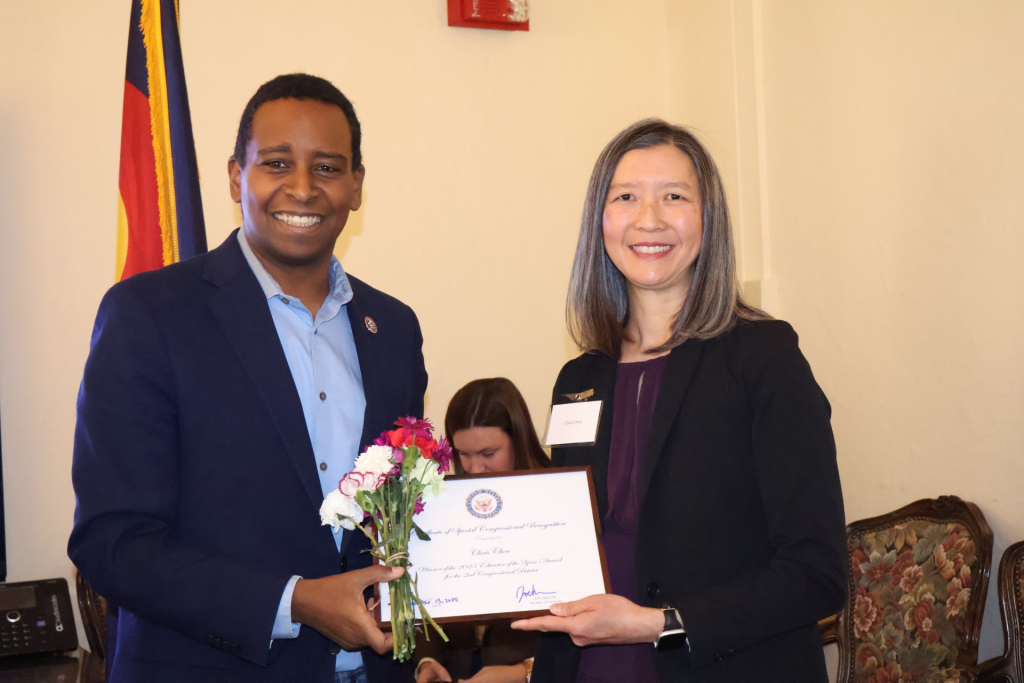
Chris Chou, a STEM teacher and co-founder of Longmont High School’s Medical and BioScience Academy and SMART team, was honored with a Congressional Service Award for Educator of the Year by Congressman Joe Neguse on Saturday, December 13. The Congressional Award is a prestigious honor established by the United States Congress to recognize initiative, service, and achievement among young Americans and community leaders. Members of Congress may also present special service recognitions to constituents whose work reflects the program’s core values.

Joe Neguse and Chris Chou smile while holding her Congressional Award for Educator of the Year.
Congressional Rep. Neguse presenting Chris Chou with the Educator of the Year Award.

Chou, who has taught various science courses at Longmont High for more than two decades and previously received the Outstanding Biology Teacher Award, was selected for this distinction for her dedication to student success and leadership in science education. In her classroom, she has been a driving force behind St. Vrain Valley Schools’ commitment to STEM, working with colleagues and community partners to provide students with engaging, hands-on learning experiences. She has also championed the growth of biotechnology and forensic science programs at Longmont High, helping to better prepare students for college and careers in high-demand fields.

The Congressional Service Award recognizes both her individual excellence and the broader impact of St. Vrain’s STEM initiatives in strengthening critical thinking, innovation, and civic engagement among students. Chou’s recognition serves as a reminder of the power of dedicated educators in inspiring students and strengthening their communities through service and leadership.

Los estudiantes en prácticas lideran las iniciativas de sostenibilidad en todo el distrito

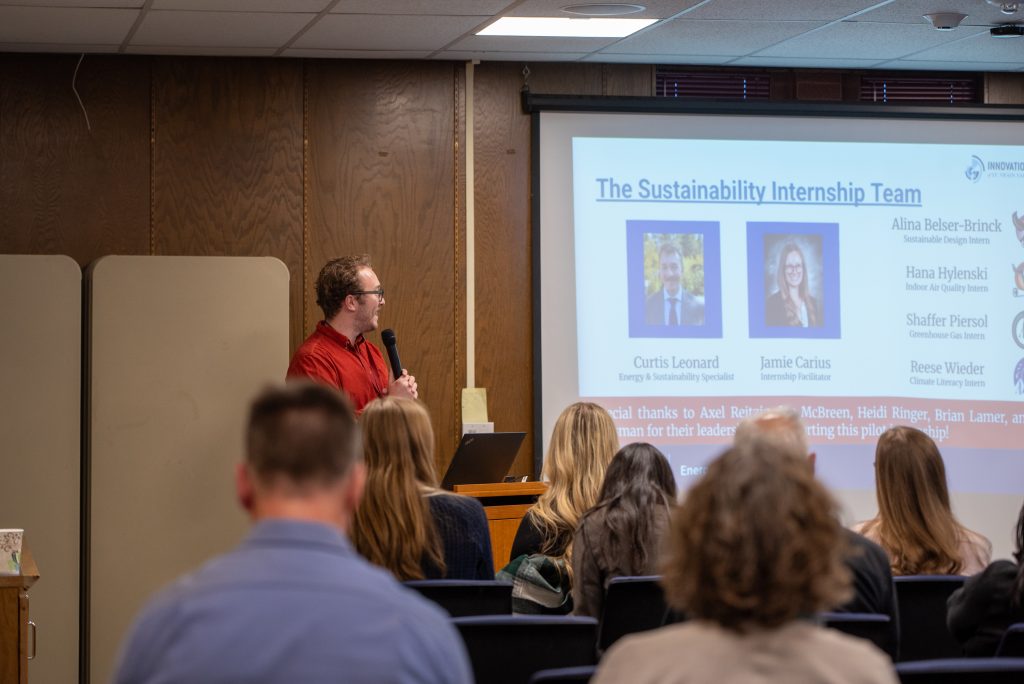
Students from Mead, Longmont, Niwot, and Silver Creek High Schools showcased their semester-long sustainability research on Tuesday, December 9, presenting findings on topics such as indoor air quality, climate literacy, greenhouse gas emissions, and sustainable design. Their work reflects a growing commitment across St. Vrain Valley Schools to integrate real-world learning with sustainability initiatives. Throughout the semester, students conducted interviews, gathered data, and collaborated with district leaders to deepen their understanding of environmental challenges and opportunities.

A speaker presents to an audience, discussing a sustainability internship team, with names displayed on a screen.
Curtis Leonard, an Energy and Sustainability Specialist, introduces St. Vrain’s sustainability interns.

These students are part of St. Vrain’s new Sustainability Internship Program developed through a partnership between the district’s Energy and Sustainability Department and the Innovation Center. Curtis Leonard, an Energy and Sustainability Specialist who co-leads the internship, says the idea grew from a districtwide stakeholder engagement effort held earlier this year. “We realized that the most exciting and meaningful way to build a St. Vrain approach to sustainability is through job preparation,” he said. “Our interns have taken that to heart, and the quality of their work has been phenomenal.” The program has exceeded expectations for applicants and the four selected interns have contributed research directly aligned with the department’s long-term goals.

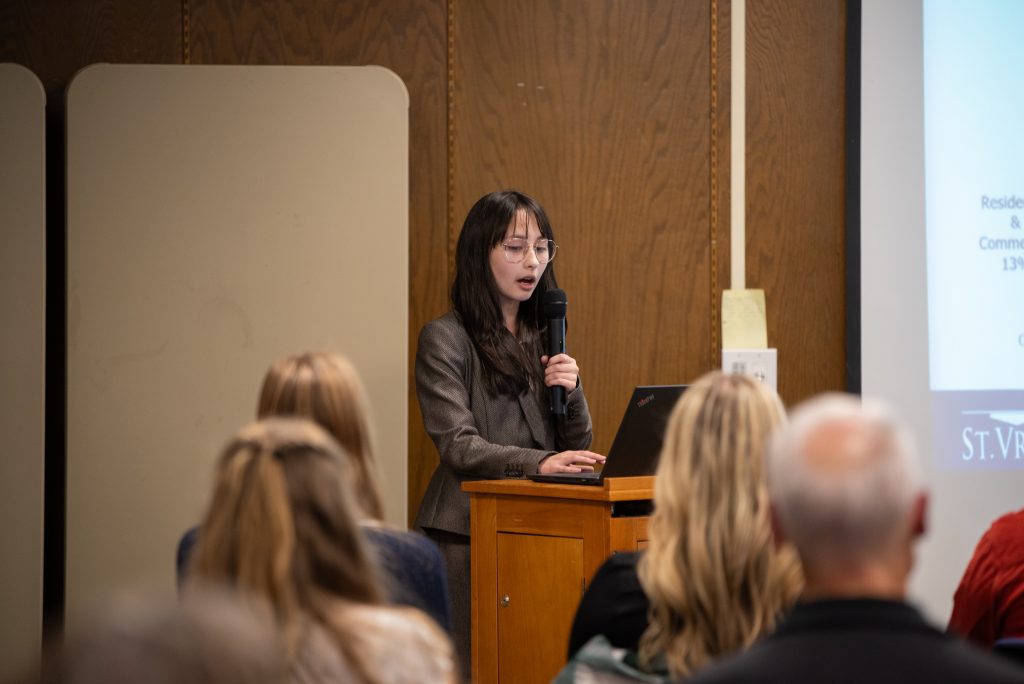
A student speaks at a podium with a laptop, presenting to an audience in a conference setting.
Shaffer Piersol, a student from Niwot High School, presents her research on greenhouse gas emissions.

As part of the experience, interns study global sustainability frameworks, listen to guest speakers across various industries, and develop actionable recommendations for the district’s future planning. Curtis notes that the internship reflects the district’s broader commitment to innovation and student empowerment. “These students are becoming subject-matter experts, and their insights are helping shape how we think about sustainability across the system,” he said. “They are truly an asset, and it’s inspiring to see young people contributing to work that benefits our entire community.”

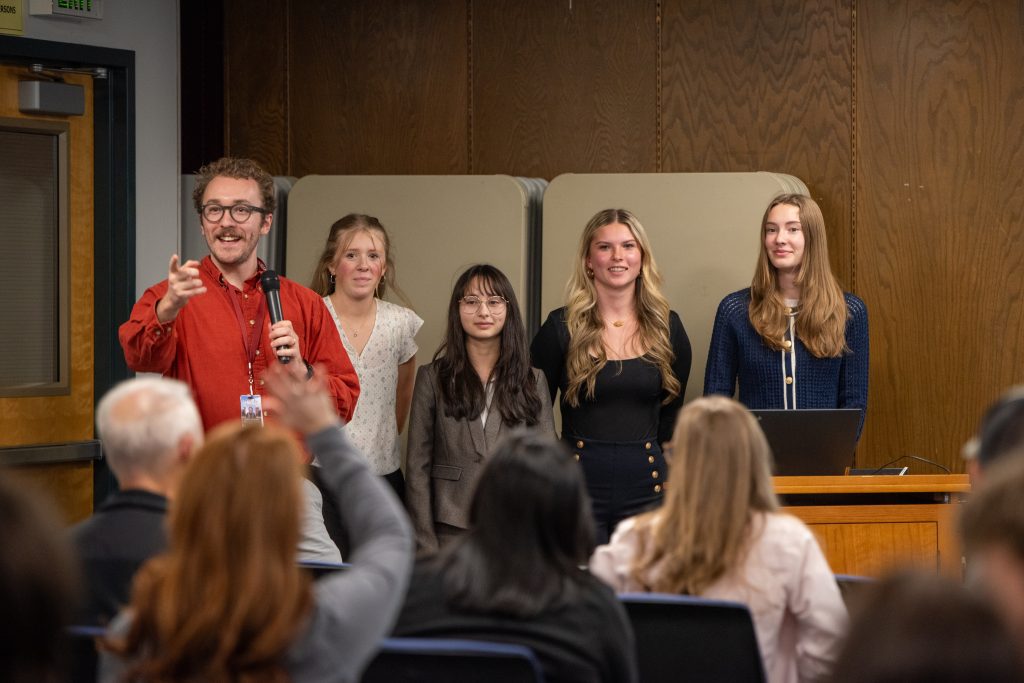
A group of five presenters stands on stage, engaging with an audience in a classroom setting.
St. Vrain’s sustainability interns participate in a Q&A following their presentations.

Creando oportunidades: el programa P-TECH de St. Vrain Valley celebra su quinta feria de empleo anual

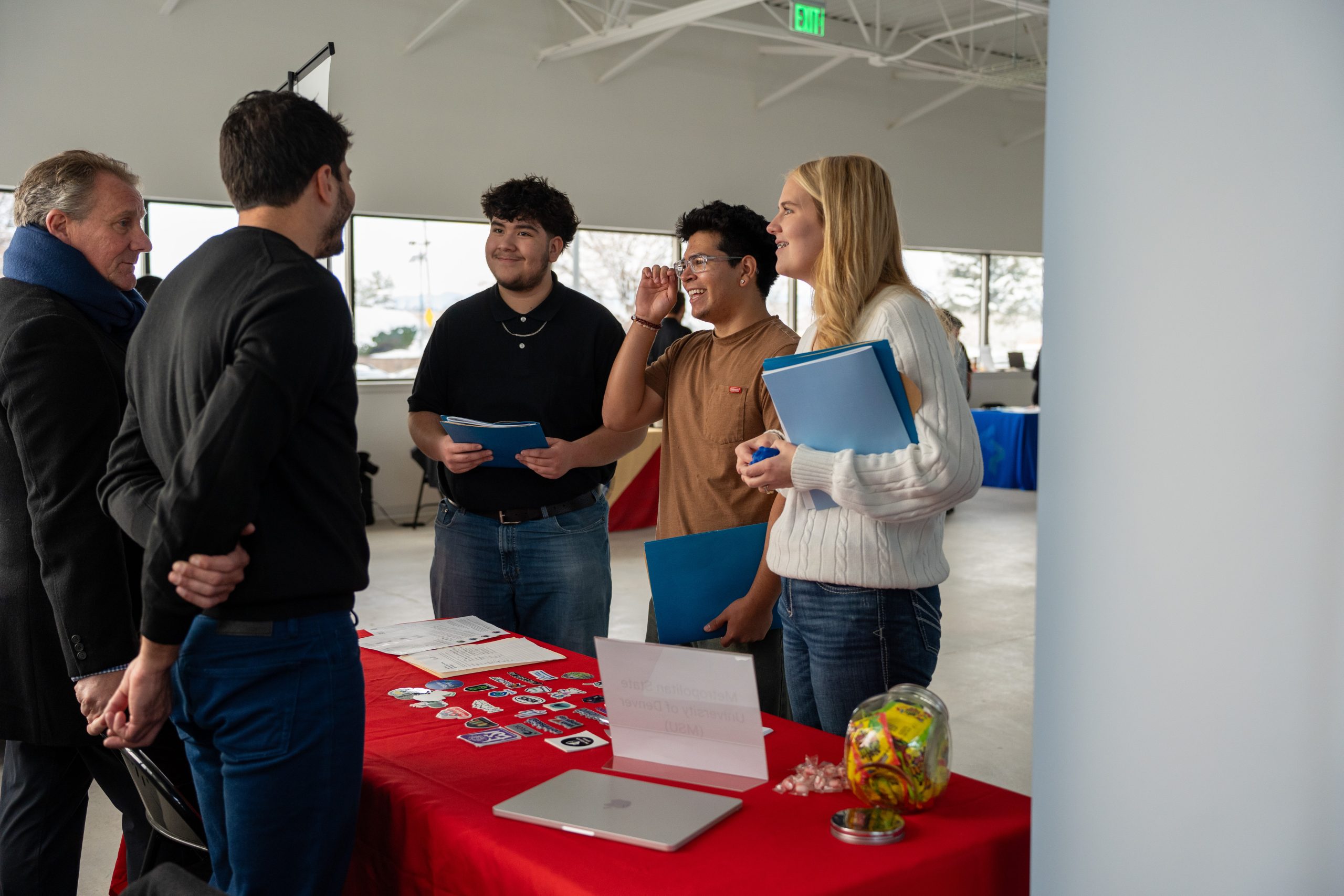
El programa P-TECH del valle de St. Vrain celebró su quinta feria anual de empleo P-TECH el viernes 5 de diciembre. Varias empresas locales se dieron cita para reunirse con los alumnos de último curso y los recién graduados del programa P-TECH Skyline High Frederick, Silver Creek y Skyline High , donde pudieron informarse sobre posibles oportunidades profesionales en el ámbito laboral que habían elegido. 

Desde 2021, la Feria de Empleo P-TECH ha crecido de forma constante cada año, ofreciendo a los estudiantes la oportunidad de establecer contactos, perfeccionar sus currículos, comunicarse de manera profesional y formular preguntas relevantes. La primera feria fue organizada por el equipo de FalconTECH del Skyline High , en respuesta a los comentarios de los primeros graduados de P-TECH, que estaban deseosos de incorporarse al mercado laboral, pero no sabían muy bien cómo desenvolverse en el ámbito de los contactos profesionales y la búsqueda de empleo. 

En la actualidad, cada año participan más de 20 empresas, que ofrecen diversas oportunidades profesionales en los ámbitos de la informática, los negocios, la industria farmacéutica, las pequeñas empresas locales y los servicios de colocación laboral. En el evento participaron alumnos de los tres programas P-TECH de St. Vrain, con un total de más de 120 asistentes. Para muchos, estas conversaciones les ayudan a conseguir entrevistas para puestos a tiempo completo y prácticas, al tiempo que les permiten establecer valiosos contactos con socios del sector. 

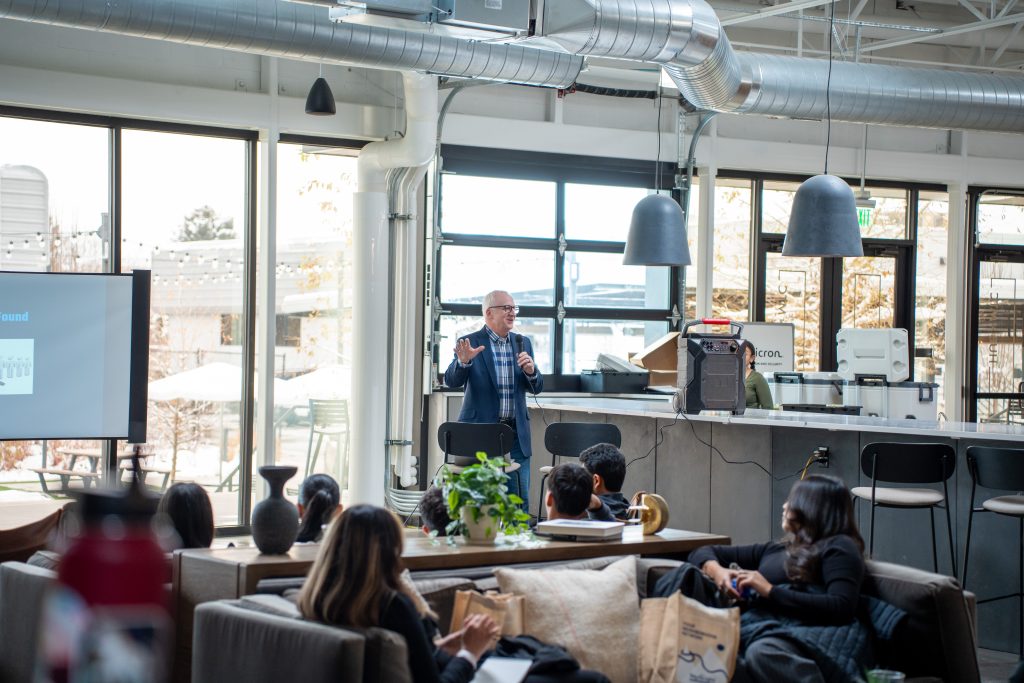
Un ponente da una charla ante el público en un moderno espacio interior con grandes ventanales y asientos informales.
Tras reunirse con representantes de empresas, los estudiantes asistieron a la ponencia del ponente principal, Rolf Kramer, director sénior de mercado de Akkodis, y aprendieron las mejores prácticas para LinkedIn.

Karis Green, que ahora trabaja en Cisco como ingeniera de soluciones, contó que su trayectoria en Cisco comenzó en la Feria de Empleo de P-TECH. Del mismo modo, Isah Rosales consiguió unas prácticas en Seagate gracias a este evento, e Intrado ha contratado a más de tres graduados de P-TECH tras conocerlos en la feria de empleo. A lo largo de los años, los estudiantes y los recién graduados han llegado a considerar la Feria de Empleo de P-TECH como una oportunidad inestimable para establecer contactos y crecer profesionalmente. Muchos socios del sector traen ahora a antiguos alumnos de P-TECH, a quienes han contratado, para que representen a sus empresas en el evento, creando un poderoso momento de cierre del círculo que inspira a los participantes actuales.

A medida que St. Vrain Valley sigue ampliando su oferta de programas P-TECH, la Feria de Empleo P-TECH sigue siendo una pieza clave del programa, ya que ayuda a los estudiantes a dar el paso con confianza hacia las carreras profesionales para las que se han esforzado tanto en prepararse.

El boliche fomenta el espíritu de comunidad en el partido unificado entre Silver Creek Highy la policía de Longmont

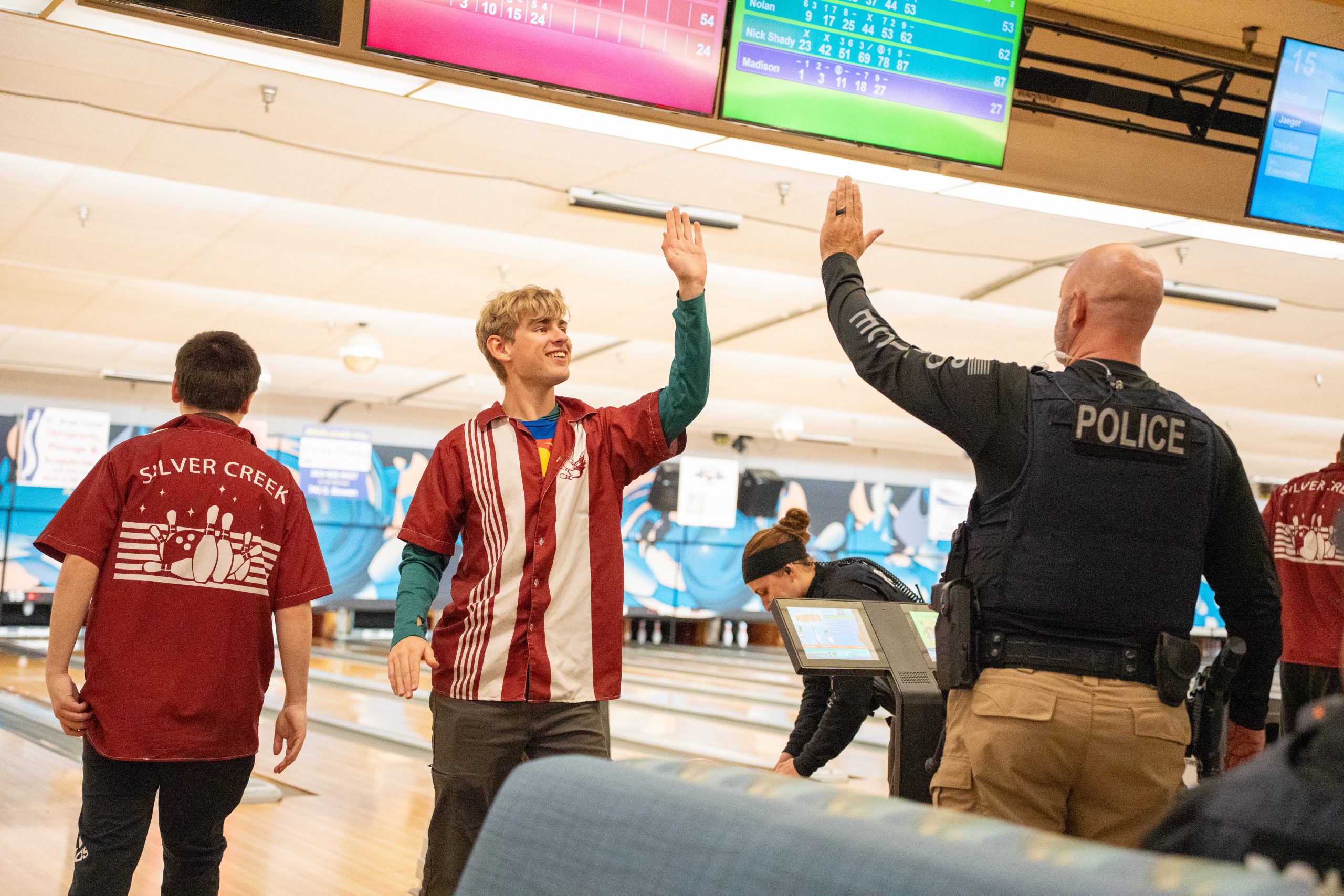
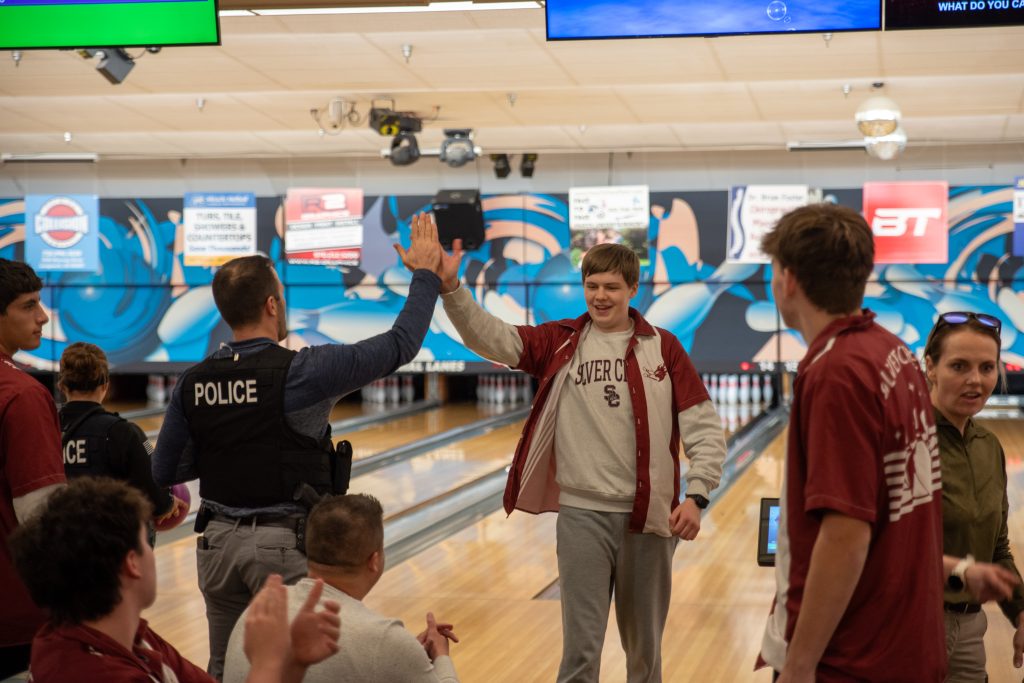
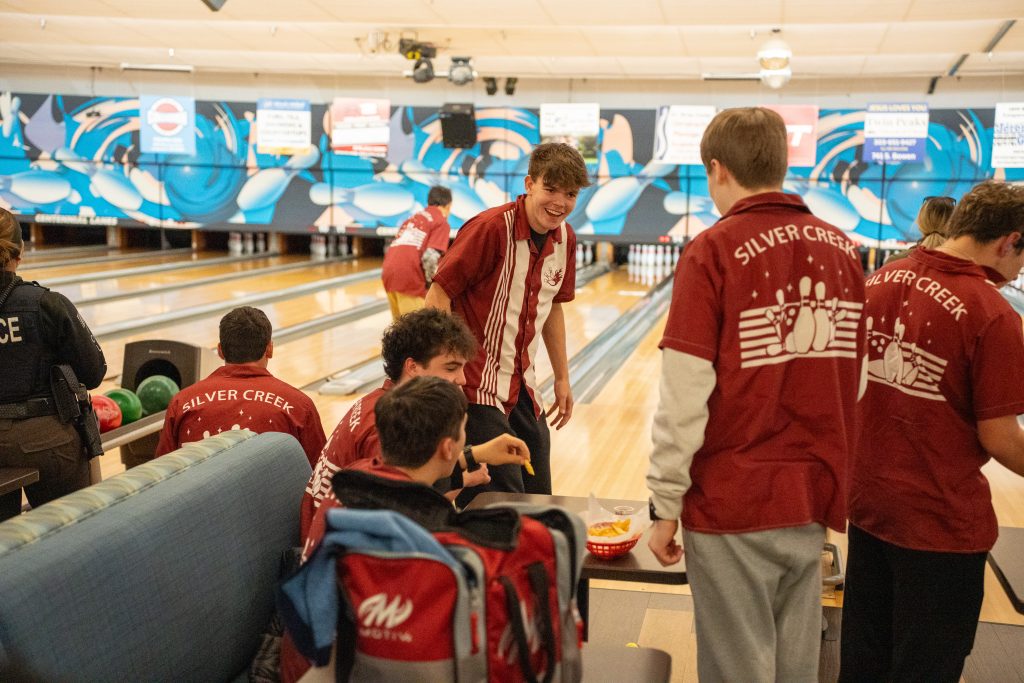
Members of the Silver Creek High School Unified Bowling Team filled Centennial Lanes Bowling Alley with energy and excitement as they faced off in a friendly competition against local Longmont police officers. The event, now a yearly tradition in the community, brought teammates and officers together for an afternoon of shared laughter, high fives, and spirited bowling.

A police officer and a young man give each other a high five at a bowling alley, surrounded by cheering friends.

Throughout the match, the atmosphere was one of encouragement and genuine connection. Students and officers cheered each other on, creating moments that went far beyond the final scores.

Unified Bowling coach Ericka Pilon highlighted the deeper meaning behind the event, emphasizing its impact on both students and the wider community. “Our annual Unified Bowling versus Police is more than just a friendly match; it’s a powerful experience for everyone,” she said. “It demonstrates that sports unite people, regardless of ability or profession. For our students, these events build confidence, foster true social inclusion, and create invaluable community bonds by allowing them to interact with local heroes in a fun, supportive setting. It truly showcases the best of our community.”

A group of young bowlers in red shirts at a bowling alley, enjoying snacks and chatting near the lanes.

The Unified Bowling versus Police match not only celebrated athletic participation, but also highlighted the strength of a community that values every individual. The event served as a powerful reminder of how inclusive sports can bridge gaps and bring people together.

El distrito escolar St. Vrain Valley rinde homenaje a ToniJo Niccoli, nombrada «Directora de Instituto del Año de Colorado 2026»

ToniJo Niccoli, directora del New Meridian High y del Centro de Formación Profesional y Tecnología, ha sido nombrada «Directora de Instituto del Año 2026 en Colorado» por la Asociación de Directores de Institutos de Colorado. 

Como galardonada a nivel estatal, pasará a optar al premio nacional «Director del Año» a través de la Asociación Nacional de Directores de Institutos de Enseñanza Secundaria. Bajo su liderazgo, la tasa de graduación en el plazo previsto de New Meridian se ha disparado del 12,5 % a casi el 90 %, la tasa de abandono escolar ha descendido de más del 25 % a menos del 3 %, y los alumnos están completando preparatoria créditos universitarios y certificaciones reconocidas por el sector. 

El distrito escolar St. Vrain Valley Schools se enorgullece de rendir homenaje al excepcional liderazgo de Niccoli y al impacto transformador que ha tenido en sus alumnos, el personal y la comunidad.

Los alumnos superdotados de Longmont Estates exploran STEM prácticas de STEM

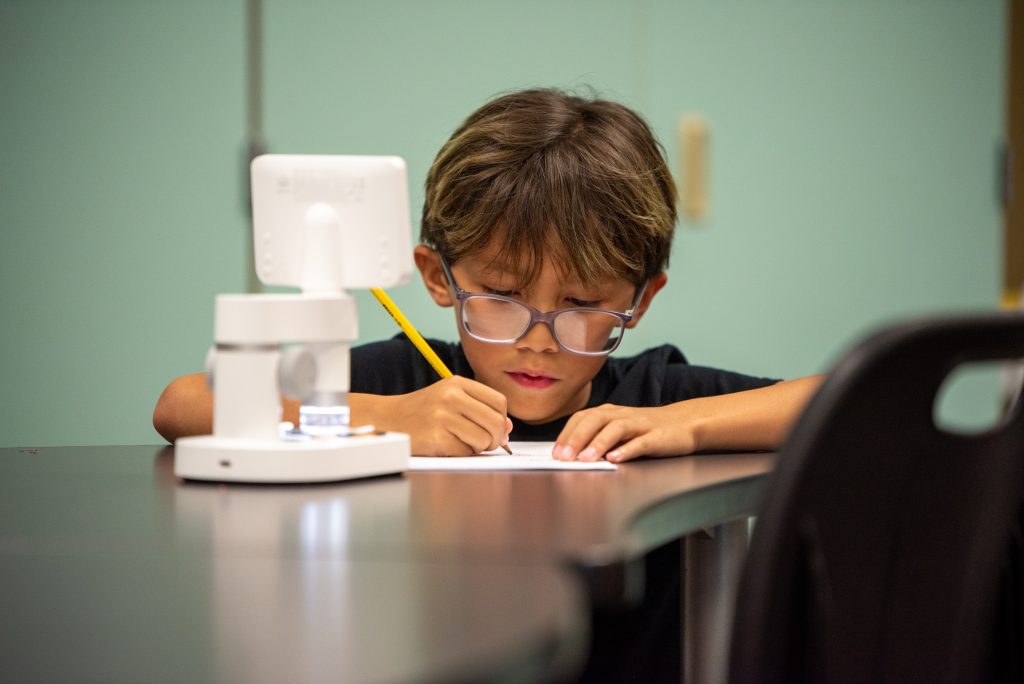
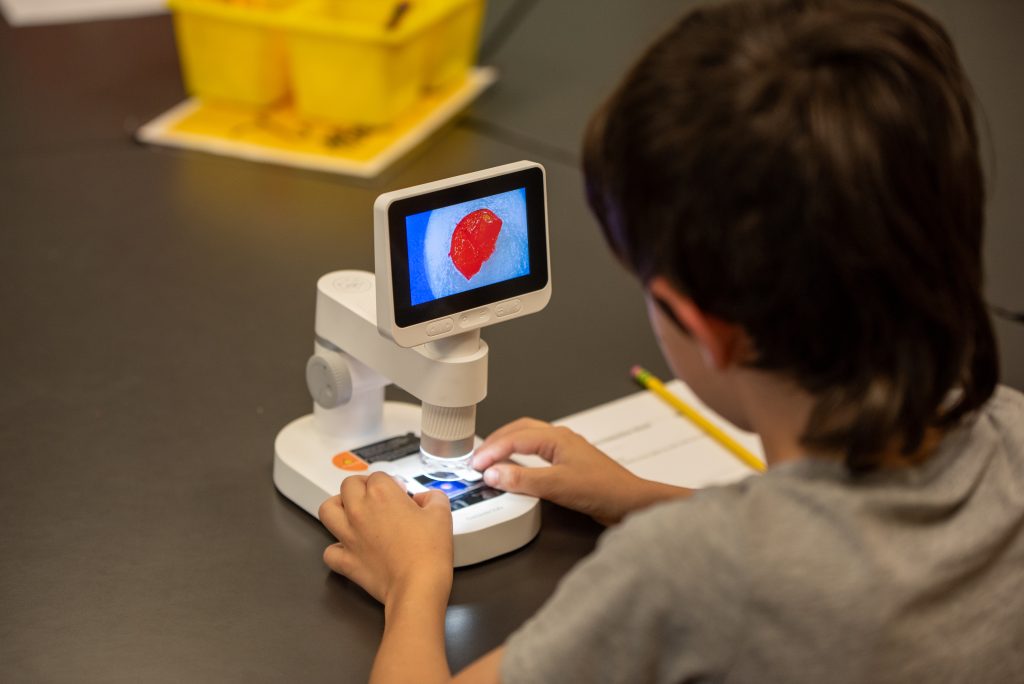
En Longmont Estates Elementary, un pequeño grupo de alumnos superdotados y con talento se reúne alrededor de sus mesas de trabajo, con la mirada fija en los microscopios digitales que brillan ante ellos. Uno a uno, ajustan los mandos de enfoque y estudian las texturas ampliadas de unas preparaciones misteriosas: hebras de fibras, fragmentos de plantas y otras muestras microscópicas. Mediante el razonamiento deductivo, estrategias de pensamiento de diseño y bocetos en sus cuadernos, los alumnos comparan sus observaciones y debaten las posibilidades. Los alumnos trabajan primero de forma individual y luego se reúnen para determinar la identidad de cada portaobjetos. Jessica Shaffer, STEM en Longmont Estates, se mueve entre los alumnos, ofreciéndoles orientación y ánimos mientras comparten teorías y perfeccionan sus conclusiones.

Un niño pequeño con gafas escribe con un lápiz en una mesa, concentrado en su trabajo, con un microscopio cerca.
Un alumno superdotado y con talento añade bocetos a su hoja de ejercicios.

Longmont Estates hace hincapié en un STEM riguroso e integrado que despierta la pasión de los alumnos por la ciencia, la tecnología, la ingeniería y las matemáticas a través de un aprendizaje basado en la investigación y orientado al mundo real. Los profesores utilizan un enfoque de pensamiento de diseño que lleva a los alumnos más allá de la memorización, involucrándolos en la experimentación, la creación de prototipos y la resolución de problemas reales. Dentro de la vía para alumnos superdotados y con talento (GT), los alumnos con planes de aprendizaje avanzados se reúnen semanalmente para realizar actividades de enriquecimiento adaptadas a sus capacidades, tales como acertijos lógicos, ejercicios de pensamiento divergente o proyectos colaborativos de tipo ingenieril.

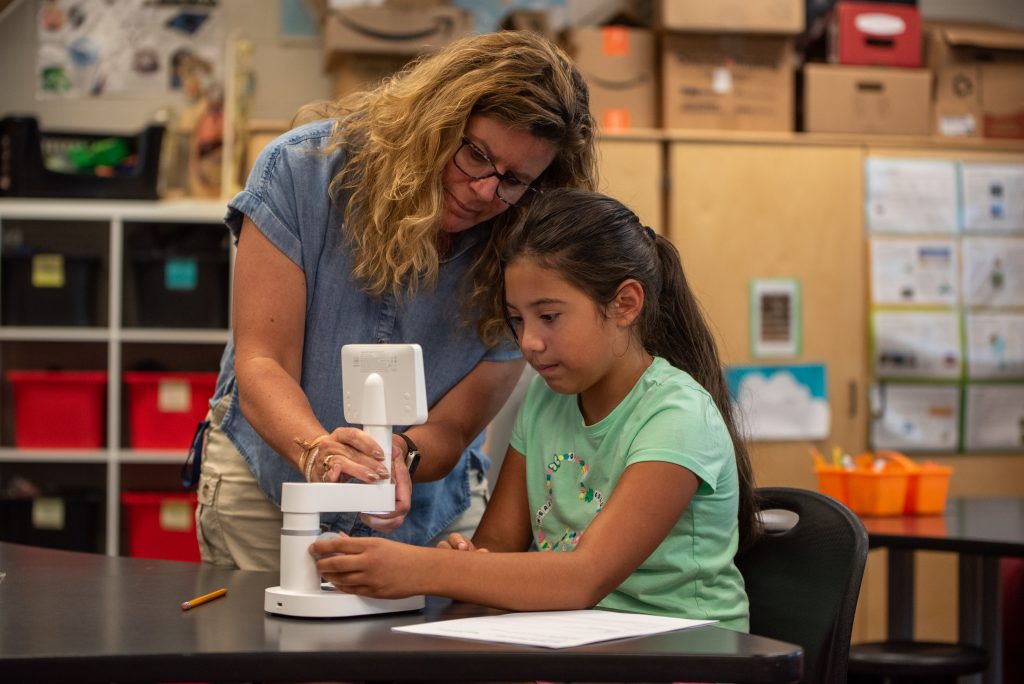
Una profesora ayuda a una niña a utilizar un microscopio en una mesa del aula, rodeada de material didáctico.
Jessicca Shaffer, STEM en Longmont Estates, trabaja con un alumno superdotado y con talento.

Shaffer señala que las STEM en Longmont Estates ofrecen a los alumnos superdotados experiencias auténticas que van más allá del plan de estudios estándar. «Es realmente inspirador ser testigo de su pasión y dedicación por explorar nuevas fronteras en STEM», afirmó, al reflexionar sobre cómo evolucionan los proyectos cada año. Los alumnos expusieron muchos de esos trabajos en la Feria de la Innovación anual de la escuela, incluyendo prototipos de robótica y proyectos de investigación autónomos de la «Genius Hour» sobre temas como la biología marina y las ciencias ambientales. A través de esta combinación de desafío, creatividad y aprendizaje práctico, Longmont Estates Elementary el crecimiento de sus alumnos al tiempo que cultiva el amor por el descubrimiento a lo largo de toda la vida.

Un niño observa una muestra a través de un microscopio digital, con un objeto rojo que se ve en la pantalla.
Un alumno superdotado y con talento examina una lámina bajo el microscopio.

Las escuelas del valle de St. Vrain reciben una subvención de 120 000 dólares para poner en marcha un estudio de movimiento y actuación de vanguardia

St. Vrain Valley Schools has been awarded a $120,000 Innovations in CTE Grant, funded by Perkins V federal funds and administered by the Colorado Community College System (CCCS). The funding will support key upgrades to the Innovation Center with a significant portion dedicated to launching the new state-of-the-art Motion and Performance (MAP) Studio, a program poised to transform how students understand movement, performance, creativity, and data.

The MAP Studio represents the first stage of a long-term effort to empower students to use data to improve their performance – whether they are athletes, dancers, creators, or future healthcare professionals. By combining cutting-edge sensors, motion-capture technology, and immersive creative tools, the studio will provide students with opportunities to explore movements of the human body and showcase how that information can be used to support growth, recovery, precision, and creativity.

The heart of the MAP Studio is an advanced motion-capture system: an array of infrared cameras that track participants. These cameras identify joint positions, record movement patterns, and transform human motion into rich datasets that students can analyze, interpret, and apply. For athletes, this means real-time feedback on technique, helping them refine their form, prevent injury, and better understand how their bodies respond to different training demands. A runner can see how their stride changes over time, a pitcher can analyze their form, and an Exercise Science student at the CETC can provide personalized feedback for an injured athlete and monitor progress during recovery.

For creative performers, the technology unlocks entirely new dimensions of expression. A dancer can see detailed feedback on balance and alignment, while digital artists can export motion-capture data into 3D design software to animate characters, or create immersive virtual experiences. Movements performed in the studio can become the foundation of lifelike avatars, choreographed animations, or interactive storytelling projects.

To further support student athletes and performers, the grant will also fund the purchase of professional athletic-training technologies. These include force plates and jump mats that measure how students land or produce power, GPS monitors that track speed and distance, and velocity-based training tools that help lifters optimize strength development. For younger athletes, these tools offer early insights into proper technique and self-awareness which are skills that will benefit them in the long term for competitive high school programs.

With the support of the Innovations in CTE Grant, the Innovation Center continues to advance as a hub of experiential learning that spans across the entire district. The MAP Studio is an important step towards a future in which every student has access to cutting-edge tools that merge science, creativity, and performance. 

Columna de consejos para las reuniones de padres y profesores: Uso consciente de la tecnología en casa


Estimada reunión de padres y profesores:

Me cuesta mucho lidiar con el uso que hace mi hija de 15 años del móvil en casa, y veo que le está afectando al rendimiento escolar. Ella dice que necesita el móvil para «estudiar», pero constantemente la pillo en las redes sociales, enviando mensajes a sus amigos o viendo vídeos en lugar de hacer los deberes. Cuando intento quitarle el móvil, discutimos y ella dice que no entiendo que el móvil es su forma de mantenerse en contacto con sus amigos y de controlar su ansiedad. Sé que St. Vrain tiene unas directrices para el horario escolar, pero no sé cómo manejar esto en casa. ¿Cómo puedo ayudarla a concentrarse mejor y a tener una relación más sana con la tecnología sin tener que pelearme constantemente?

– Sin conexión en Dacono

——————

Estimado Desconectado:

Tu preocupación refleja uno de los retos más comunes a los que se enfrentan las familias hoy en día, y tienes razón en estar preocupada. El cambio constante de dispositivos fragmenta la atención y hace que el aprendizaje profundo sea casi imposible. Pero puedes ayudar a tu hija a desarrollar hábitos tecnológicos más saludables sin convertir tu hogar en un campo de batalla.

Comprenda a qué se enfrenta. Lo que está experimentando su hija no es necesariamente una «adicción» en el sentido clínico, sino más bien una respuesta neurológica muy real. Los teléfonos están diseñados para proporcionar un refuerzo intermitente a través de notificaciones e interacciones sociales, lo que crea patrones similares a los que se observan en otros comportamientos gratificantes. Cuando los adolescentes hacen un uso intensivo de los dispositivos, pueden desarrollar una dependencia real para la regulación emocional y la conexión social. Esto significa que el simple hecho de quitarles el teléfono no resuelve la necesidad subyacente que este satisface.

Establece límites que funcionen. Quitar el móvil por completo suele ser contraproducente y dar lugar a luchas de poder. En su lugar, prueba a establecer límites estructurados:

Establece «zonas de concentración» para todos. Fija horarios específicos para hacer los deberes en los que todos los miembros de la familia dejen sus dispositivos en un lugar central, como una cesta en la cocina o una estación de carga. Preséntalo como una forma de crear un entorno que favorezca el rendimiento intelectual de todos, no como un castigo. Cuando los padres también participan, los adolescentes cooperan mejor.

Utiliza intervalos de trabajo estructurados. El cerebro de los adolescentes necesita descansos regulares. Prueba la técnica Pomodoro: 25 minutos de trabajo concentrado seguidos de un descanso de 5 minutos para usar el móvil. Pon un temporizador. Cuando termine el descanso, hay que guardar el móvil. Esto satisface su necesidad de conexión al tiempo que protege el tiempo de concentración.

Ten en cuenta lo que le aporta el teléfono. Tu hija ha dicho que el teléfono le ayuda a mantenerse en contacto y a controlar la ansiedad. Tómate esto en serio. Si es su principal mecanismo de afrontamiento, necesita alternativas. Organiza encuentros presenciales regulares con sus amigos. Enséñale técnicas concretas para controlar la ansiedad, como la respiración profunda, escribir un diario o hacer ejercicio físico. Mantén conversaciones sinceras sobre lo que está ganando y lo que, posiblemente, se está perdiendo.

Da ejemplo con tu comportamiento. Si estás mirando el móvil durante la cena o lo revisas constantemente, ella se dará cuenta de la doble moral. Establece tus propios momentos de desconexión del móvil y habla abiertamente sobre cómo gestionar las distracciones tecnológicas.

Minimiza las distracciones. Silenciar las notificaciones puede ser una forma rápida y fácil de reducir la tentación de mirar el móvil.

Empieza poco a poco y sé constante. No lo cambies todo de golpe. Empieza con un solo cambio, como cenas familiares sin teléfonos móviles o una hora fija para hacer los deberes. Una vez que se haya convertido en una rutina, añade otra norma. Cambiar estos hábitos lleva tiempo. Es normal que al principio haya resistencia, pero mantén el rumbo.

Colabora, no impongas. Cuando los dos estén tranquilos, trabajen juntos para elaborar un plan. Pregúntale qué cree ella que le ayudaría a concentrarse mejor. Es más probable que respete las normas que ella misma ha ayudado a crear.

Sepa cuándo pedir ayuda. Si los conflictos persisten o si observa signos de ansiedad o depresión graves relacionados con el uso del teléfono, como el abandono de actividades, trastornos del sueño o reacciones extremas cuando se separa de su teléfono, póngase en contacto con el orientador escolar o con su médico de cabecera.

Recuerda que el objetivo no es eliminar la tecnología, sino ayudar a tu hija a desarrollar habilidades de autorregulación para toda la vida. Vive en un mundo en el que la tecnología está presente en todas partes, y es fundamental que aprenda a gestionarla de forma consciente. 

—Reunión de padres y profesores

Columna de consejos para las reuniones de padres y profesores: Organización y gestión del tiempo


Dear Parent Teacher Conference,

My high school sophomore is smart and capable, but she’s constantly struggling to keep up with her schoolwork. She waits until the last minute to study for tests, then stays up until 2 a.m. cramming. She forgets about assignments until the night before they’re due, and her backpack is a disaster with crumpled papers everywhere, missing handouts, lost permission slips. I’ve tried reminding her to start earlier, but she insists she has it under control. Then test day comes and she’s stressed and underprepared. Her grades are suffering, and I can see her confidence taking a hit. She’s not lazy, but she just seems completely overwhelmed and has no system for managing it all. How can I help her develop better time management and organization skills before it’s too late?

– Frazzled in Firestone


Dear Frazzled,

You’ve identified something critical: your daughter isn’t lazy, she’s overwhelmed. That distinction matters because the solution isn’t about pushing harder, it’s about working smarter. The good news is that time management and organization are learnable skills, not innate talents. The challenge is that by high school, she needs to develop these systems herself, with your support rather than your control.

Understand what’s really happening. High school demands a level of executive function that many teens simply haven’t developed yet. The teenage brain is still building the neural pathways for planning, prioritizing, and self-regulation. Your daughter may be dealing with anxiety about starting tasks, perfectionism that makes her avoid work, or simply a lack of awareness about how long things actually take.

Help her break down the process. Many students struggle because they don’t know what “studying” actually means. Work with her to identify concrete strategies: making flashcards, rewriting notes in her own words, teaching material to someone else, doing practice problems, or creating study guides. Different subjects require different approaches.

Teach backwards planning. When she has a test coming up, help her work backwards from the test date. If the test is Friday, what needs to happen Thursday? Wednesday? Tuesday? This might look like: Monday—review chapter 1 notes, Tuesday—make flashcards, Wednesday—practice problems, Thursday—review everything. Write it down where she can see it.

Introduce tools that work for teens. A paper planner works for some students. Others need digital solutions such as phone reminders, Google Calendar, or productivity apps. Let her experiment to find what clicks. The key is checking it daily and actually using it. Start small: just track test dates and major assignments for two weeks, then build from there.

Create simple organization systems. Help her set up one folder or binder per class, a designated homework spot at home, and a weekly backpack cleanout routine. The system should be simple enough that she’ll actually maintain it.

Establish a study routine. Work with her to identify when she’s most alert and focused. Help her block out 30-45 minutes of focused study time daily. Make sure she has a consistent, relatively distraction-free place to work.

Address the procrastination. Often it’s about anxiety or not knowing where to start. Help her identify the smallest possible first step. Not “study for history test” but “open the textbook to chapter 7.” Starting is often the hardest part.

Leverage school resources. Encourage her to use teacher office hours or tutoring. St. Vrain high schools offer resources through counselors and academic advisors who can help students develop organizational strategies tailored to their needs.

Model without micromanaging. Share your own time management strategies, but resist doing it for her. Don’t check her planner or text reminders about every assignment. Natural consequences are powerful teachers, as long as they’re not catastrophic.

High school is rigorous, and the organizational demands are real. But with patience, the right tools, and your steady support, your daughter can learn to manage it all. She’s capable. She just needs to build the systems that work for her brain.

—Reunión de padres y profesores

Escuelas del Valle de St. Vrain