The Doing Democracy Day event kicked off on Thursday, March 6 with students from local high schools coming together to discuss complex issues such as cell phone bans, affordable housing, a $20 minimum wage, and more. This multi-community, multi-school event presented students with the opportunity to research these issues, craft solutions, and present their ideas to local leaders. More than 90 high school students participated in the event, and the team whose proposal was most successful was celebrated at the end of the day.
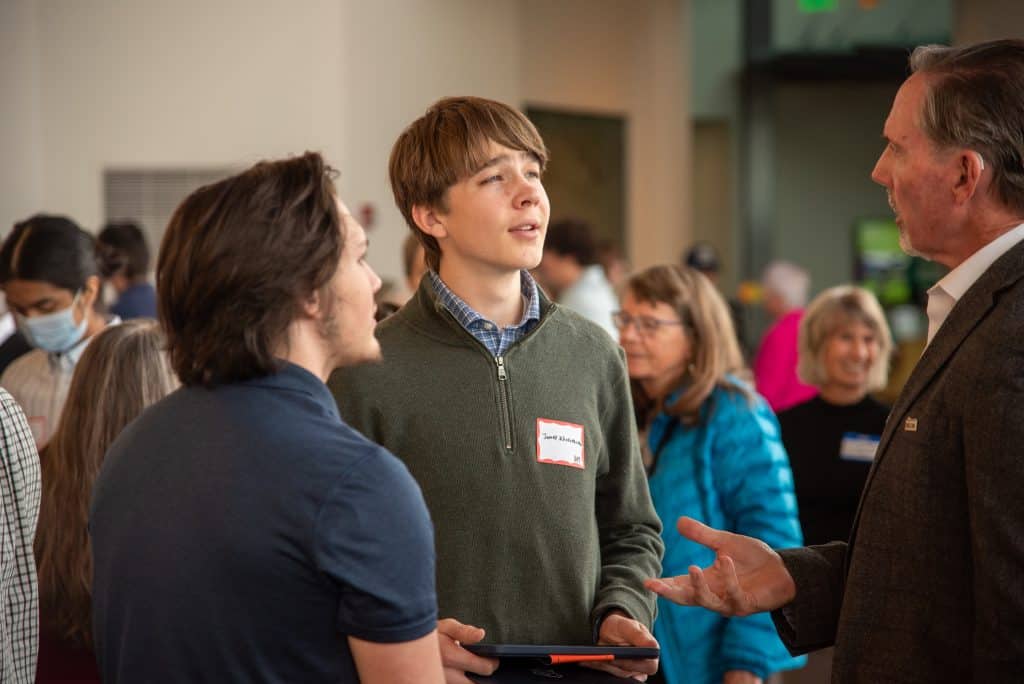
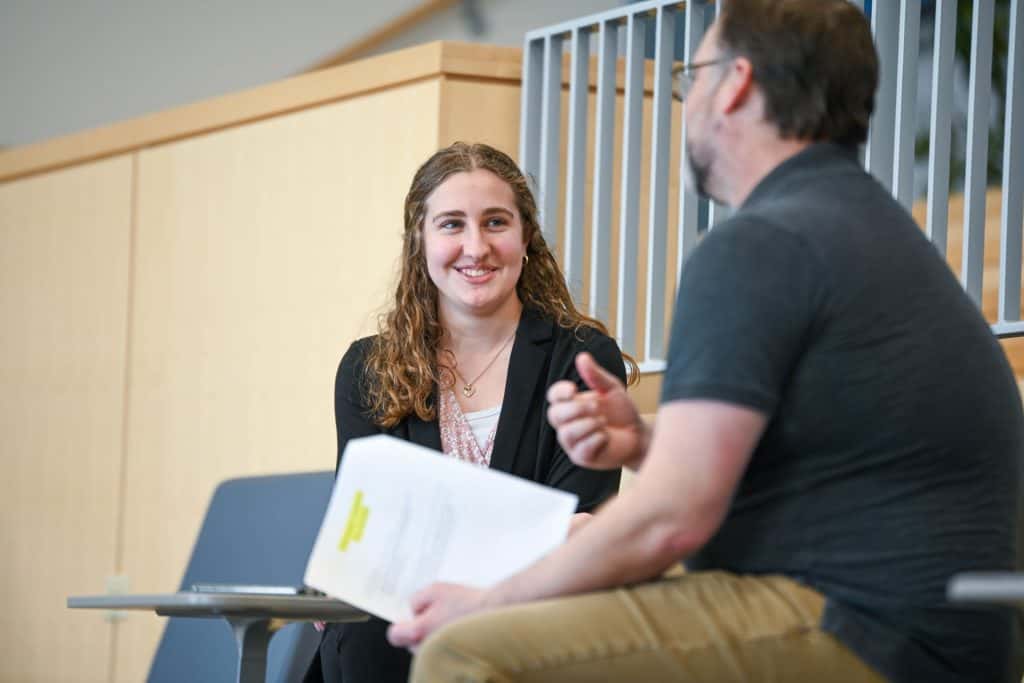
Students engage in conversation with a local leader.
Hosted at the Longmont Museum, students spent the morning of the event splitting into designated groups and researching their assigned issues. After completing their preliminary research, students were invited to interview local leaders from various businesses and organizations. Throughout the Swan Atrium, students spoke with representatives from the Innovation Center of St. Vrain Valley Schools, Boulder County, UCHealth, and many more. “I’ve been here several years now and my topics today are voting for 16 and 17 year olds and minimum wage. I’ve also talked to a lot of students about cell phones. The students ask a lot of good questions and I just love working this event,” said Peggy Leech from League of Women Voters of Boulder County.
Students, through conversations with peers and community leaders, are able to think critically about both local and regional issues. For many, it’s a great opportunity to simply connect with the community and to gain new perspectives. “I think that it’s really important that we’re making connections with people and understanding what the world is going to look like as we take the reins,” said Silver Creek High School junior Addison Tretten. “I also think that there’s a lot of really smart people in this room and a lot of brilliant ideas, and when you put all of us together, you get a lot of positive impact.”
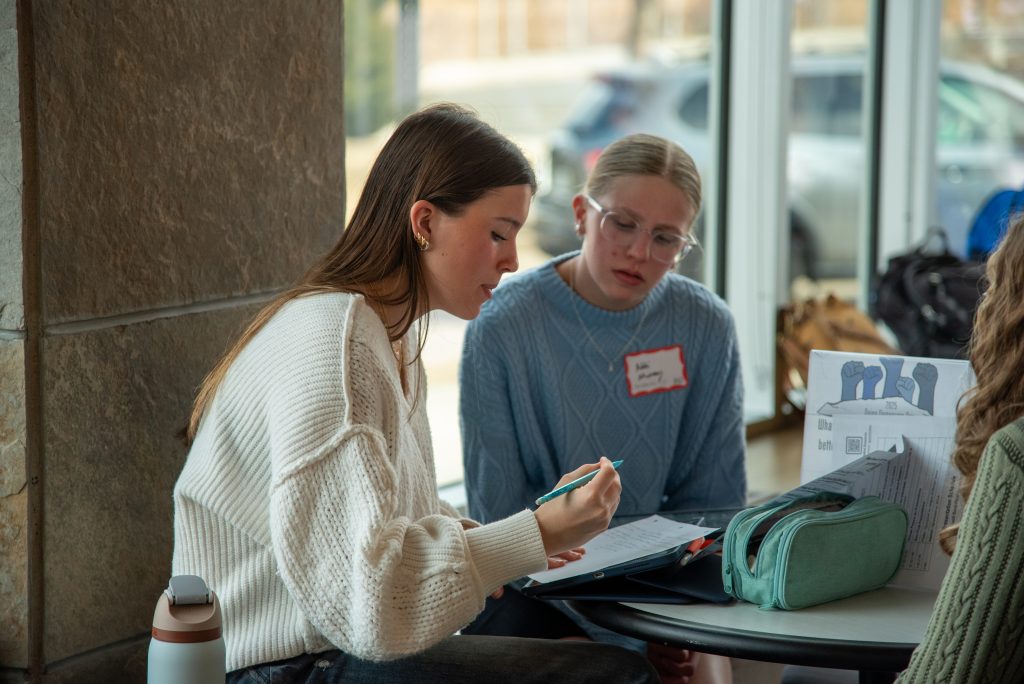
A group of students work together to present their solution to local leaders.
This yearly event has allowed the community and St. Vrain Valley Schools to continue their partnership in nurturing students’ critical thinking and problem solving skills. For many district employees working the event, they couldn’t be more proud of the active role their students are taking in addressing and solving these issues. Lynn Eckart, Innovation Outreach Facilitator for the Innovation Center of St. Vrain Valley Schools said, “They’re learning how to network and talk with other people and research. I really love seeing how empowered the teams are, and that they realize that this is their world and they are the next generation to go into the workforce.”
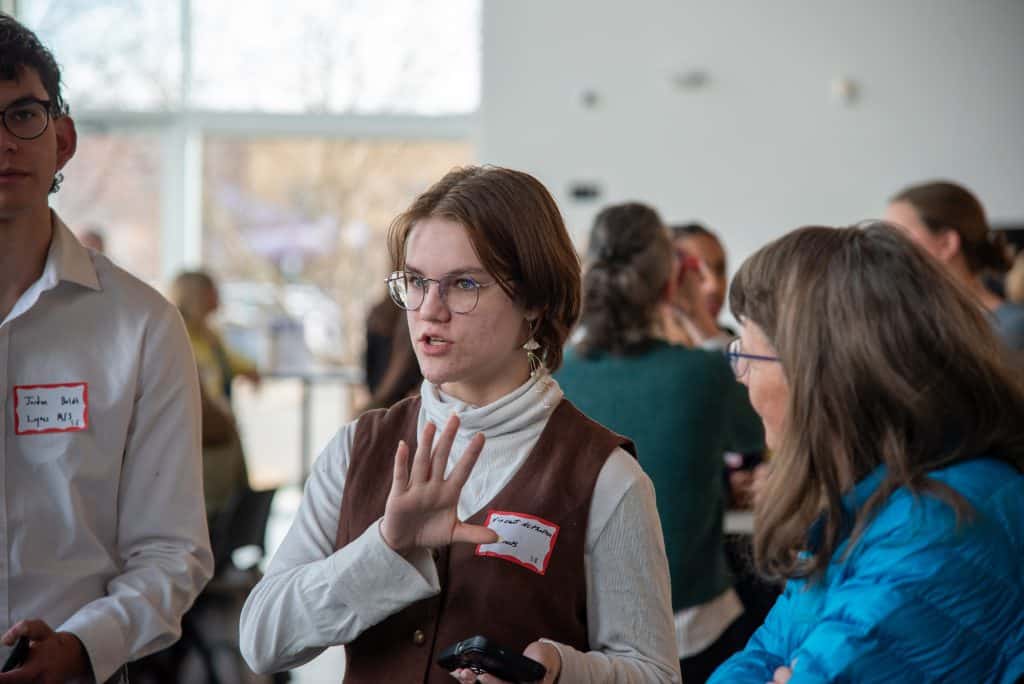
A high school student interviews community leaders about local issues.
The Doing Democracy Day event continues to serve as a valuable platform for students to engage with pressing societal issues, collaborate with peers, and connect with local leaders. Through research, discussion, and solution-driven thinking, participants gain skills that will help them navigate the complexities of the real world. As they take these lessons forward, the event reinforces the power of youth voices in shaping the future of our community.
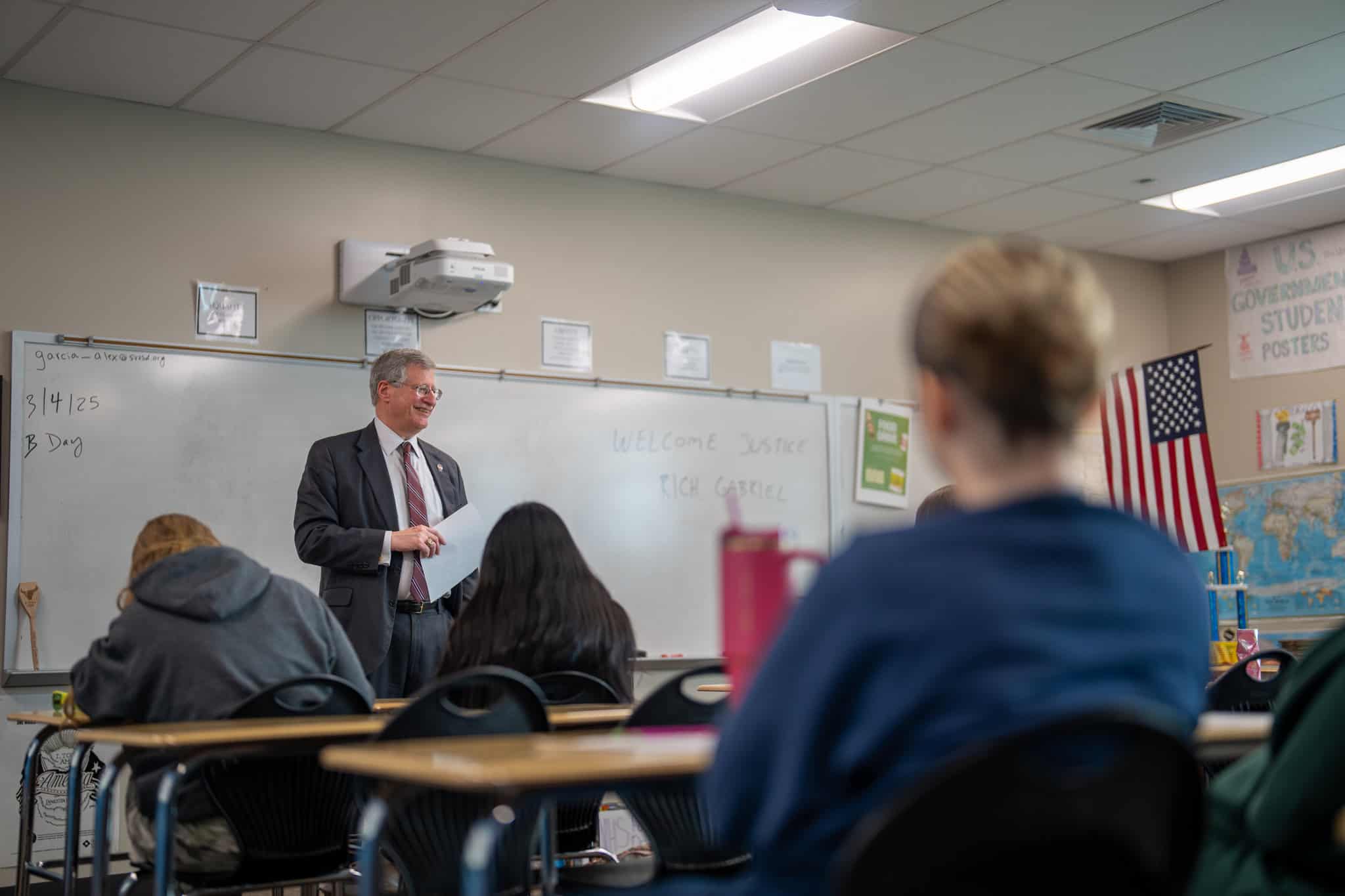
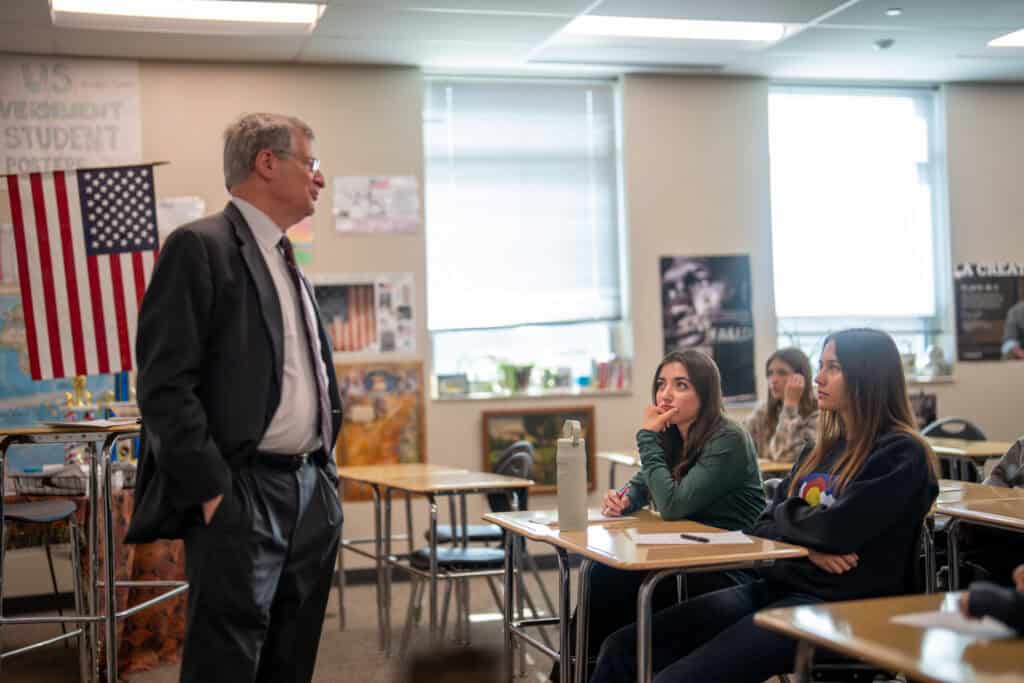
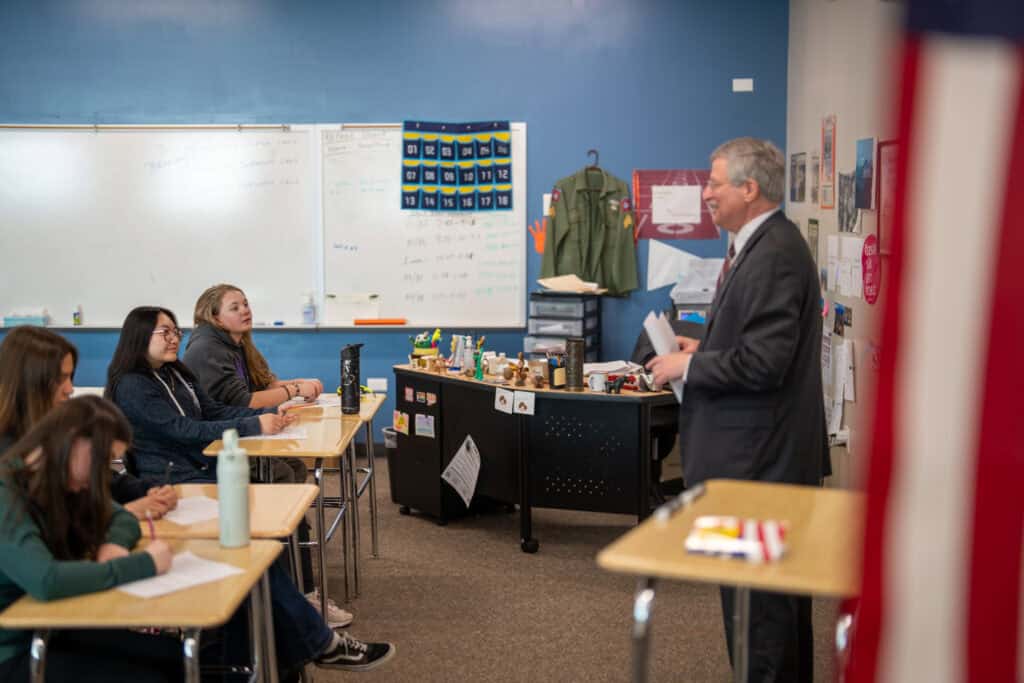
The students of Mead High School sat in rapt attention as Justice Richard Gabriel of the Colorado Supreme Court shared insights from his years on the bench. It was the eighth consecutive year that he and his fellow justices had made the trip to Mead, a tradition built on the belief that the judicial system should be transparent and accessible.
“This is a great joy,” Justice Gabriel said. “These are up-and-coming voters and citizens, and we want them to be educated. If they understand how the courts work, they see the rigor that goes into making decisions—and that tends to breed respect for the courts.”
Through the Our Courts Colorado initiative, Justice Gabriel has dedicated himself to civic education, ensuring that students gain a nuanced understanding of the judicial process. Each year, Mead High students read real court cases, preparing thoughtful questions for the justices.
“As you saw, I had a whole bunch of prepared questions—and they were excellent, every one of them,” he remarked with admiration. “Here at Mead High School, the students always read a couple of our cases before we come in, and they get to ask us what went into the decision. They go straight to the most difficult issues that the court faced.”
A Lasting Impact on Students
The opportunity to engage with Supreme Court justices left a profound impression on Mead students, many of whom were struck by the depth of the discussions and the personal stories shared by the visiting judges.
“I enjoyed the fact that we already researched the cases beforehand so that we could have a discussion about the specifics of the law, rather than a general conversation about the Colorado Supreme Court,” said Elena Gomez, who met Justice Maria Berkenkotter.
Beyond legal discussions, students were inspired by the justices’ perspectives on civic engagement and respectful dialogue.
“We as a society need to learn civil discourse,” said Josh Gonslaves, who met Justice Gabriel. His sentiment was echoed by Karissa Erickson, who appreciated the justices’ thoughtful approach to discussion: “I loved the refreshing take on how to disagree and debate respectfully.”
For some students, the visit reinforced their personal aspirations. Kiana Melgar, who met Justice Carlos Samour, found motivation in his personal journey.
“I loved hearing about the life experience from someone who came into the country with nothing, not knowing the language. He and his family worked hard to get what they have—they earned this life,” she said. “Yes, I’ve always dreamed about being a lawyer mainly because I’m very intrigued by the law and love helping people during vulnerable moments.”
Others, like Ayden Kohlscheen, left with a deeper appreciation for legal knowledge, even if they don’t plan to enter the field.
“I never really wanted to go into law, but everyone should know about the fundamentals of it,” Ayden said after meeting Justice Hood. Mikey Carrigan agreed, noting, “I enjoyed how engaged Justice Will Hood was with the class. He was very funny and kept me awake, engaged, and excited. There will always be a part of me that wants to be a lawyer.”
The Teachers’ Perspective: A Tradition of Engagement
For Mead High School government teacher Alex Garcia, this annual tradition has been invaluable in shaping students’ understanding of the judicial process.
“For eight years running, I so appreciate that these very busy Colorado judges take time to drive down to Mead each year to interact with every single junior at Mead,” Garcia said. “Students are always impressed to see our Colorado Supreme Court Justices as human beings with personal biases who nevertheless strive to put their biases aside when making rulings on cases.”
Garcia noted that students particularly enjoy hearing the justices’ personal stories—how they worked their way up to the Supreme Court and the challenges they face in the role.
“Students are also always impressed at how many hours the judges work per week and how seriously they take serving every citizen of Colorado,” Garcia added. “With that said, it surprised students to learn that judges sometimes receive death threats for rulings they make.”
A Meaningful Learning Experience
Each year, these visits give students the chance to engage in discussions that go far beyond the classroom. They gain insight into real-world legal decisions, learn to analyze complex cases, and see firsthand the kind of reasoning and effort that goes into each ruling.
For some students, meeting the justices reinforced their interest in law as a career. Others may never step into a courtroom, but they walked away with a stronger understanding of how the judicial system affects their lives.
Above all, these conversations encouraged students to ask questions, think critically, and see the courts as more than just an abstract branch of government. The experience gave them a glimpse into the work of those shaping the law in Colorado—an opportunity they won’t soon forget.
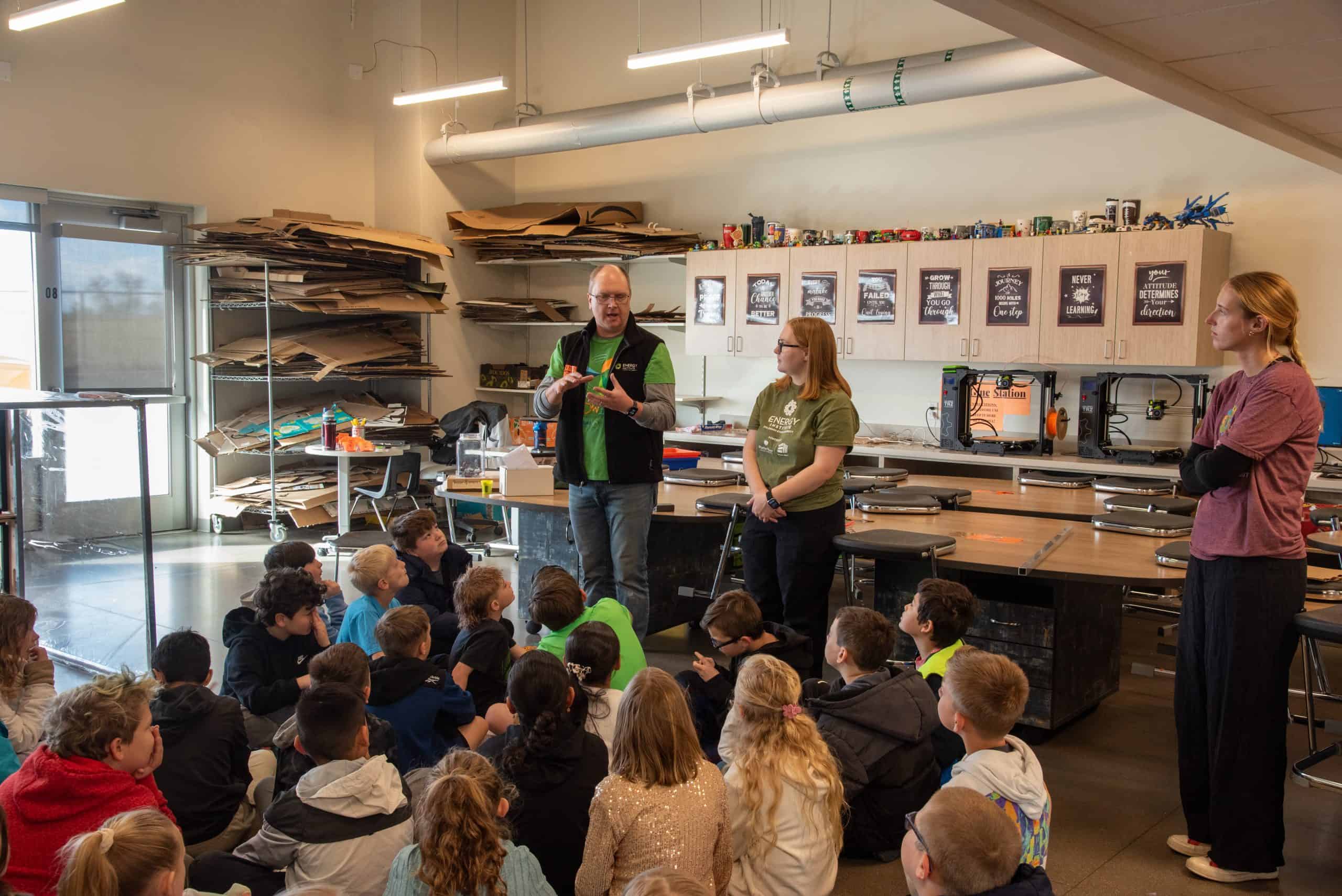
After an exciting few weeks learning about engineering and renewable energy concepts, 24 student teams in Mead Elementary’s fourth grade class were finally able to test their wind turbine designs.
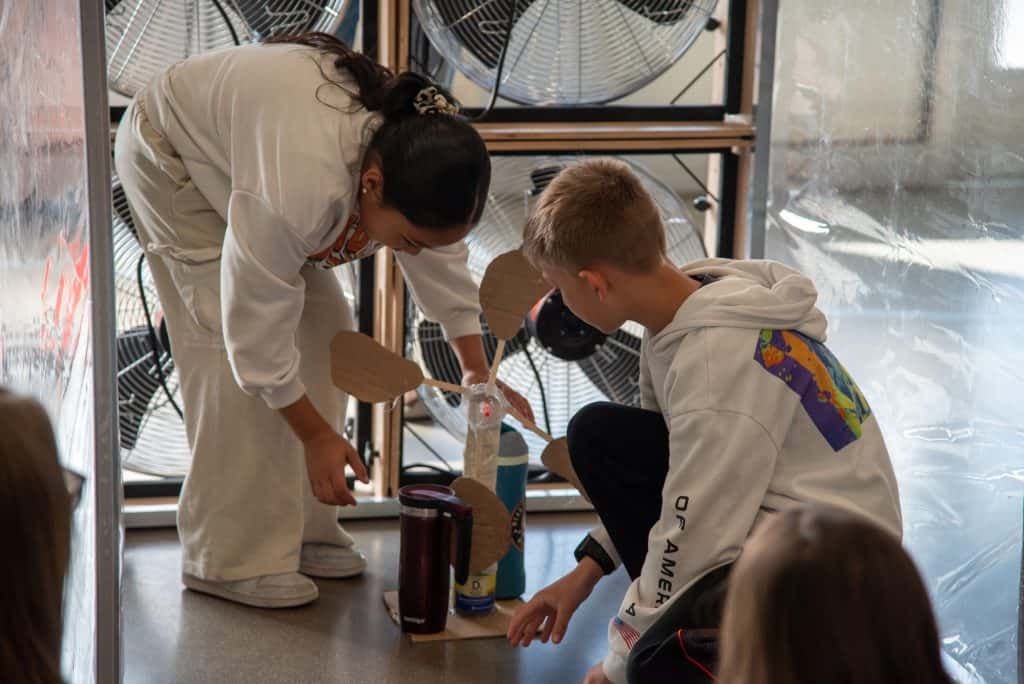
In collaboration with the KidWind Project team from Colorado State University (CSU), students in four scheduled sessions were given the opportunity to build, modify, and test their cardboard wind turbine designs in a powerful wind tunnel. Surrounded by their peers, each student team placed their turbine into the wind tunnel and waited eagerly to see if the vacuum of air would spin their propellers. Each design was highly unique and reflected the student groups’ thought process and problem-solving skills. At the end of the day, once all teams had the opportunity to test their turbines, students with the most effective designs were celebrated.
For many students whose turbine’s propellers were unable to spin, this didn’t necessarily signify failure. Instead, many students expressed that this was an opportunity to learn more about the design process and to develop critical teamwork skills. “Even if our design didn’t work, we learned things that we can do better next time,” said fourth grade student Hadley Griffith. This growth mindset is an important part of the STEAM/Energy Lab’s mission.
Hands-on experiences with the help of community members are one of the many important ways in which St. Vrain Valley Schools continues to foster academic excellence. ”We like to emphasize the hands-on nature of engineering and the importance of the process — not just the end result,” said Mike Estergard, Colorado State University’s Outreach and Education Coordinator for the Engineering Institute. Similarly, Tyler Swanson, STEAM/Energy Lab Specials Teacher, expressed, “At Mead Elementary, our students learn that with STEAM and engineering, failing is the first part of learning. We emphasize learning opportunities where groups must collaborate and problem-solve, and this event truly showcased the positive results from working through the design process.
Two students work to set up their cardboard wind turbine in CSU’s wind tunnel.
The KidWind Challenge at Mead Elementary was a valuable learning experience that encouraged creativity, teamwork, and perseverance. By engaging in hands-on problem-solving, students gained a deeper understanding of engineering principles and the iterative design process. With the support of CSU’s KidWind Project team and the dedication of their teachers, these young engineers walked away not only with new knowledge but also with the confidence to embrace challenges and keep innovating.
St. Vrain Valley Schools continues to lead in STEM education, with its VEX Robotics program achieving significant milestones this season. For the 24-25 season, St. Vrain has 265 teams and 1,060 students participating, and the district has hosted 25 tournaments in addition to preparing to host four upcoming state competitions.
The state tournaments will take place at the following locations:
Trail Ridge Middle School – February 28 and March 1
Altona Middle School – March 8
Erie High School – March 15
St. Vrain Valley Schools’ teams consistently rank among the top in Colorado, with the following competition groups in the top ten state rankings:
7 IQ elementary teams
4 IQ middle school teams
7 V5 middle school teams
3 V5 high school teams
On the world stage, Longmont High School is currently ranked No. 1, and Silver Creek High School holds the No. 5 ranking.
The continued success of St. Vrain Valley Schools’ VEX Robotics program highlights the district’s commitment to providing students with hands-on, real-world STEM experiences that foster critical thinking, collaboration, and innovation. As students prepare for the upcoming state tournaments, they are demonstrating the skills and knowledge that will drive future advancements in technology and engineering.
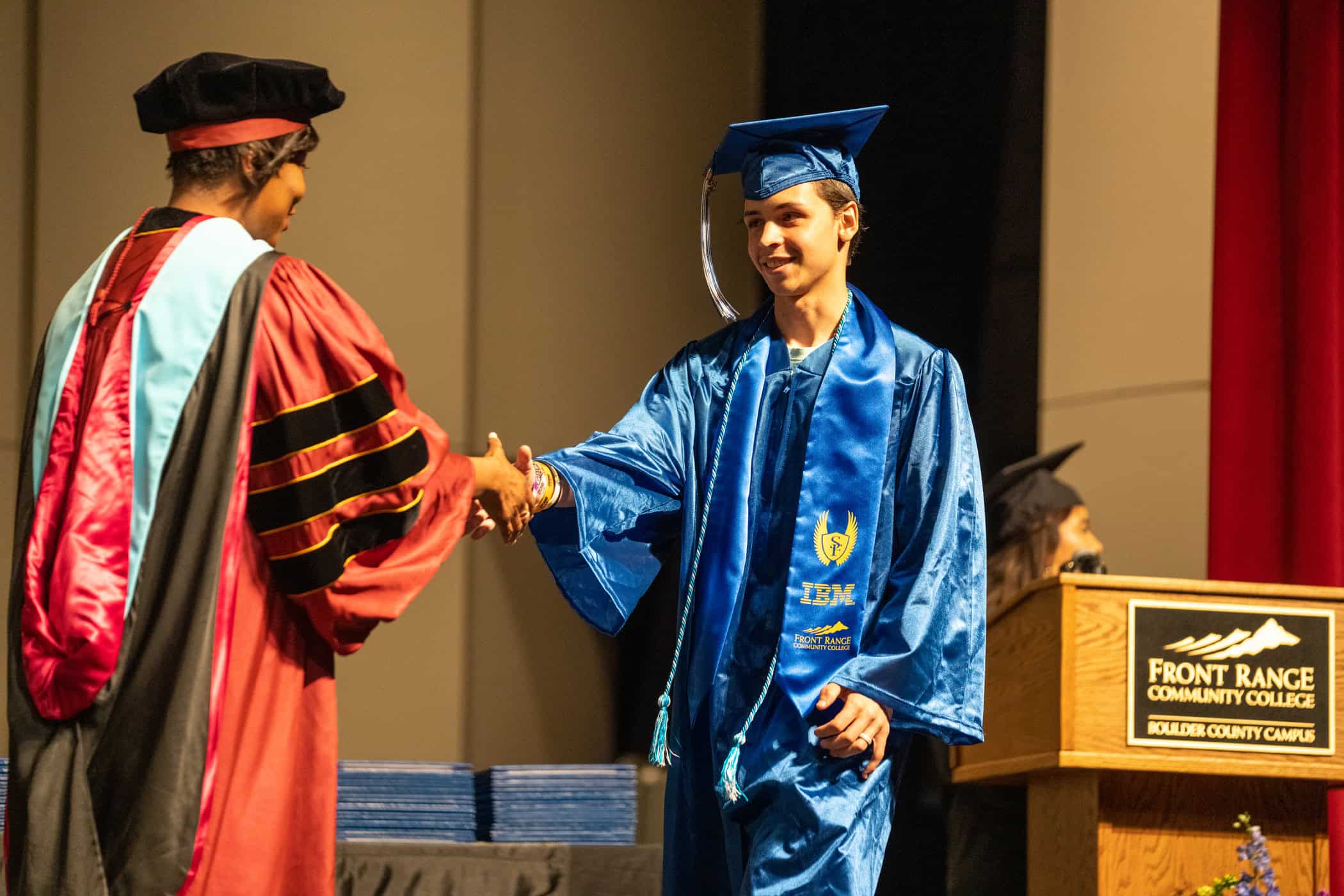
The moment is thrilling: high school seniors standing at the edge of the stage, their eyes set on the long-awaited moment when they’ll cross and receive their diplomas — a symbol of countless hours of perseverance, dedication, and growth. In the Spring of 2024, 44 Pathways in Technology Early College High School (P-TECH) students crossed the stage, not to collect a high school diploma quite yet, but rather an Associate college degree. This unique journey — one that connects high school and higher education — marks not just the end of one chapter, but the beginning of a future brimming with possibility.
St. Vrain Valley Schools is proud to offer four P-TECH programs, each uniquely designed to set students on a path toward success in high-demand industries. At Skyline High School, FalconTECH has been a pacesetter since 2016, giving students hands-on experience in computer information systems— fields that power the digital world we rely on every day. In 2019, Frederick High School introduced EagleTECH, where students explore the cutting-edge possibilities of biochemistry, from groundbreaking medical research to environmental innovations.
By 2021, Silver Creek High School launched RaptorTECH, immersing students in the high-stakes, ever-evolving world of cybersecurity — an essential field in an increasingly digital age. Most recently, in 2023, Longmont High School debuted TrojanTECH, where students are gaining the skills to thrive in today’s dynamic and competitive business industries. Each program provides students the opportunity to build real-world skills, earn an Associate degree at no cost to them through programs at either Front Range Community College or Aims Community College, and step confidently into their future. With opportunities growing and learning styles evolving, P-TECH programs are creating a clear pathway for high school students to graduate with two years of college and a cutting edge advantage to the beginning of their next journey reshaping the future for high school students.
The History and Outcomes of P-TECH
St. Vrain Valley Schools embarked on an ambitious journey back in 2016 with the start of the P-TECH program at Skyline High School, the first program of its type in Colorado. Brandon Shaffer, Executive Director of P-TECH in the District, states “P-TECH directly targets the skills gap by aligning education with industry needs. P-TECH integrates real-world experiences from day one. Students work on industry-driven projects, gain exposure to workplace environments through mentorships and internships, and develop critical skills like problem-solving and collaboration, which are essential in today’s job market.”
RaptorTECH student Kaylee Crouthamel exemplifies this initiative. This past summer Kaylee completed an internship at Zivaro, an IT consulting firm, worked on projects involving the company’s Security Information and Event Manager (SIEM), Reflecting on her experience, Kaylee shared, “This internship gave me insight into the industry and allowed me to learn from professionals across different departments. It was a chance to understand how a company like Zivaro operates and how my role fits into the bigger picture.” Kaylee had a big emphasis on her professional skills that she has gained through this process, “I think the way I have developed my professional skills through this program has been invaluable to my future endeavors. I’ve made countless connections that I can reach out to about job opportunities or support, and I have a much better understanding overall of the field I want to pursue and the options that are available to me.” She is hoping to enter the field of Cybersecurity once she graduates with her Associate of Applied Science in Cybersecurity.
Throughout the Summer of 2024, 83 P-TECH students were hired as interns by dedicated industry partners and local companies. These internships consist of 136 hours of work, while also being enrolled in a 3 credit college course. Over 280 P-TECH students have collectively earned over $500,000 through internships.
Brandon Shaffer, states “P-TECH directly targets the skills gap by aligning education with industry needs. P-TECH integrates real-world experiences from day one. Students work on industry-driven projects, gain exposure to workplace environments through mentorships and internships, and develop critical skills like problem-solving and collaboration, which are essential in today’s job market.”
FalconTECH alumni Karis Green found that she was able to benefit the most from the time that she had spent at IBM. She stated “Being around other working professionals and seeing the amount of options available in the IT world, was infinitely valuable.” Karis still keeps in touch with her mentor from the P-TECH program to this day. She had emphasized that the P-TECH program really helped her with all her soft skills in the professional world, and that through the P-TECH program she was able to gain professional exposure early, making her transition into the workplace a much less abrupt one. Through the P-TECH job fair Karis was able to get a position as an ASE (Associate Solutions Engineer) in CSAP (Cisco Sales Associate Program). She later was able to work up to her current position as a Cisco Meraki Solutions Engineer. As these students’ stories demonstrate, the P-TECH program is transforming the lives of St. Vrain Valley students one student at a time.
Stan Litow, creator of the P-TECH program, described the program as affordable, widely supported, and highly effective. “It’s not extremely costly, it has strong backing from key stakeholders, and there is solid data showing its impact and cost-effectiveness,” says Litow. With about 400 industry partners worldwide, P-TECH offers students the chance to earn both a high school diploma and an associates degree through dual enrollment, allowing them to complete college-level courses while still in high school. Litow was passionate about these students gaining the opportunity to have structured workplace visits, mentors from an industry partner, paid internships and all of the above integrated.
High School
Skyline High School
Frederick High School
Silver Creek High School
Longmont High School
Program
Computer Science
BioScience
Cybersecurity
Business
Degree
Associate of Applied Science -Computer Information Systems
Associate of General Studies – BioScience
Associate of Applied Science -Cybersecurity
Associate of Arts – Business
Community College Partner
Front Range Community College
Aims Community College
Front Range Community College
Front Range Community College
Industry Partners
IBM, ANM, CGI, District Technology Services
Agilent Technologies, KBI BioPharma, AGC Biologics, Corden Pharma, Umoja Biopharma
City of Longmont, Longmont Chamber, Longmont Downtown Development Authority, Longmont Economic Development Partnership, Hispanic Chamber of Boulder County
Year Founded
2016
2019
2021
2023
Current Enrollment (24-25)
173
123
93
55
College Graduates
139
24
N/A*
N/A*
Internships
230
36
22
N/A*
High School Graduation Rate
100%
100%
N/A*
N/A*
Students that Continue to 4-year College
56%
67%
N/A*
N/A*
*Data not available
Student Perspectives: Real World Learning
St. Vrain Valley Schools P-TECH programs are shaping the future for the next generation. Schools are now thriving with the access that students have to commit themselves to the road of achieving their associates degree coming out of high school.
“P-TECH has influenced my career goals because it is making me see the different paths I can take and how they will benefit my future,” said TrojanTECH student Abby Mares.Eager to shape her future in a business-centered career, Abby decided to join the newest P-TECH program in the district that is focused on business. “I have also seen how much being in P-TECH will give me an advantage whenever I try to get into colleges and future jobs.” Abby is very future goal oriented, with a clear ambition of becoming a marketing manager after graduation. “We have been seeing how companies market their products and for me that seems like a very cool and beneficial job to do,” said Abby. “I would like to study and work in something business and financial related, having the experience of being in P-TECH will be a great advantage.” By leveraging the opportunities provided by the P-TECH program in St. Vrain Valley Schools she is not only preparing herself for a career in the business world but also positioning herself for academic success.
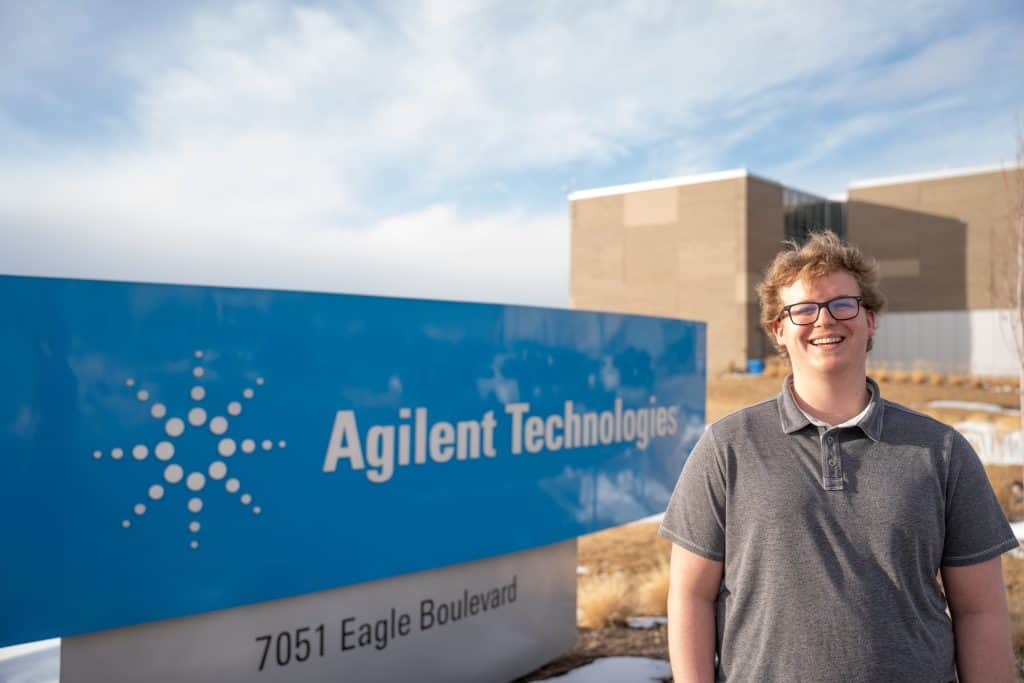
All students have different experiences with the P-TECH program, but what this innovative program is sure to do is bridge the gap between education and industry. EagleTECH alumni Gabriel Zierleinshares his unique experience. Gabriel, who worked at Agilent Technologies as an intern, feels that the EagleTECH program helped him find the courage to take a deep dive into the real world, as he emphasized his personal and professional development through the P-TECH program that provides hands-on and in person learning. Gabriel is now a Manufacturing Chemist for Agilent, the same company he interned with.
First Generation Students
55%
Female P-TECH Students
48%
Second-Language Learners
41%
Ethnically Diverse
54%
Total Number of Industry Certifications (A+, Network+, Security+, Cloud+)
24
Total number of college credits earned
21,071
Total number of Associate degrees earned
163
Total number of Certificates earned from Community College
285 (Business Specialization: 149, Programming: 88, Web Developer: 48)
Data compiled for all St. Vrain P-TECH programs since 2016
The St. Vrain Valley Schools Model
St. Vrain Valley Schools are incredibly unique in the way they translate the P-TECH educational model into pathways of opportunities including internships, mentorships, and overall connections. Louise March, P-TECH Coordinator, stated “the goal is to take students and get them workplace ready.” The district has created a model that not only prepares students for college but sets them up with connections and pathways into the workforce. P-TECH fast-tracks this through direct industry involvement. By the time students graduate, they’ve built a robust portfolio of professional skills, certifications, and real-world experience, giving them a head start in their careers or higher education. It’s not just about earning a degree; it’s about creating opportunities that set students apart.”
St. Vrain Valley Schools P-TECH program has not only transformed the lives of students in the school district with various opportunities, but has reinforced a reputation as a leader in academic excellence by design.
Altona Middle School and Flagstaff Academy have been recognized by Colorado Association of Middle Level Education (CAMLE) as 2025 Colorado Trailblazer Schools to Watch. The middle schools are two of five selected in Colorado and will be recognized nationwide at the National Schools to Watch Conference in June 2025 in Washington, DC.
Selection is based on a written application that requires schools to show how they met the criteria developed by the Forum. State teams organized by the Colorado Schools to Watch program conduct site visits in order to affirm that they have indeed met the rigorous requirements of the award. These teams observe classrooms, interview administrators, teachers, and parents, review achievement data, suspension rates, instructional quality, and student work. Schools are recognized for a three-year period, and at the end of three years must repeat the process in order to be re-designated.
“Receiving the Schools to Watch designation for the third time is an incredible honor for Altona Middle School,” said Altona Middle School principal Jeremy LaCrosse. “This recognition validates our staff and teachers’ hard work and dedication to excellence, as demonstrated by the positive feedback we received from students and parents during the evaluation process. Our students feel empowered and engaged, and our parents appreciate the strong sense of community and rigorous learning opportunities we provide. We are proud to create an environment where our kids are excited to learn each day and will continue to prioritize their growth and success through engaging and meaningful learning experiences.”
Silver Creek High School in partnership with the Asian-Pacific Association of Longmont (A-PAL) invites the community to its 15th Annual Lunar New Year Celebration on Saturday, February 22, 2025, at Silver Creek High School (4901 Nelson Road, Longmont, CO). This free and public event runs from 2:00 to 5:00 p.m., with doors opening at 1:30 p.m.
The Lunar New Year is a significant cultural celebration across many Asian communities. This year, the event will honor the Year of the Snake with an afternoon of performances, cultural activities, and educational experiences designed to bring the Longmont community together.
A Celebration of Culture and Tradition
The event will feature a dynamic lineup of traditional and contemporary performances, including:
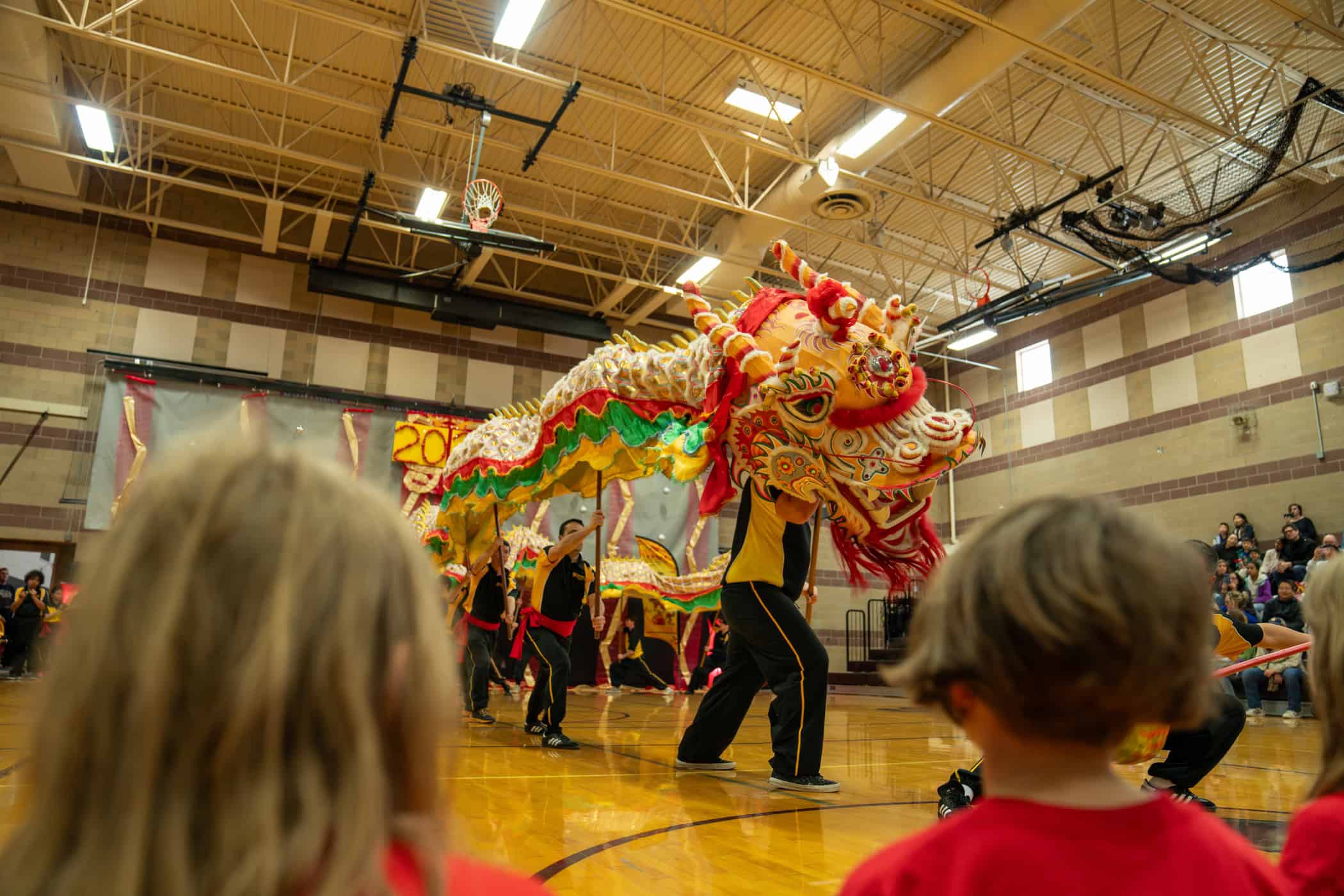
Lion Dance – A vibrant and symbolic tradition marking the start of the festivities.
Martial Arts Demonstrations – Showcasing discipline and skill from various Asian traditions.
K-Pop and Bollywood Dance – A fusion of modern and cultural influences.
Taiko Drumming – A powerful performance of traditional Japanese percussion.
Cultural Music and Dance – Featuring performances from diverse Asian communities.
Interactive Cultural Booths – Hands-on activities, games, and educational exhibits.
Asian Food Sampling – Offering flavors from across Asia.
In addition to the performances in the main gym, cultural music and dance performances will be held in the auditorium at 3:30 p.m., and cultural games will take place in the small gym following the main performances.
A Community Effort Rooted in Education and Leadership
Beyond celebrating culture, the Lunar New Year event serves as a mentorship and leadership opportunity for students throughout St. Vrain Valley School District. Each year, 125 to 150 students participate as event organizers and volunteers, gaining valuable experience in event planning, leadership, and public relations.
The event also serves as a Capstone Project from the Silver Creek Leadership Academy, allowing students to take on leadership roles and contribute to the success of a large-scale public event. Students from the following schools will be involved:
Silver Creek High School
Niwot High School
Altona Middle School
Westview Middle School
Flagstaff Academy Charter School
Skyline High School
Longmont High School
Event Details and Attendance Information
Date: Saturday, February 22, 2025
Time: 2:00 – 5:00 p.m. (Doors open at 1:30 p.m.)
Location: Silver Creek High School, 4901 Nelson Road, Longmont, CO
Admission: Free and open to the public
About A-PAL
Founded in 2010, the Asian-Pacific Association of Longmont (A-PAL) works to build bridges between Longmont’s Asian-American and immigrant communities and the broader community. Through events like the Lunar New Year Celebration, A-PAL fosters cross-cultural understanding and engagement while empowering local youth through hands-on leadership opportunities.
Hosted by members of St. Vrain’s Priority Programs and kindergarten teachers, this event is designed to empower families with valuable insights and strategies for literacy development. Families will learn about the Colorado READ Act, including key literacy terms and available supports in St. Vrain. Kindergarten Family Literacy Night will also provide practical approaches to strengthening early reading skills through everyday conversations at home and will explore available digital tools that enhance literacy growth.
The Longmont Library team will also share community resources to support young readers.
St. Vrain Valley Schools looks forward to a collaborative evening focused on building strong, confident readers.
Erie High senior Kayla Evans and Niwot High junior Katelin VonFeldt are looking to help NASA address isolation challenges for astronauts by combining virtual reality and sensory-based memory triggers with exercise.
They’re creating the project for NASA HUNCH, a program that engages high school and college students in real-world research and development for space missions.
St. Vrain’s Parent University program provides training, information, and resources to parents and caregivers in order to support the well-being and success of their children.
All spring sessions are from 5 p.m. – 6:30 p.m. and will be held virtually. Spanish translation services will be available.
Join us on Zoom, Feb. 20 from 5-6:30 p.m. Adolescent RISE with Nicholas Thompson, Licensed Clinical Social Worker
Adolescent RISE is a presentation that takes a fun and informative look at the developmental period of adolescence (ages 10-25). It includes debunking myths about adolescence, understanding the four qualities of adolescence (risk taking, identity formation, social reorientation, and emotional intensity), and learning about the tweenage brain. With this foundation established, ways to better support our kids will be discussed.
Please register online to assist with planning purposes.