
Gathered around a container of pond water, Longmont Estates Elementary second graders leaned closer. They slowed down, watching intently as they discovered the small creatures living in the water. Along the pond’s shore, a snapping turtle sunning itself inspired another quiet gathering. Students observed in awe, careful to leave it undisturbed.
These moments of discovery shaped a recent field trip to Sandstone Ranch, where students explored how the natural world connects to what they are learning in their classrooms.
“This field trip connects with second grade’s study of habitats and plant and animal adaptations,” said Kyle Houghton, a second-grade teacher at Longmont Estates Elementary.
Longmont Estates is one of 25 schools participating in the program, which is offered at no cost to schools. According to Mike O’Toole, St. Vrain Valley Schools’ science coordinator, more than 12,000 second graders have participated over the past 15 years. The experience gives students an opportunity to explore the natural resources within their own community, supported by City of Longmont volunteers who share their time and love of nature.
Students rotated through four stations, each offering a different way to investigate the landscape and the living things that depend on it.
At the water station, students examined pond life and learned how wildlife populations can provide clues about water quality. A container of pond water became an opportunity to pause, look closely, and discover life they might otherwise have overlooked.
Another station connected the landscape to the area’s geological history. Students learned about Sandstone Ranch’s rock formations while practicing their cardinal directions with the help of a memorable phrase: “Never Eat Soggy Waffles.”

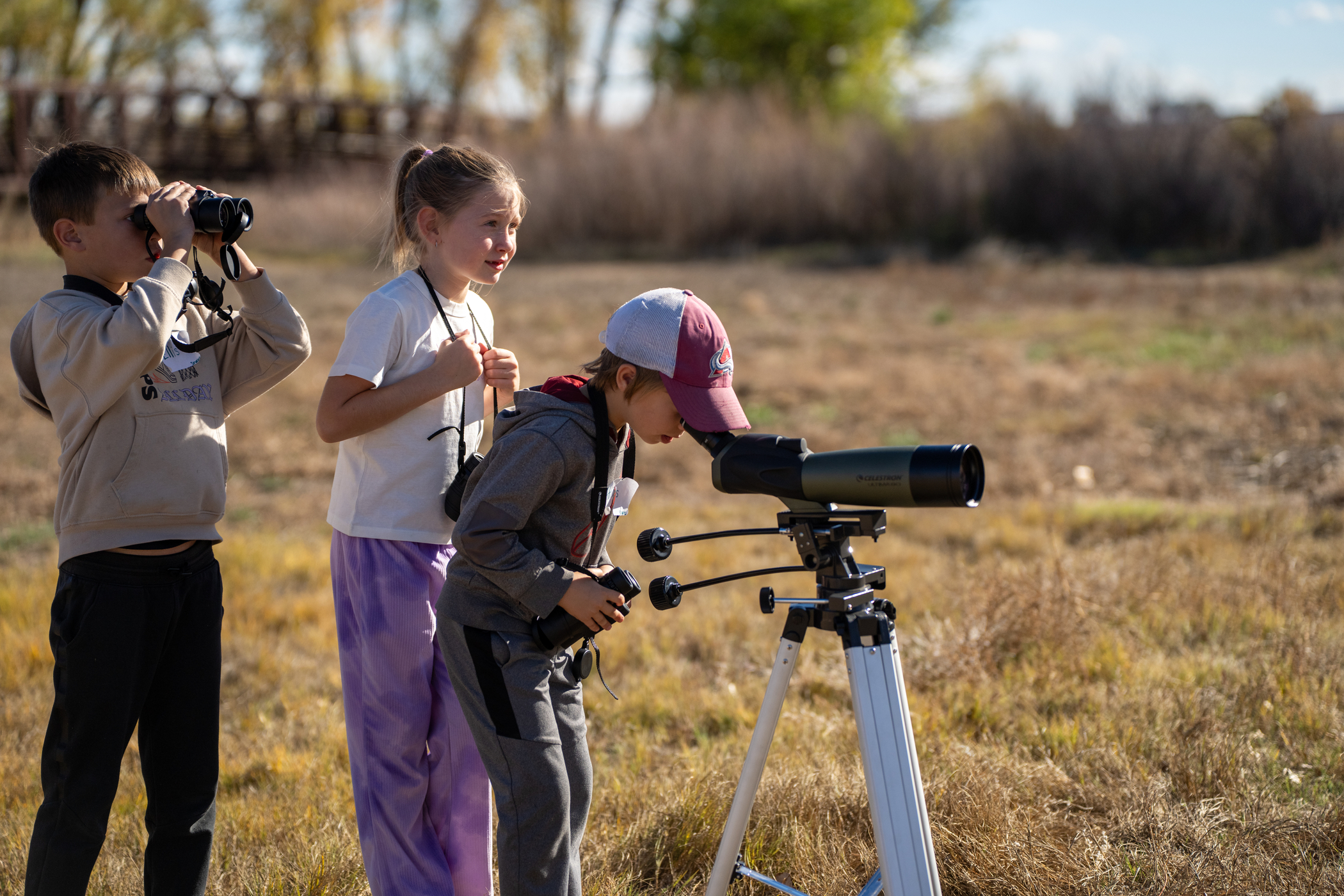
Binoculars offered a closer look at another part of the habitat. Students searched for bird nests in trees and along cliffs, learning how birds build shelters and use the landscape to meet their needs.
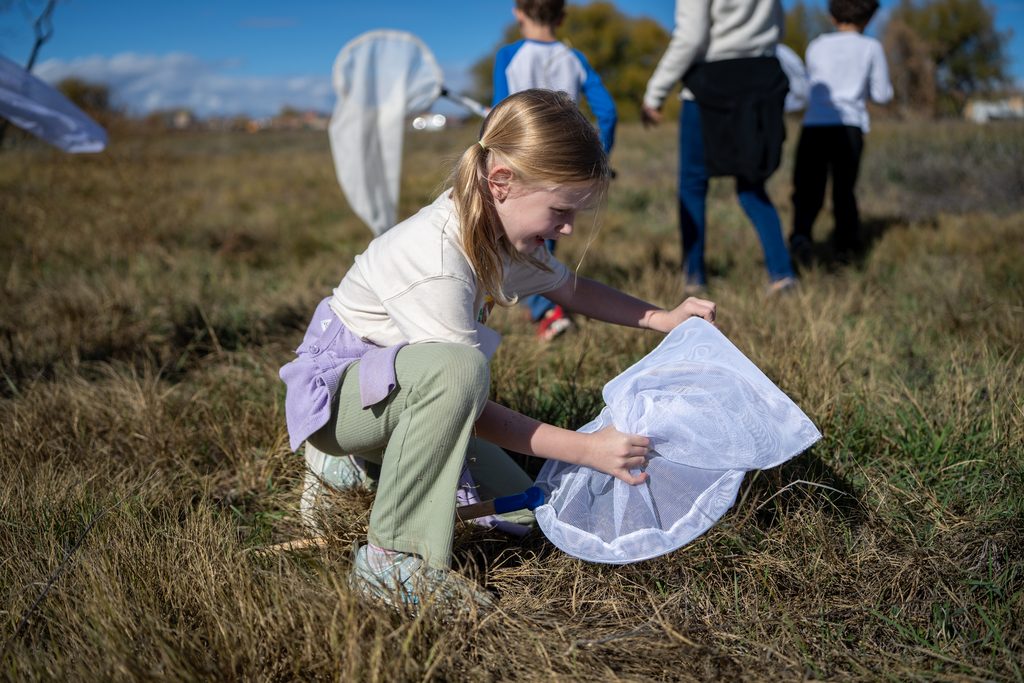
At the barn and surrounding fields, students considered what life might have been like when the area was settled and explored ways to find food. They learned how different types of scat can help identify and track animals, swept nets through the grass to catch grasshoppers, and had the opportunity to try commercially prepared, cooked and seasoned crickets.
For many, tasting a cricket was simply a chance to try something new. A few particularly enthusiastic students enjoyed the experience enough to ask for more.
Throughout the day, volunteers helped students connect their discoveries to a larger understanding of the environment, encouraging them to observe carefully and respect the wildlife around them. O’Toole emphasized his appreciation for the volunteers and the value of helping children explore the community they call home.
For the second graders, that exploration brought classroom science into focus. Whether peering into pond water, locating a nest through binoculars, or quietly watching a turtle, students experienced the joy of discovering how much there is to learn close to home.