
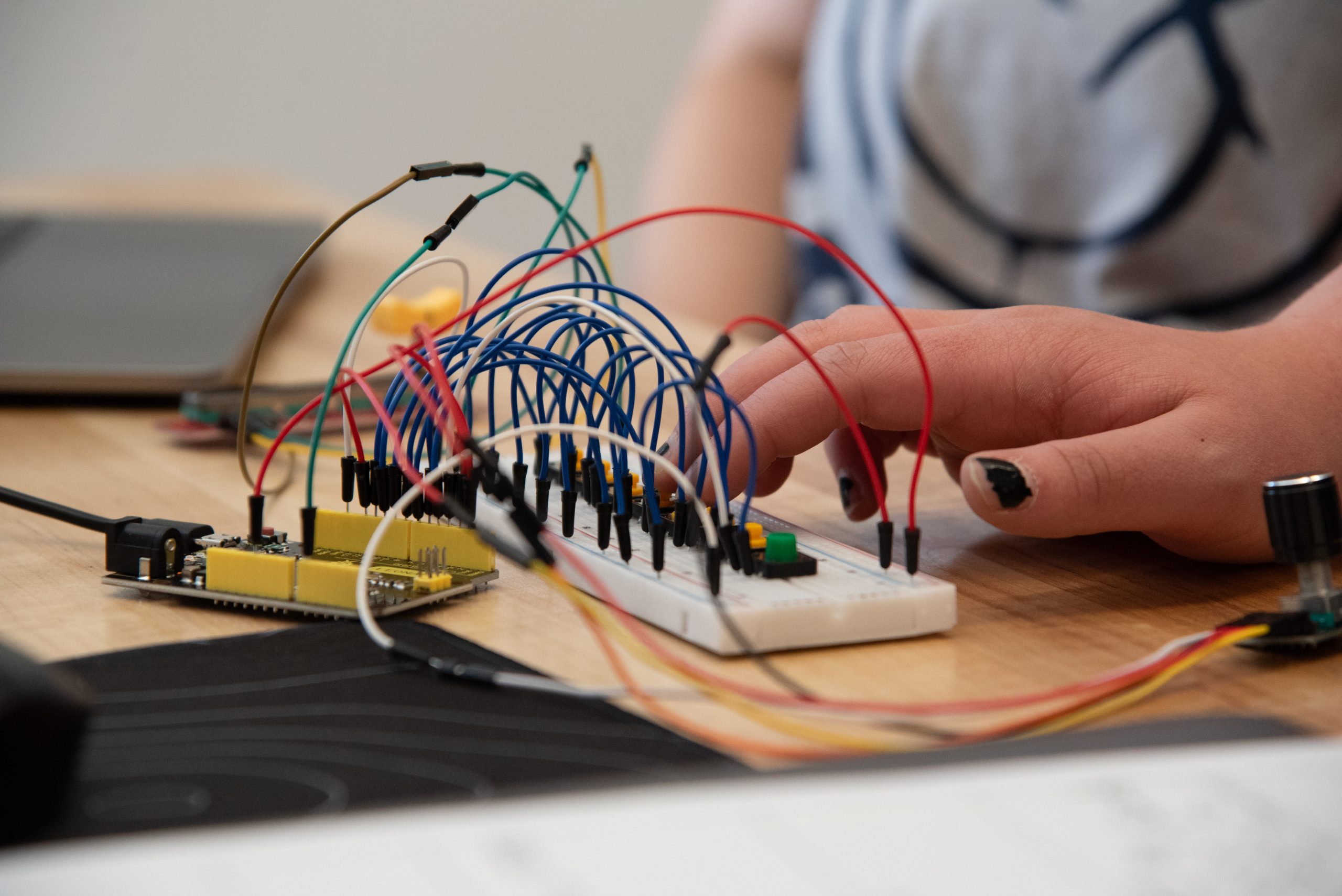
En el Centro de Innovación de las Escuelas del Valle de St. Vrain, la música no solo empieza con las notas de una partitura o con los instrumentos tradicionales; también puede surgir de los cables, el código y la imaginación.
Una mañana reciente, los alumnos de la asignatura «Introducción a la innovación musical» se reunieron alrededor de mesas repletas de microcontroladores Arduino Leonardo, cables de colores, sensores y prototipos fabricados a mano para una sesión final de evaluación. La tarea consistía en diseñar y construir sus propios instrumentos musicales.
A lo largo de las últimas seis clases, utilizando una combinación del hardware de Arduino y el software Logic Pro, los alumnos transformaron sus creaciones en controladores MIDI (Interfaz Digital de Instrumentos Musicales) capaces de producir y manipular el sonido de forma digital. Sus proyectos se basaban en el proceso de pensamiento de diseño, por lo que cada instrumento debía dar respuesta a un reto específico que ellos mismos habían identificado.

Desde el concepto hasta el prototipo, los alumnos desarrollaron sus instrumentos utilizando herramientas como Gemini para ayudarles a escribir y solucionar problemas en su código de Arduino. Este uso de la inteligencia artificial permitió a los alumnos centrarse en la creación rápida de prototipos sin necesidad de tener conocimientos previos de programación. El resultado fue una serie de soluciones ingeniosas a retos musicales reales, inspiradas en los marcos musicales e intereses propios de los alumnos.
En uno de los puestos, Clara Lehmer y Mason Morrow, estudiantes de primer curso de la Escuela de Ingeniería de la Universidad de Longmont High , hicieron una demostración de un ecualizador controlado por un sensor ultrasónico, que les permitía moldear el sonido con el movimiento de sus manos, de forma similar a un theremín. En otro puesto, una serie de botones asignados a notas musicales permitía cambiar entre tonalidades y acordes, con el objetivo de hacer que los fundamentos de la música resultaran más accesibles para los principiantes, incluidas las personas mayores o aquellas con limitaciones físicas.
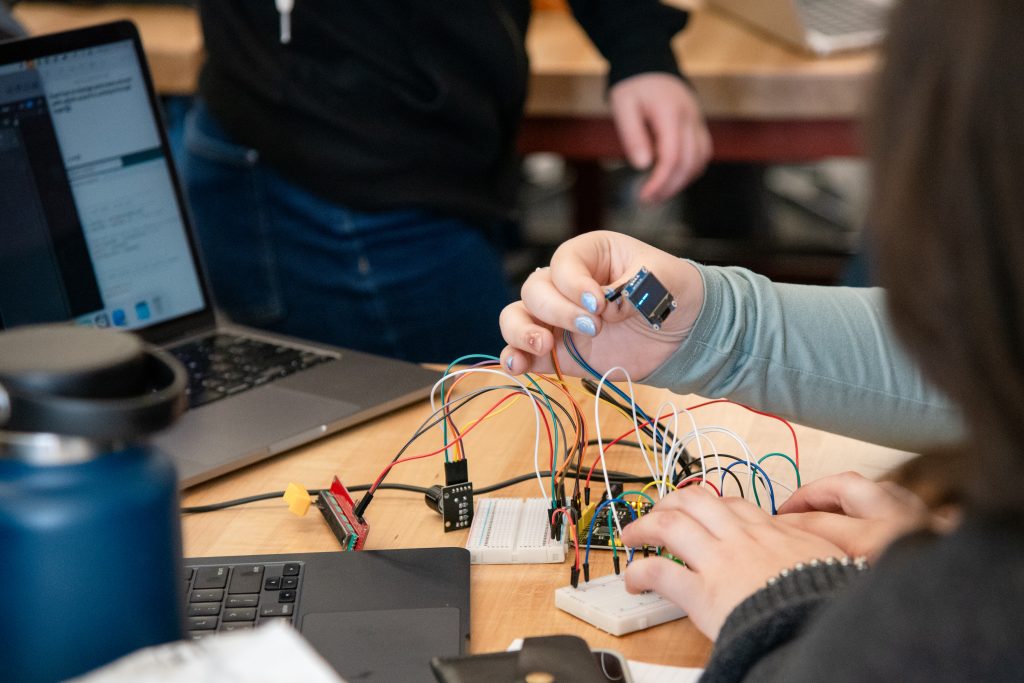
Para Alexis Bonilla, un estudiante de segundo curso de la Escuela « Skyline High », el proyecto le abrió nuevas formas de pensar sobre la música. «Me pareció que me ofrecía un montón de posibilidades creativas a pequeña escala», afirmó.
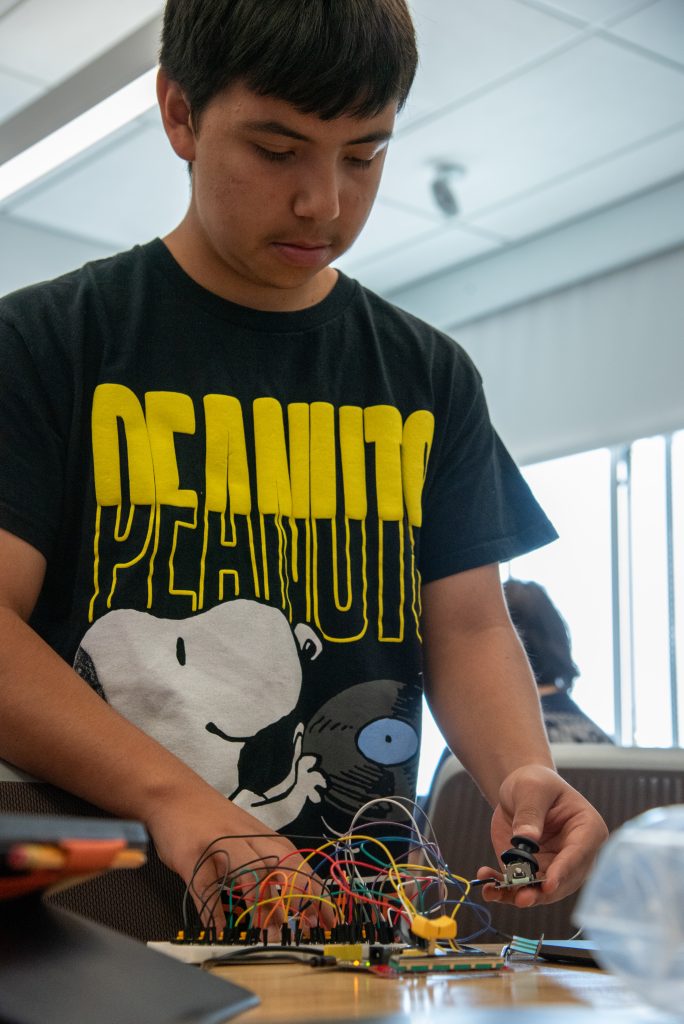
Otros proyectos surgieron directamente de la experiencia personal. Tristan Jones y Nove Cleveland, ambos bajistas, diseñaron un pequeño instrumento similar a un teclado que les permite practicar la lectura a primera vista y aprender melodías de oído sin tener que llevar consigo un bajo de tamaño normal. Cerca de allí, Spencer Gutiérrez y Nayeli Ceja, ambos de la Escuela « Frederick High », desarrollaron un controlador intuitivo para resolver un problema al que se han enfrentado en sus actuaciones en directo. Spencer, que toca en una orquesta de foso, explicó que puede resultar difícil ajustar rápidamente la configuración de los instrumentos informáticos durante un espectáculo. Su solución: un sistema de control simplificado diseñado para ofrecer rapidez y facilidad de uso.
«Es muy gratificante crear algo que se adapta exactamente a lo que necesitas», afirmó Spencer.
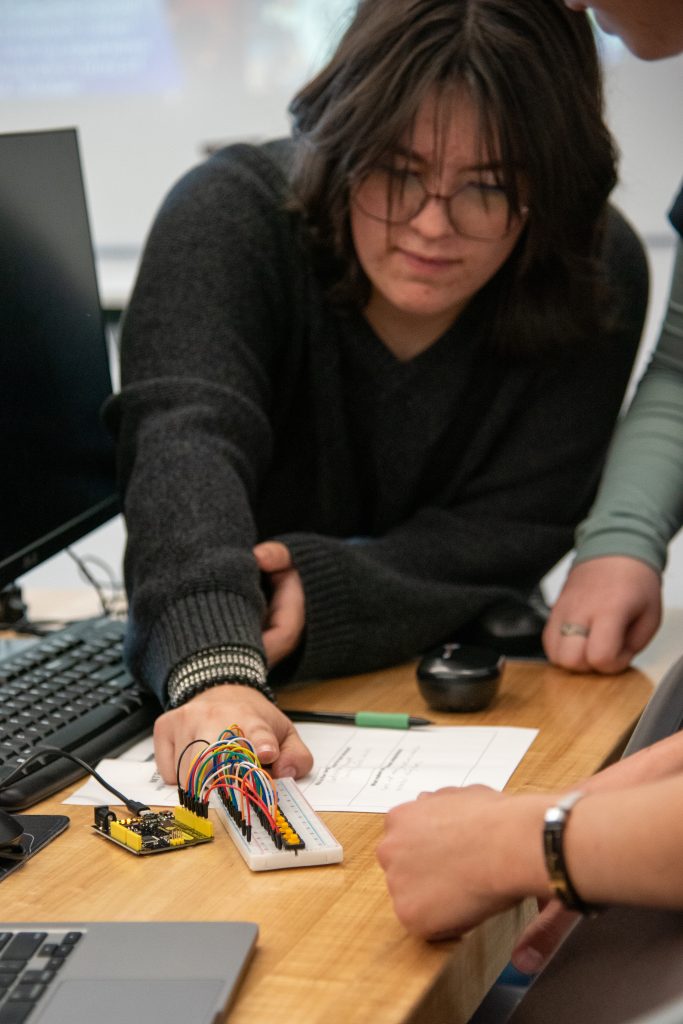
El programa «Music Innovation Pathway» se sustenta en tres pilares: la industria musical, la educación musical y el « STEM » de la música y el sonido. Kyle Liss, director del programa «Music Innovation», afirmó que el proyecto se creó específicamente para abordar este último aspecto. «Quería un reto de diseño que potenciara la creatividad de los estudiantes y que, al mismo tiempo, mantuviera una esencia musical, al tiempo que se relacionara con el « STEM » de la música y el sonido».
Liss añadió que le había impresionado la variedad de proyectos y soluciones que había presentado cada grupo, y que se trata de una de las pocas —y, que él sepa, la única en la actualidad— estructuras de educación primaria y secundaria que incorporan retos de diseño rápido de instrumentos Arduino/MIDI dentro de un programa distrital en marcha.
Al combinar la creatividad humana con la tecnología, nota a nota, línea a línea o incluso instrumento a instrumento, estamos deseando escuchar qué nuevas ideas se les ocurrirán a estos alumnos.