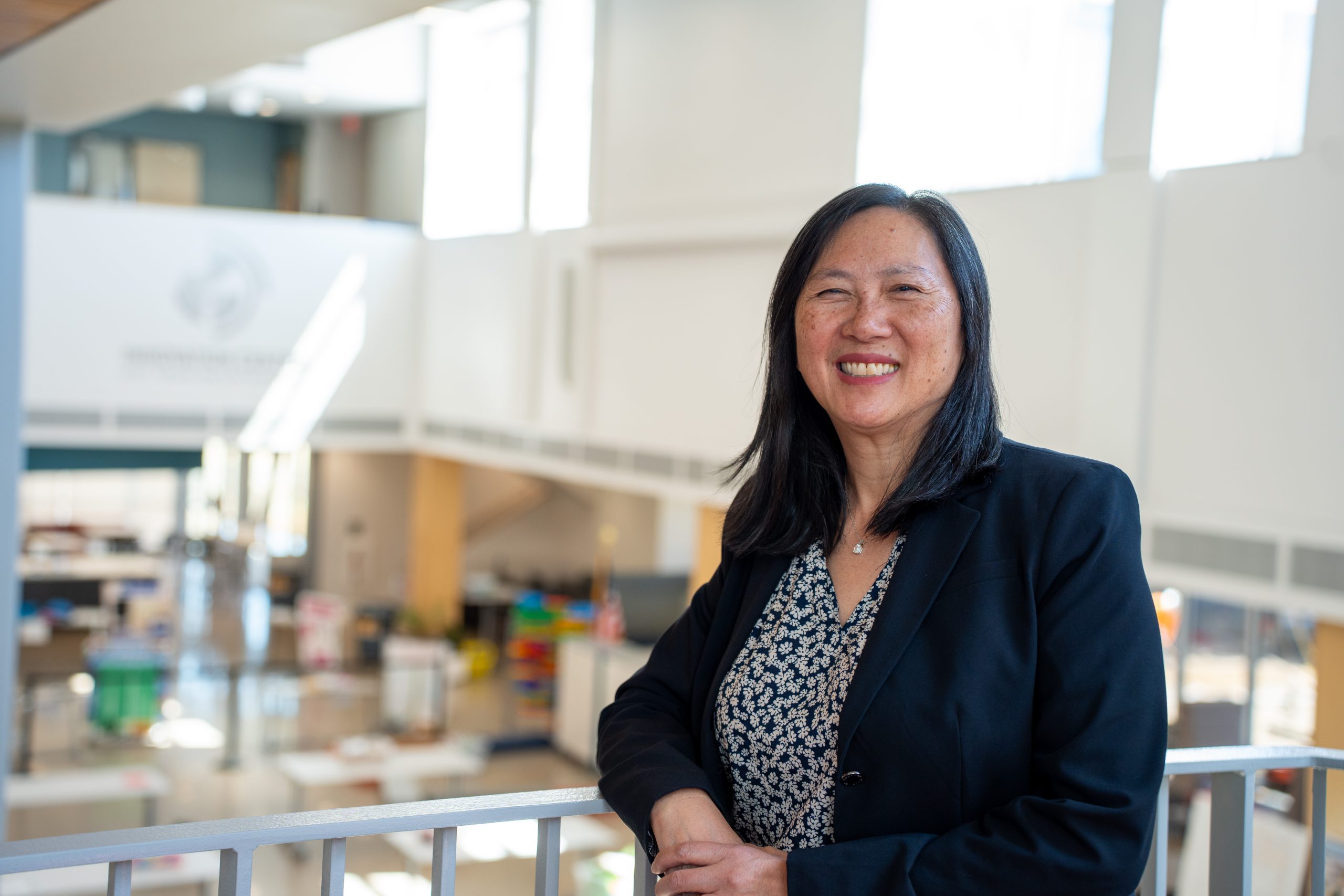
Mai Vu, AI Program Coordinator at the Innovation Center, first learned about the Presidential AI Challenge over the summer. Designed to encourage both educators and students to address real-world community issues while using artificial intelligence, the challenge immediately caught her attention. Encouraged by colleagues and friends to participate, Vu saw it as an opportunity to bring her own perspective on responsible AI use to a broader stage.
That perspective had already been taking shape in her work. As AI becomes increasingly embedded in everyday products, including children’s toys, Vu began questioning not just what AI can do, but what it should do. “As an AI program manager, I’m very pro using AI but at the right place, at the right time, and with the correct guardrails,” she explained.
Those “guardrails” became the foundation of the project she submitted to the challenge: an interactive AI puppet program designed to teach students how to engage with artificial intelligence safely and thoughtfully. In the program, students create an online puppet by assigning it specific attributes and characteristics. From there, they must define boundaries for interaction – preventing the puppet from sharing personal information such as age, location, or contact details. A token system further limits how many questions can be asked, encouraging intentional and mindful use rather than unlimited access.
By connecting creativity with digital responsibility and digital literacy, Vu’s software directly reflected the mission of the Presidential AI Challenge. Her project advanced to the state round, where she was selected as one of ten finalists to compete at the regional level. Vu’s work continues to gain recognition and momentum beyond the competition. . This summer, the AI puppet program will be integrated into the Innovation Center’s Best Friend Algorithm camp, where students will create both physical sock puppets and their digital AI counterparts. Through these hands-on experiences, students will begin to understand not only how AI works, but how to use it responsibly.
Vu hopes this approach helps shift the conversation around AI, especially for younger learners. “I think when people think about AI, especially with younger kids, it’s often very black and white,” she said. “But AI is embedded in so many of the things they interact with every day. I want them to understand how those things are made and to use them thoughtfully.”