Mountain View Elementary Earns Tree Campus Recognition with Arbor Day Celebration

On Friday, April 24, Mountain View Elementary celebrated Arbor Day with a school-wide event that highlighted hands-on student learning and community collaboration. The day began with an all-school assembly, where student council members performed skits centered on environmental responsibility, followed by a unified musical performance. Shortly after, students moved outdoors for a tree planting ceremony recognizing the school’s participation in the Arbor Day Foundation’s Tree Campus K-12 program, a national initiative that supports meaningful, sustainable environmental efforts.
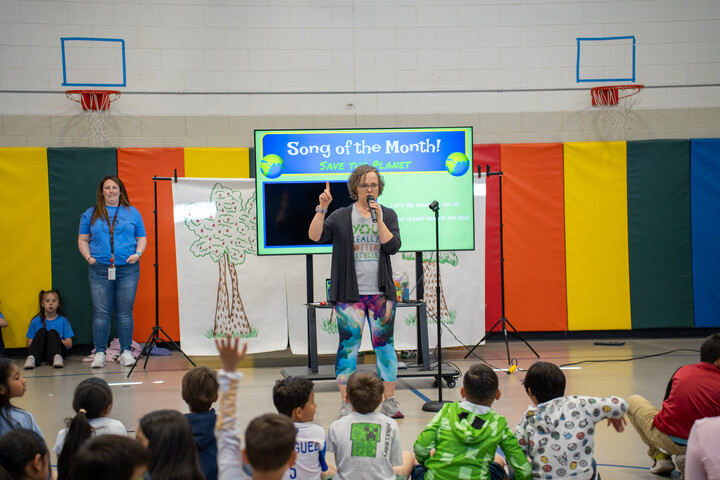
A teacher leads a music session about environmental awareness in a colorful gym, with students engaged on the floor.
Students at Mountain View Elementary sing during their Arbor Day celebration.

Mountain View earned its Tree Campus designation by meeting four core goals: establishing a student- and staff-led Tree Campus team, implementing a school-wide education plan, providing hands-on learning opportunities, and hosting an Arbor Day observance. First grade classrooms played a central role in the effort, connecting tree-focused learning to grade-level standards through field experiences at Boulder Community Gardens, literacy activities centered on plant life cycles, and student writing projects.
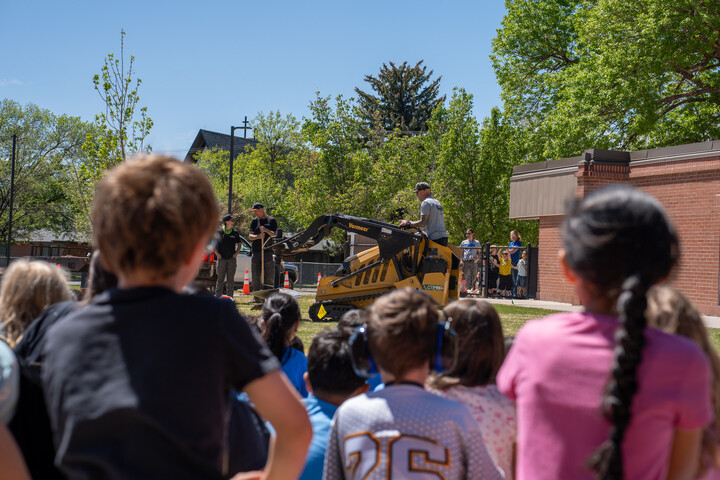
Children watch a demonstration with heavy machinery in a schoolyard on a sunny day. Trees and a building are in the background.
Students at Mountain View Elementary watch as Blue River Forestry and Tree Care begins to plant the school’s newest tree.

Students also engaged in stewardship through hands-on experiences, including contributing to a tree inventory in which they identified and recorded all the trees on the Mountain View campus. The celebration extended beyond campus, with Mountain View’s student council distributing wildflower seeds for students to plant at home, reinforcing the importance of environmental care within the broader community.
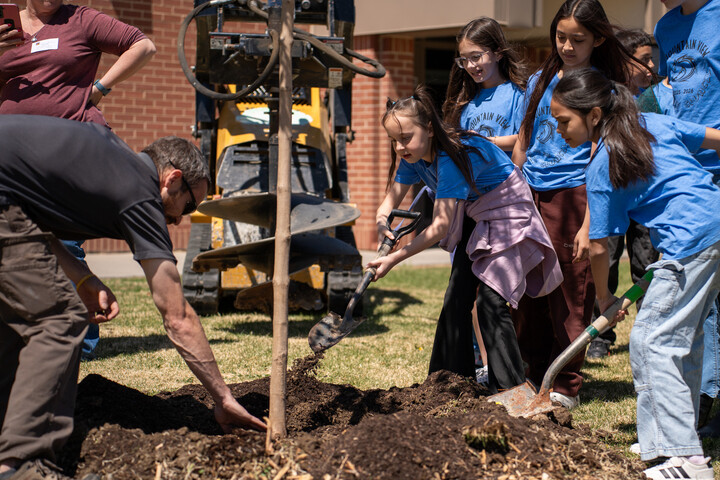
A group of children in blue shirts help plant a tree, using shovels and tools in a sunny outdoor setting.
Student council members at Mountain View help to finish planting the school’s newest tree.

The tree planting at Mountain View was made possible through coordination led by the district’s Building Services Department in partnership with Blue River Forestry and Tree Care, who provided the tree to plant. St. Vrain’s Groundskeeping Department also played a key role in planning and carrying out the planting on the north side of the campus.
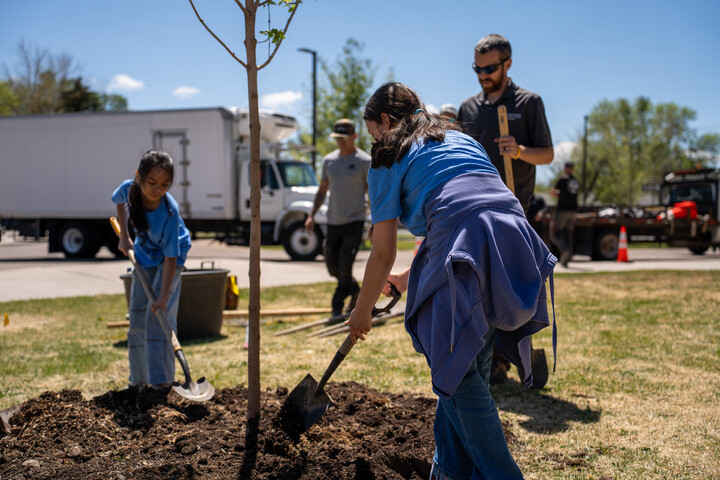
Two children are planting a tree while adults assist in a community gardening effort on a sunny day.
Students add dirt around Mountain View Elementary’s newest tree.

St. Vrain Valley Schools Earns National Recognition as a Best Community for Music Education for Sixth Consecutive Year

Colorful graphic celebrating St. Vrain Valley School District as a 2026 Best Community for Music Education.

St. Vrain Valley Schools has been recognized by the NAMM Foundation as one of the nation’s Best Communities for Music Education, marking the district’s sixth consecutive year receiving this prestigious honor.

This national designation celebrates school districts that demonstrate exceptional commitment to ensuring all students have access to high-quality music education as part of a well-rounded academic experience. The application process evaluates districts on a variety of factors, including access to certified music educators, advanced degrees held by teaching staff, funding for music programs, equitable access for Title I students, the breadth of music courses and ensembles offered from preschool through twelfth grade, graduation requirements in the arts, and opportunities for districtwide collaboration.

This year, St. Vrain Valley Schools was one of three districts in Colorado to receive this distinction.

“This recognition is a reflection of the hard work, passion, and dedication of our music teachers, who create music communities in their classroom every day, and our building administrators who support them,” said Janay Bird, Director of Fine Arts, Performing Arts, and PE.

Innovation Center Educator Advances in Presidential AI Challenge

Mai Vu, AI Program Coordinator at the Innovation Center, first learned about the Presidential AI Challenge over the summer. Designed to encourage both educators and students to address real-world community issues while using artificial intelligence, the challenge immediately caught her attention. Encouraged by colleagues and friends to participate, Vu saw it as an opportunity to bring her own perspective on responsible AI use to a broader stage.

That perspective had already been taking shape in her work. As AI becomes increasingly embedded in everyday products, including children’s toys, Vu began questioning not just what AI can do, but what it should do. “As an AI program manager, I’m very pro using AI but at the right place, at the right time, and with the correct guardrails,” she explained.

Those “guardrails” became the foundation of the project she submitted to the challenge: an interactive AI puppet program designed to teach students how to engage with artificial intelligence safely and thoughtfully. In the program, students create an online puppet by assigning it specific attributes and characteristics. From there, they must define boundaries for interaction – preventing the puppet from sharing personal information such as age, location, or contact details. A token system further limits how many questions can be asked, encouraging intentional and mindful use rather than unlimited access.

By connecting creativity with digital responsibility and digital literacy, Vu’s software directly reflected the mission of the Presidential AI Challenge. Her project advanced to the state round, where she was selected as one of ten finalists to compete at the regional level. Vu’s work continues to gain recognition and momentum beyond the competition. . This summer, the  AI puppet program will be integrated into the Innovation Center’s Best Friend Algorithm camp, where students will create both physical sock puppets and their digital AI counterparts. Through these hands-on experiences, students will begin to understand not only how AI works, but how to use it responsibly.

Vu hopes this approach helps shift the conversation around AI, especially for younger learners. “I think when people think about AI, especially with younger kids, it’s often very black and white,” she said. “But AI is embedded in so many of the things they interact with every day. I want them to understand how those things are made and to use them thoughtfully.”

St. Vrain’s Unframed Art Show Celebrates Student Creativity Across the District

Community members packed the Boulder County Fairgrounds Exhibition Hall for St. Vrain Valley Schools’ annual Unframed Art Show, a districtwide celebration of student creativity and artistic expression.

The week-long event featured thousands of pieces of artwork from students representing every grade level and school across the district. Families, staff, students, and community members explored a wide range of pieces showcasing both technical skill and creative voice through mediums including ceramics, digital art and photography, drawing, jewelry making, metalwork, mixed media, painting, and printmaking.

A highlight of the week was the Artists’ Night Open House on April 17, where students had the opportunity to share their work with family members, teachers, and peers.

Award winners from this year’s show can be viewed at svvsd.org/artshow.

Innovation Center Students Design Their Own Instruments

At the Innovation Center of St. Vrain Valley Schools, music doesn’t only begin with notes on a page or traditional instruments; it can also start with wires, code, and imagination.

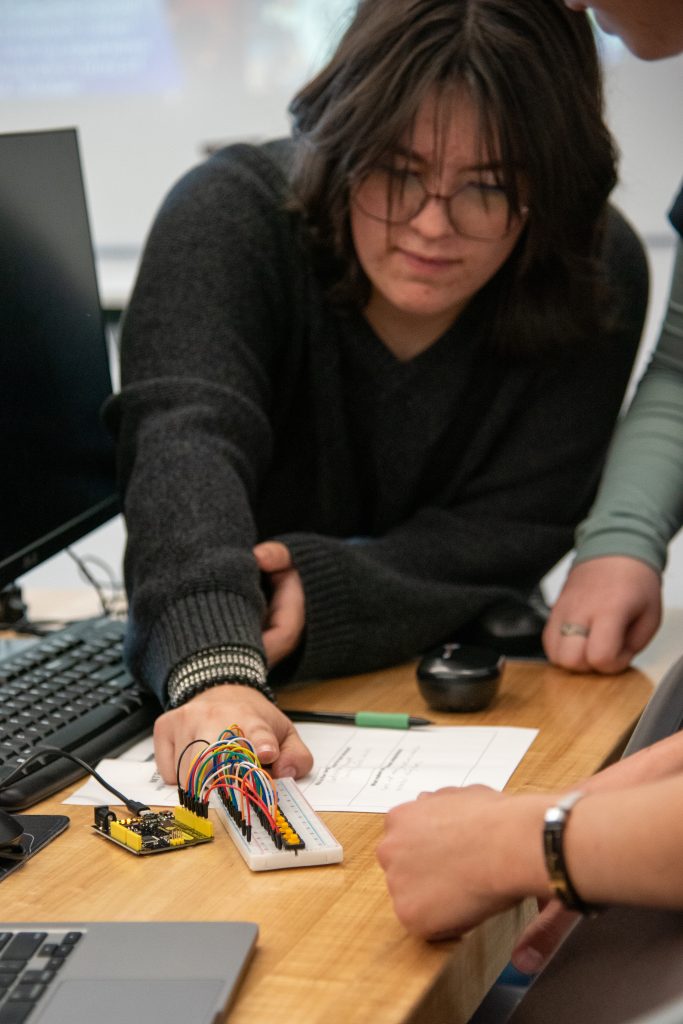
On a recent morning, students in the Intro to Music Innovation class gathered around tables scattered with Arduino Leonardo microcontrollers, colorful wires, sensors, and hand-built prototypes for a culminating feedback session. The assignment: build and design their own musical instruments. 

Over the past six classes, using a combination of Arduino hardware and Logic Pro software, students transformed their creations into MIDI (Musical Instrument Digital Interface) controllers capable of producing and manipulating sound digitally. Their projects were rooted in the design thinking process, so each instrument needed to address a specific challenge they identified. 

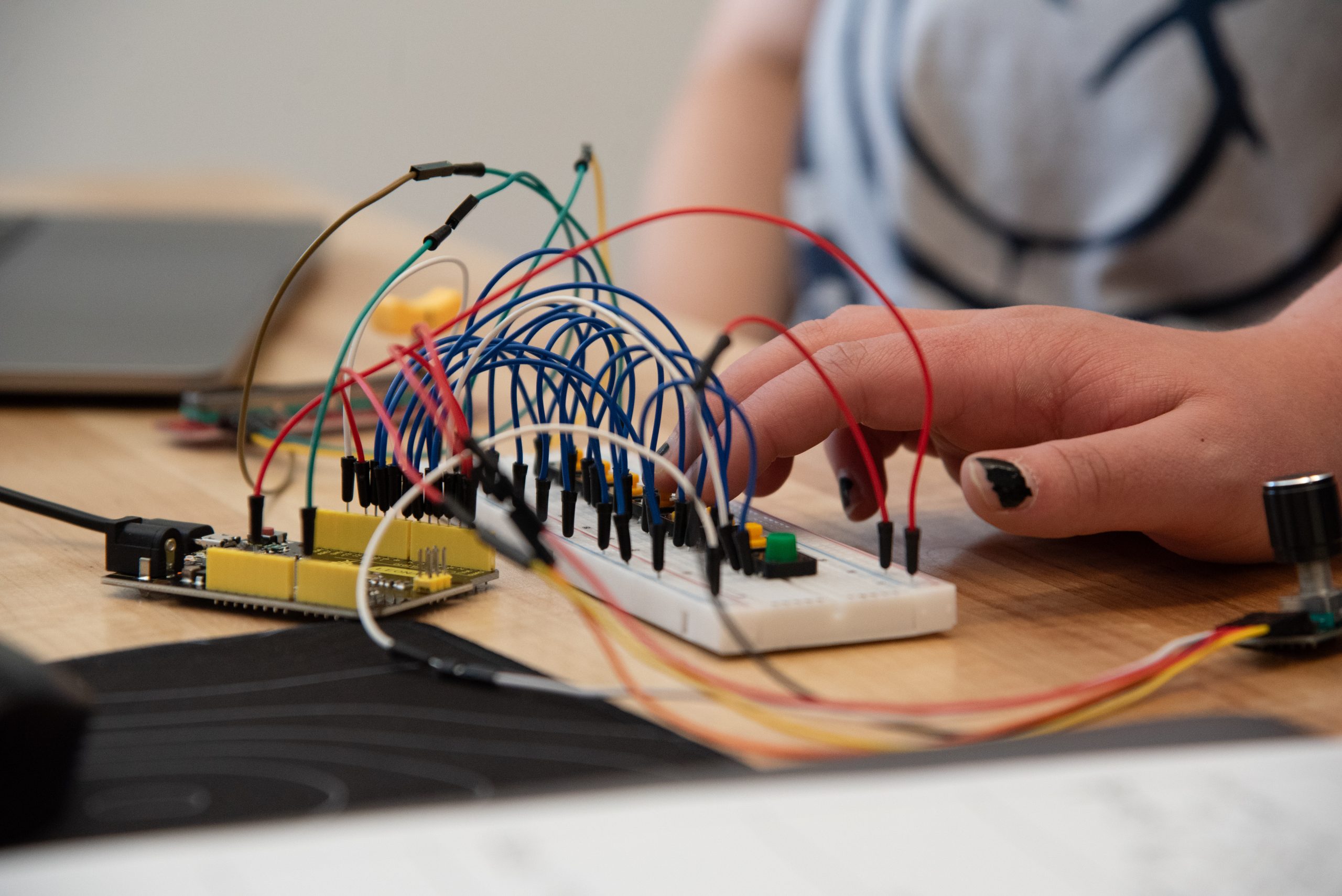
A student works on a laptop, assembling wires and components on a breadboard at a wooden desk.

From concept to prototype, students developed their instruments, using tools like Gemini to help write and troubleshoot their Arduino code. This use of AI allowed students to focus on rapid prototyping without needing a coding prerequisite. The result was a range of inventive solutions to real musical challenges, inspired by students’ existing musical frameworks and interests. 

At one station, Longmont High freshmen Clara Lehmer and Mason Morrow demonstrated an equalizer controlled by an ultrasonic sensor, allowing them to shape sound with the movement of their hands—similar to a theremin. At another, a series of buttons mapped to musical notes could shift between keys and chords, designed to make music fundamentals more accessible for beginners, including older adults or individuals with physical limitations.

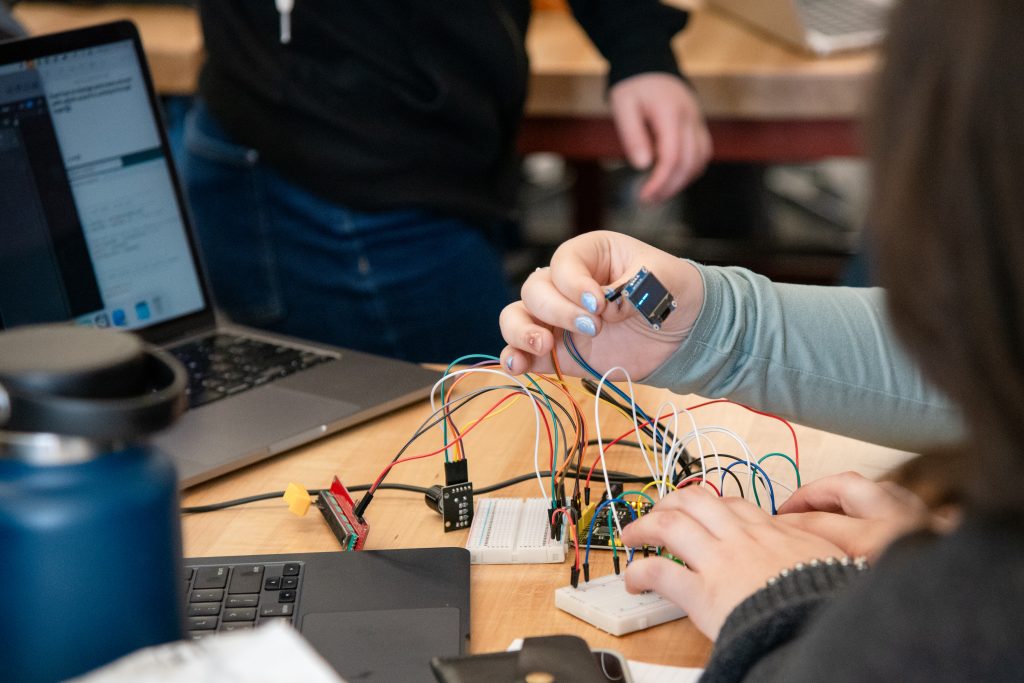
A hand holds a small display while another hand connects wires to a circuit board, with a laptop nearby.

For Alexis Bonilla, a sophomore from Skyline High School, the project unlocked new ways of thinking about music. “It felt like it opened a lot of creative possibilities on a small scale,” he said.

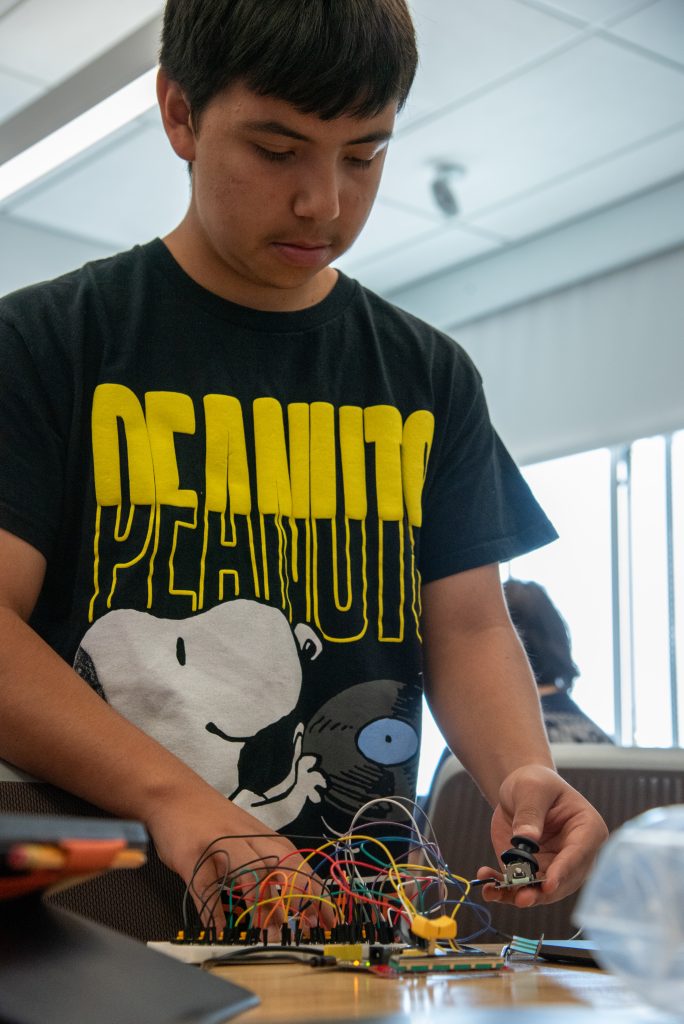
A young person in a black "Peanuts" shirt works with colorful wires and components on a table.

Other projects were born directly from personal experience. Tristan Jones and Nove Cleveland, both bass players, designed a small keyboard-style instrument that lets them practice sight-reading and learning melodies by ear without carrying a full-sized bass. Nearby, Spencer Gutierrez and Nayeli Ceja, both from Frederick High School, developed an intuitive controller to solve a problem they’ve faced in live performance. Spencer, who plays in a pit orchestra, shared that it can be difficult to adjust computer instrument settings quickly during a show. Their solution: a simplified control system designed for speed and ease.

“It’s empowering to build something that is customized for exactly what you need,” Spencer said.

A student works on a circuit with wires on a breadboard, with a laptop and notes visible on the table.

The Music Innovation Pathway has three pillars: music industry, music education, and STEM of music and sound. Kyle Liss, Music Innovation Program Manager, said that the project was created specifically to speak to the latter. “I wanted a design challenge that enabled students’ creativity and was still musical at heart, while connecting to the STEM of music and sound.” 

Liss added that he has been impressed by the range of projects and solutions each group came up with, and that this is one of the few—and to his knowledge the only current—K-12 structures embedding rapid Arduino/MIDI instrument design challenges inside an ongoing district program.

Blending human creativity with technology, note by note, line by line, or even instrument by instrument, we can’t wait to hear what these students will come up with next.

Earn your Lifeguard Certification this Summer at St. Vrain’s Aquatic Center

Sessions are available this summer for both students and staff in St. Vrain Valley Schools to earn a new lifeguard certification or recertify. Using the American Red Cross curriculum, participants will train in water safety, emergency response, first aid and CPR, and AED operation. Whether you are looking for a rewarding way to serve the community, are a competitive swimmer or student-athlete, or want to build real-world skills in emergency response, leadership, and teamwork, this training is an invaluable opportunity. 

The course follows a hybrid training model, with an online component to be completed prior to the hands-on session. 

Participants must meet the following requirements:

  • Be at least 15 years of age
  • Swim 150 yards
  • Tread water for two minutes without using hands
  • Retrieve a 10-lb weight from 10 feet of water
  • Have a current physical on file (for St. Vrain students)

Details

Dates

  • May 28-29: Lifeguard Recertification
    8 a.m.-2 p.m. (students and staff)
  • June 1-5: Students Only (Initial Certification)
    Monday 8 a.m. – 1 p.m., Tuesday – Friday 9 a.m. – 1 p.m.
  • June 8-12: Staff Only (Initial Certification)
    Monday 8 a.m. – 1 p.m., Tuesday – Friday 9 a.m. – 1 p.m.
  • June 15-19: Students Only (Initial Certification)
    Monday 8 a.m. – 1 p.m., Tuesday – Friday 9 a.m. – 1 p.m.

Recertification must have at least 5 participants to run the course.
Initial Certification must have at least 8 participants to run the course.  

Costs per person: 

  • $200 for recertification
  • $300 for new certification training

*Class Format:

All classes are in a hybrid format with an online learning portion. Participants must complete the online learning portion prior to the first day of class in the pool.  If the online portion is not completed by the first day of class, the participant will not be able to participate and there is no refund.  A link to the online portion will be sent on 5/16/26.  

Registration is open through May 15, 2026.

For questions or more information, please contact:

Devin Clark
Athletic Secretary, Silver Creek High School
clark_devin@svvsd.org
(720)494-3729 extension: 45714 

Or Scott Sullivan 
Athletic Trainer
American Red Cross Certified Instructor: Lifeguarding, First Aid, CPR, AED
sullivan_scott@svvsd.org

Just Keep Swimming: Legacy Elementary Students Perform Finding Nemo

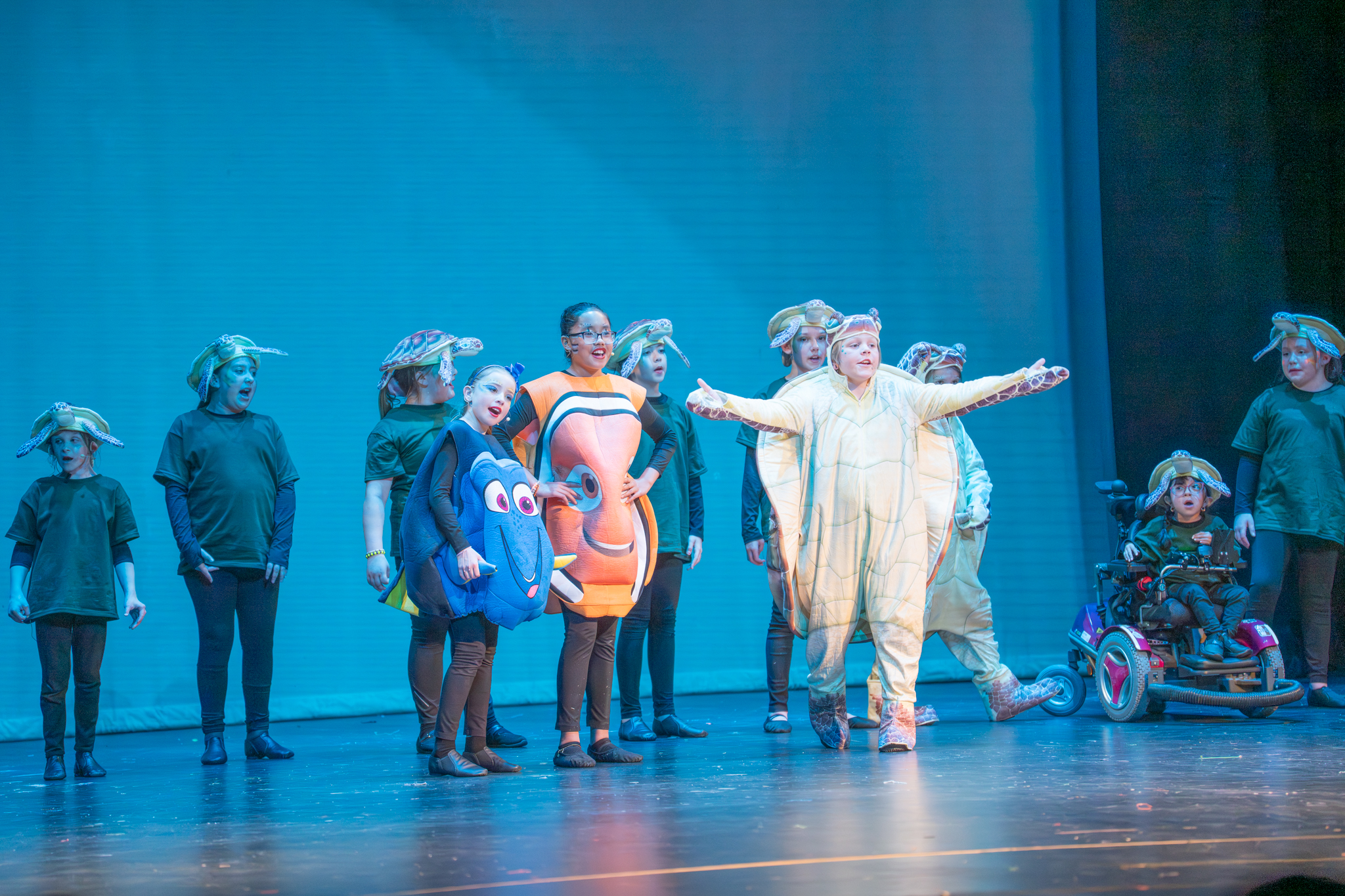
On Friday, March 27, and Saturday, March 28, Legacy Elementary students took to the stage for their production of Finding Nemo. These productions are a powerful display of student talent, and play a strong role in preparing students for future opportunities.

While the two hour-long shows are the public element of the production, they provide just a small glimpse into the significant efforts put forward by students, teachers, staff, and community members alike. To ensure the shows were performed at the highest possible level, students rehearsed before school three times each week starting in mid-November. 

Caleb Smith, the music teacher at Legacy Elementary who also directs the musicals, said the most rewarding part is inspiring students and watching them develop a passion for performing.

“I hope students gain confidence, cooperation, and a sense of belonging in theatre,” Smith said. “I love teaching students to sing, act, and dance, and when they leave my program, I want them to take that into everything they do, from sports, work, or academics,” he added.

Smith also highlighted that the show was a coordinated effort between volunteers and students, but the students took the lead on nearly every element of the show. 

“We had a lot of backstage volunteers helping coordinate things, but students ran the show,” Smith said. “I often had volunteers backstage just standing and enjoying the show while the cast took control and made the show their own,” Smith added.

Finding Nemo was Smith’s third final show at Legacy, and he reflected on what makes productions such as this one special. “It’s special because it’s a launching point for the future of these students in musical theatre and beyond,” Smith explained. 

Providing students with opportunities to perform in theatre productions, particularly at the elementary level, gives students a competitive advantage for future opportunities they may pursue within St. Vrain and beyond.

Students Take the Lead at SMART Team Symposium

 Longmont High’s MBSA program hosts national showcase of student-driven scientific research

On March 28, the Innovation Center became a hub of scientific curiosity and collaboration as St. Vrain Valley Schools hosted the SMART (Students Modeling A Research Topic) Team Colorado Symposium.

The event, led by the Longmont High School MBSA Program, brought together nine student research teams from four high schools across Colorado, Kansas, Ohio, and Wisconsin. While the projects varied in focus, each shared a common foundation: a year-long deep dive into complex scientific research and the challenge of translating it into something tangible, understandable, and meaningful.

Through the SMART Team program, developed by 3D Molecular Designs, students step beyond traditional classroom learning. They analyze primary scientific literature, study protein structures, and ultimately design detailed 3D models that represent the function and form of the molecules they investigate.

“The SMART Team program transforms students from passive learners into practicing scientists,” said science teacher Chris Chou. “Students learn how to interpret complex research, use evidence to answer meaningful questions, and communicate their understanding in ways that are accessible to different audiences.”

At the symposium, that transformation was on full display.

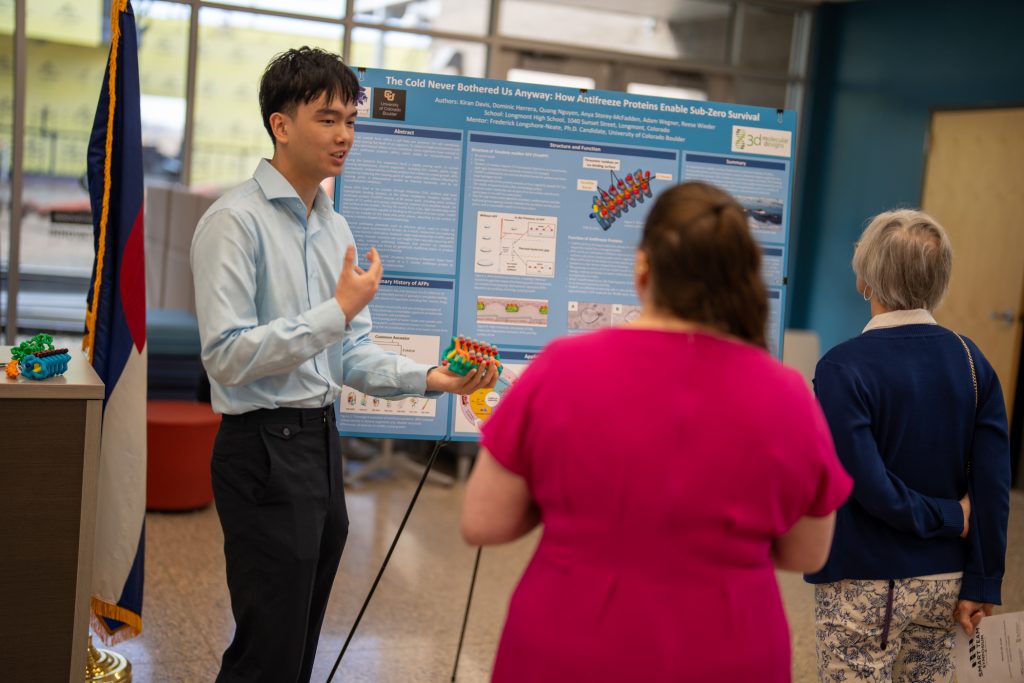
A young presenter explains his research on antifreeze proteins to two attendees at a science event.

Spread throughout the open space of the Innovation Center, students stood alongside professional-quality posters and intricately designed protein models – many freshly unboxed and seen in physical form for the first time. The setting allowed for something often missing from larger scientific conferences: meaningful conversation. Instead of navigating crowded poster halls, students engaged in thoughtful, one-on-one discussions with visiting scientists, educators, peers, and community members.

Students explained the structure and function of proteins, adapted their messaging for different audiences, and shared the story of their research journey multiple times throughout the morning. For many, it was a chance to build confidence not just in their knowledge, but in their identity.

“SMART Teams don’t just teach science – they help students see themselves as scientists,” Chou said.

That sense of belonging was just as important as the academic rigor. The symposium created a space where students with a shared passion for science could connect, many realizing for the first time that they weren’t alone in their interests. Conversations extended beyond projects, forming connections that reflected both collaboration and community.

The experience also highlighted the long-term impact of the program. Many former SMART Team students have gone on to pursue advanced studies and careers in science, including research pathways and doctoral programs. One such student, Maya Blau (Longmont High Class of 2017), is now enrolled in an MD/PhD program at the Medical College of Wisconsin and has returned to the program as a SMART Team advisor, an example of the full-circle influence the experience can have.

At its core, the symposium was a celebration. A celebration of students willing to take on complex challenges. A celebration of educators creating space for authentic, hands-on learning. And a celebration of what happens when students are given the opportunity to go beyond memorization and into true understanding.

Sunset Middle School Community Celebrates IB Eighth Grade Showcase

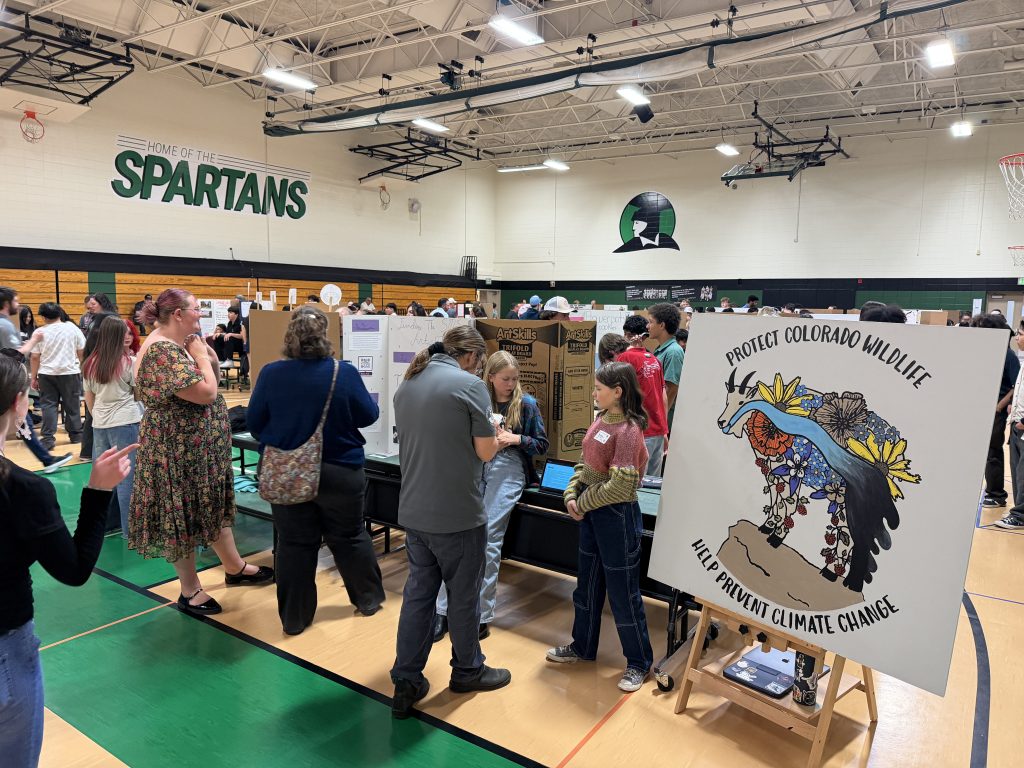
Students gather in a gymnasium for an IB project showcase, featuring projects on wildlife and climate change.

On Thursday, April 3, Sunset Middle School welcomed families and community members for a vibrant Community Night celebrating the culminating experience of the International Baccalaureate Middle Years Programme (IB MYP).

The event featured student-led community projects, live performances, interactive displays, and guest speakers, including the Mayor of Longmont. Attendees also experienced a variety of food presentations that reflected the cultures and communities explored through student research.

As part of the IB MYP, students completed projects focused on both research and direct service, identifying real needs within their community and taking action to address them.

Principal Alicia Bono shared, “This is an impactful experience. Students learn what it means to be part of a community and that they can already play a role in making a difference. Through their projects, they identify community needs and find ways to give back. They come to see they are capable of far more than they initially thought.”

Students echoed that growth and said the experience strengthened communication skills, deepened understanding of community needs, and built trust in their peers. Many also described a shift in perspective and recognized the value of contributing to something larger than themselves.

The evening highlighted the power of authentic learning and the meaningful connections formed between students and the community they serve.

Longs Peak Middle School Celebrated Eighth Grade Students Accepted into High School Focus Programs

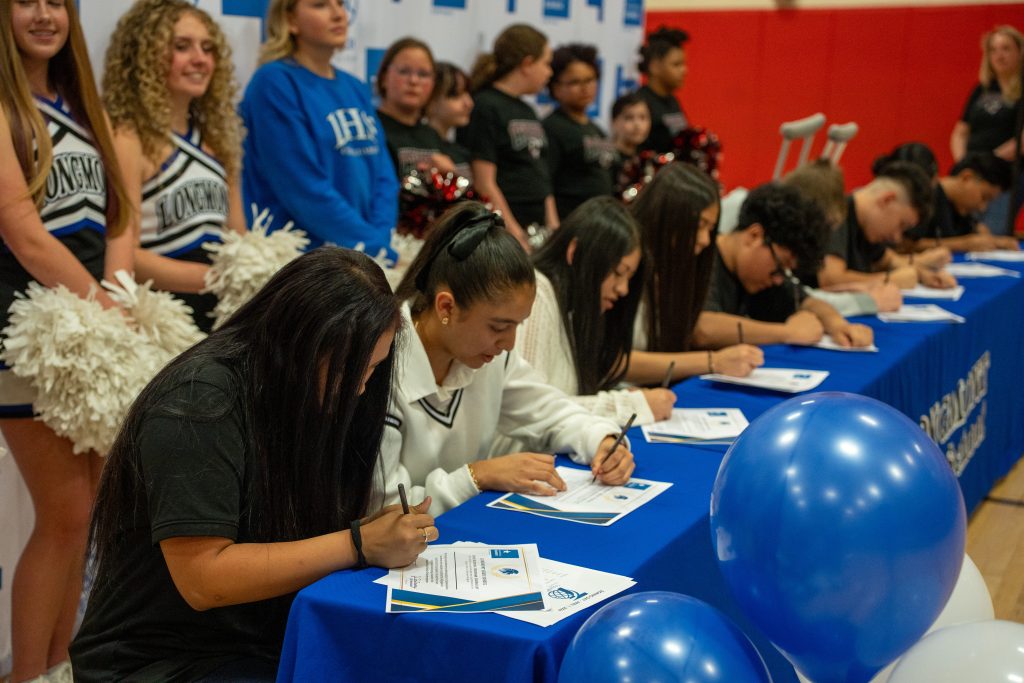
Longs Peak Middle School recently held a special signing ceremony honoring more than 40 eighth grade students who have been accepted into high school focus programs. Inspired by traditional athletic signing days, the all-school assembly took place on Wednesday, April 1 from 2:30 to 3:15 p.m., celebrating students’ dedication and preparation for advanced academic opportunities.

Students are signing documents at a table, with cheerleaders and supporters in the background. Blue balloons are visible.

Students from Longs Peak earned acceptance into specialized pathways at two local high schools. Programs include the Medical & Bioscience Academy (MBSA) and the High School of Business at Longmont High School, as well as FalconTECH at Skyline High School.

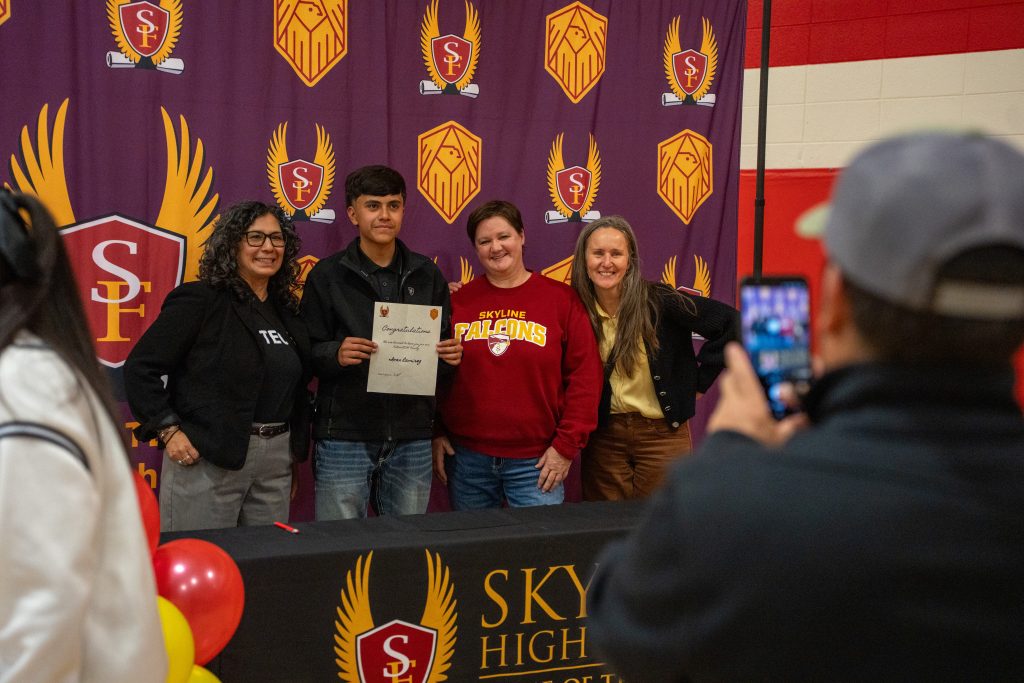
Four people pose for a photo at a celebration event, holding a certificate, with a school backdrop and balloons.

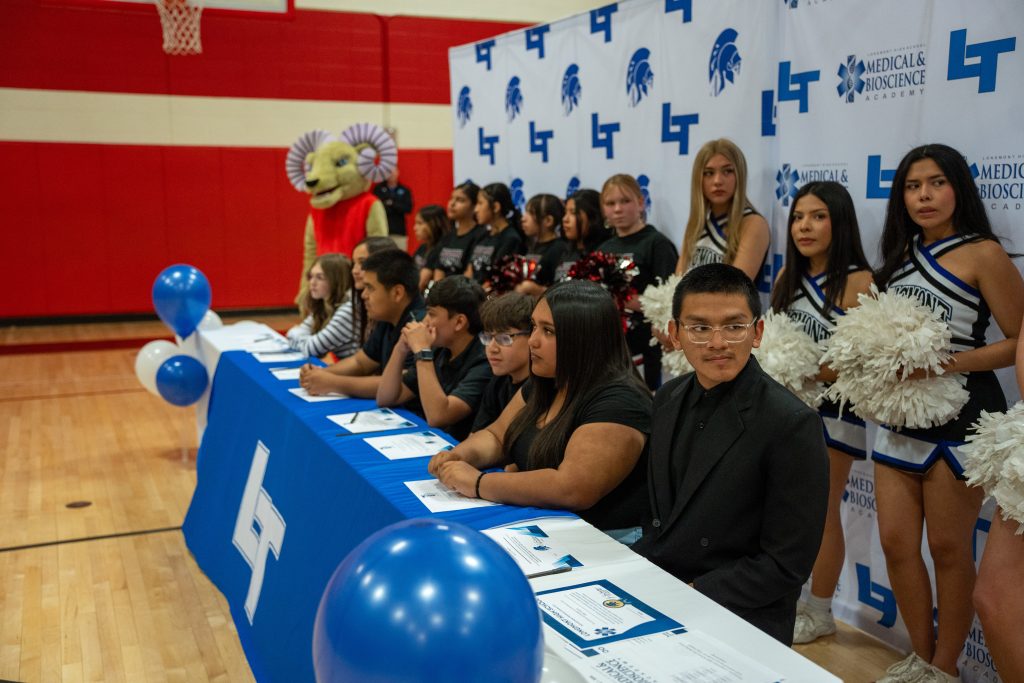
The celebration included performances by the school’s mariachi and percussion ensembles, along with appearances by cheerleaders. Principals and program representatives from each high school were present to welcome future students into their programs. As part of the ceremony, each student was recognized individually and signed a commitment letter, marking an important milestone in their academic journey. The event wrapped up with performances from the Longmont High School drum line and cheerleaders, followed by closing remarks and group photos. Families were also in attendance to share in the celebration.

Students sit at a table with documents, while cheerleaders and a mascot stand behind them in a gym setting.

“This event showcased the value of hard work, encouraged younger students, and generated excitement for what lies ahead in high school,” said Karin Blough, Principal of Longs Peak Middle School. “We have built programs that connect directly to advanced high school coursework and help prepare students for what comes next. We are proud of the dedication shown by our students and their families and look forward to seeing their continued success in these programs.”

View the full event photo album

St. Vrain Valley Schools