Championing Fiscal Responsibility and a Strong Return on Investment, St. Vrain Valley Schools Lowers Rates for Property Taxes Collected in 2024

Over the past decade, the St. Vrain Valley has experienced significant growth and is considered one of the most desirable places for outstanding public schools, jobs in fast-growth industries, abundant outdoor recreation, and an overall high quality of life. As homes and commercial properties have become more valuable, assessed valuations have also increased. The investment of the St. Vrain Valley community into our public schools through the passage of two Mill Levy Overrides, one in 2008 and one in 2012, has continued to provide a strong financial investment and foundation that has enabled St. Vrain to become one of the state’s leading school systems – recently achieving the highest on-time graduation rate in the Denver Metro Area at 93.3%, and the lowest dropout rate at 0.6%. 

As the district has continued to strengthen and advance student achievement and opportunities, it has also focused heavily on strong financial management and systems that will ensure the best use of community resources and investment. This has included debt refinancing, payment structuring, and early debt payoff strategies which has saved taxpayers approximately $82.3 million over the past two decades. This includes $36.8 million saved in December alone, a testament to the district’s conservative financial planning and its dedication to the community’s economic well-being. The $82.3 million in savings does not go back to the district for other uses, and is solely for the benefit of the taxpayers. For property taxes collected in 2024, the district continues these efforts and has reduced the property tax mill levy rate by 1.147 mills. 

“By judiciously managing our finances, we’ve been able to reduce the mill levy and still honor our promise to deliver a world-class education system,” said Greg Fieth, Chief Financial Officer. “This approach will also enable our community to continue to invest in our schools in a potential 2024 bond – including safety upgrades, critical infrastructure and maintenance needs, and provide classroom additions and construct new school buildings to address overcrowding and future enrollment  – without raising taxes1.”

St. Vrain voters pass bond initiatives that are paid through property taxes. Bonds are used to make investments to increase school safety, complete critical building maintenance, add classroom and instructional space, build schools, and complete other bricks and mortar infrastructure projects – they are not used for hiring, operating schools, or increasing salaries.

St. Vrain Valley Schools is currently planning to recommend that a bond initiative be placed on the 2024 ballot that will not increase property taxes1, and will represent a significant investment in advancing the future of our community. The 2024 bond will focus on: providing the education that today’s students will need for tomorrow’s jobs and careers, including skilled trades (plumbing, electrical, and construction), computer systems, cybersecurity, healthcare, and more; improving safety and security in school buildings; performing critical building maintenance and replace outdated electrical, plumbing, and HVAC systems; continuing the district’s commitment to academic excellence, safety, and accountability; and providing classroom additions and construction of new school buildings to address overcrowding and future enrollment

The St. Vrain community also continues to experience growth in both population and economic strength, increasing the number of resources available to invest in our public schools. Due to existing community investment, strong financial management, and growth in population and economic strength, the 2024 bond will not require a new school district property tax or increase district property taxes1.

“It’s about fiscal responsibility and community trust,” said Dr. Don Haddad, Superintendent. “We are grateful for our community’s support and are committed to using resources in the most fiscally responsible way.”

In addition to the opportunity to pass a bond without increasing taxes for the community, the district’s strong financial position has also enabled significant investment in raising salaries for teachers, bus drivers, custodians, office professionals, campus supervisors, nutrition service workers, paraprofessionals, and so many others who support the academic success and well-being of our students. While the 2024 bond cannot be used for hiring or salaries, the district has leveraged existing resources and capitalized on the economy of scale across our large system to increase starting teacher salaries to one of the highest in Colorado.

“Offering competitive salaries is not just a necessity in the face of national staff shortages; it’s an investment that directly benefits our children and the community at large,” said Dr. Don Haddad, Superintendent. “We remain deeply committed to ensure that each and every student has access to the highest quality education and the very best teachers who will support their continued growth and advancement.” 

This investment in teachers and school staff also contributes to the economic strength of the community. St. Vrain Valley Schools is the largest employer in the district’s 411 square mile footprint, with approximately 5,500 employees that serve approximately 33,000 students. Further, as the district continues to see student outcomes soar – such as graduation rates, Advanced Placement class enrollments, 80% athletics and co-curricular participation rates, significant student achievements in visual and performing arts, exponential growth in competitive robotics, and so much more, the quality of the education system is contributing significantly to the quality of the overall community. 

High-quality schools provide a return on services valued in great excess of their funding.2 As a region’s quality and level of education increases, productivity, income, social stability and economic development also rise, while crime rates, health care dependence and public service costs decrease substantially.3,4,5

When calculating the public benefits of education in terms of high school graduation rates, the net economic benefit to the public is $127,000 per high school graduate.6 For the approximately 2,000 students who graduated from a St. Vrain high school in 2023, the lifetime positive economic impact on public funds puts an additional $254 million into our communities.

“Our transformational shift over the past 13 years has been focused on maximizing the returns on our community’s investments into our schools, while also giving our students a strong competitive advantage for future success,” added Dr. Haddad. “Public education is America’s most significant investment and – second only to parenting – is the greatest contributor to the future of our world. The quality of our schools impacts and strengthens our economy, public health and safety, national security, the quality of our service industry, residential and business property values, public health, our workforce pipeline, our democracy, and so much more.” 

While the full return on investment and its benefits are often not seen until decades in the future, St. Vrain will continue to invest our resources to advance the future of not only today’s generation but also tomorrow’s.


1 Passage of the 2024 bond will not impose any new school district property tax and will not increase the district’s existing annual debt repayment obligation. Based on the current tax formula, it is specifically designed to not increase your existing school district taxes, and may even result in a lowering of existing property taxes, similar to the tax reduction the district made in January 2024.

2 Bogart, W.T. & Cromwell, B.A. (1997). How much more is a good school district worth? National Tax Journal, 50:2, 215-232.

3 Greenstone, M., et al. (2012). A Dozen Economic Facts About K-12 Education. The Hamilton Project.

4 Hanushek, E.A., Ruhose, J., & Woessmann, L. (2015). Economic Gains for U.S. States from Education Reform, National Bureau of Economic Research Working Paper No. 21770.

5 Berger, N. & Fisher, P. (2013). A Well-Educated Workforce is Key to State Prosperity. Economic Analysis and Research Network. Retrieved from http://www.epi.org/publication/states-education-productivity-growth-foundations.

6 Levin, H.M., et. al. (2007). The costs and benefits of an excellent education for all of America’s children. Center for Benefit-Cost Studies in Education (CBCSE), Teachers College, Columbia University, New York.
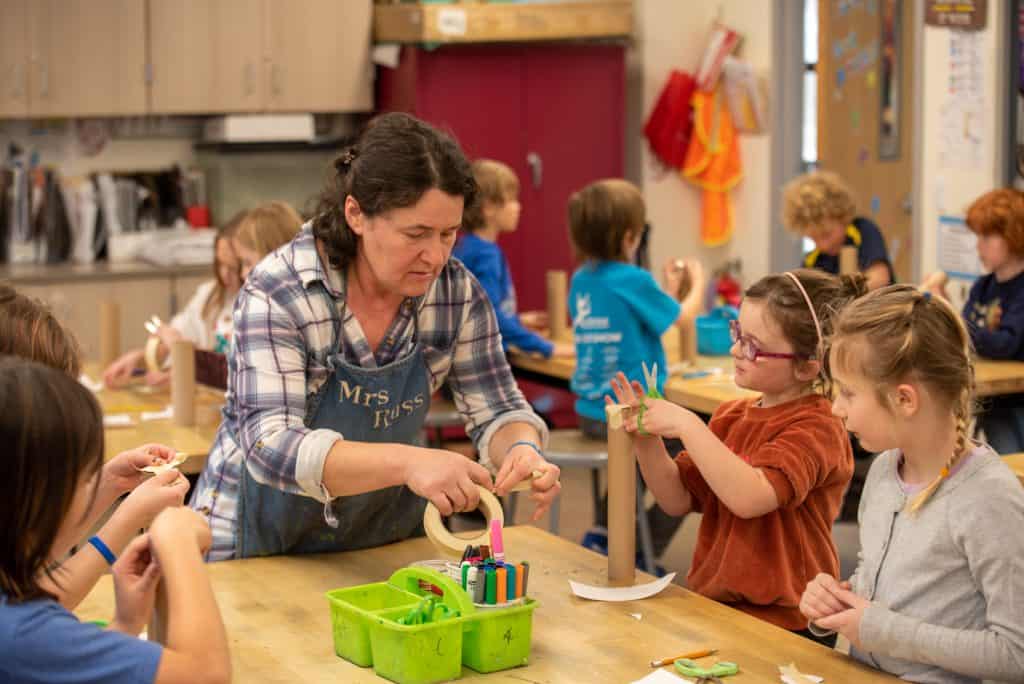
Embracing the Art of Teaching: Elena Russ Inspires Students at Lyons Elementary

Lyons Elementary Art Teacher, Elena Russ, has a deep-rooted passion for teaching and art. Her mother, a teacher for more than 40 years, influenced her journey into the field of education. Despite not intending to follow in her mother’s footsteps, Russ found herself drawn to the teaching profession.

Growing up in a village in the former Soviet Union, Russ witnessed her mother’s dedication to her students. She recalls countless late nights spent grading papers and a constant stream of children seeking her mother’s guidance and support. “She tutored them for free, or for a jug of sour cream or milk, just because she loved them and wanted them to succeed,” shared Russ. “Seeing all of that, I playfully mentioned that pursuing a career as a teacher was not in my plans. Many years later, when my beloved mom called and asked, ‘What are you doing?’ I replied, ‘Teaching!'”

Russ developed a passion for art at an early age. “For as long as I can remember, I was drawing,” she shared. “My mom would leave me with colored pencils and papers, and I would draw for long periods of time.” As an adult, she continues to embrace opportunities to learn and explore new art mediums. “I like to dive into whatever I am doing, whether it’s painting, drawing, clay, darkroom photography, fiber, or collage. I love the challenge and the journey.”

After graduating from a visual arts high school, Russ furthered her education at the College of Visual Arts “A. Plamadeala” in the Republic of Moldova, specializing in visual arts and pedagogy. She started her career in education as a teacher in Moldova public schools and as a missionary at an orphanage. Upon relocating to the United States, she studied visual arts at Front Range Community College and completed the Education and Leadership Program at Colorado State University, earning a master’s degree. Russ was a substitute teacher in St. Vrain Valley Schools before joining the team at Lyons Elementary as the school’s art teacher, where she’s worked for the past seven years.

Embracing the belief that “if you love what you do, you will never ‘work’ a day in your life,” Russ approaches her role with a deep sense of fulfillment. She likens the dynamic in her classroom to a “beautiful dance” or a “perfect storm,” drawing parallels to Van Gogh’s Starry Night. “My students are like individual blotches of paint, each individually simple and vibrant in color, coming together to create a perfect storm of creativity.”

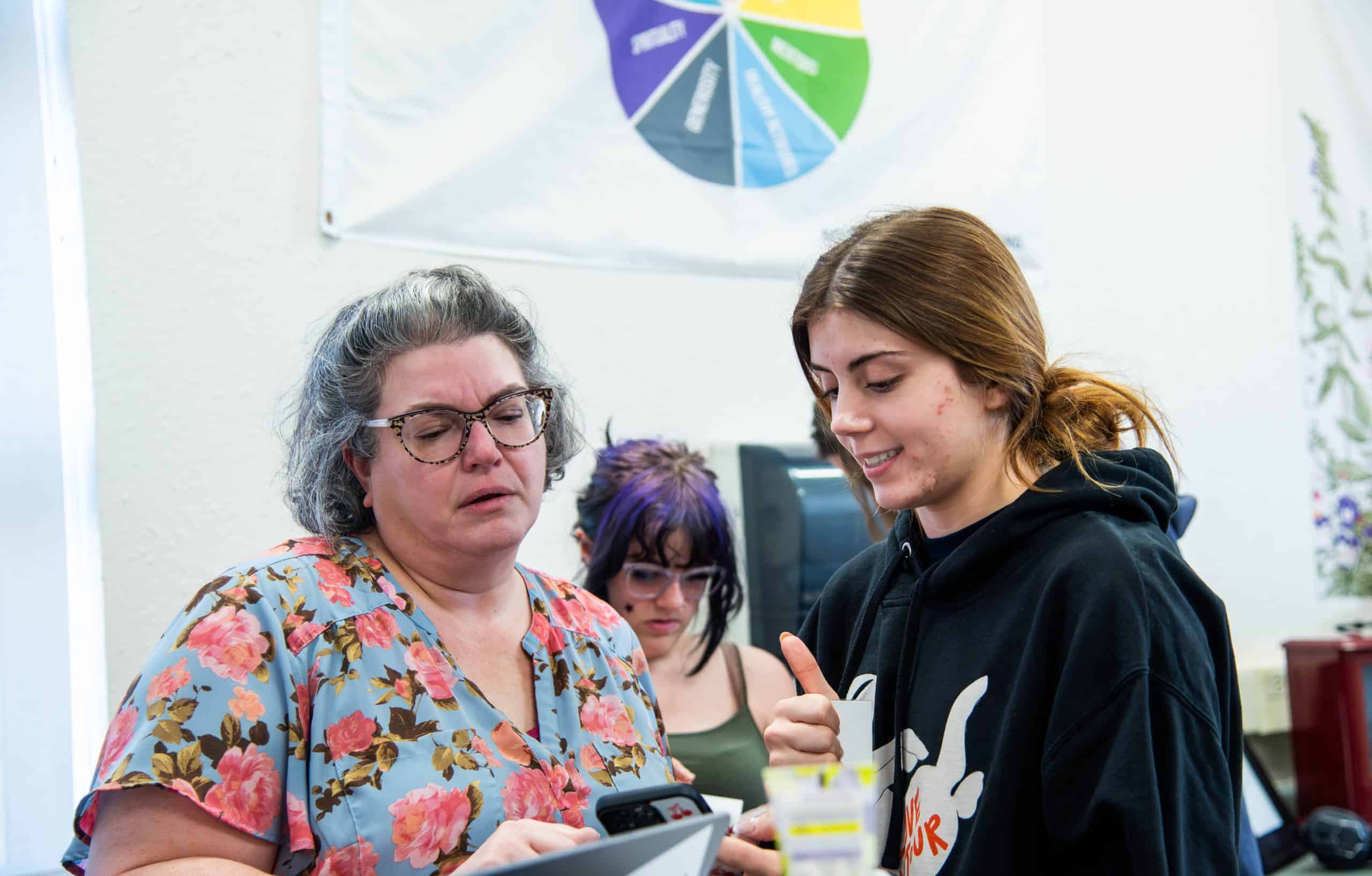
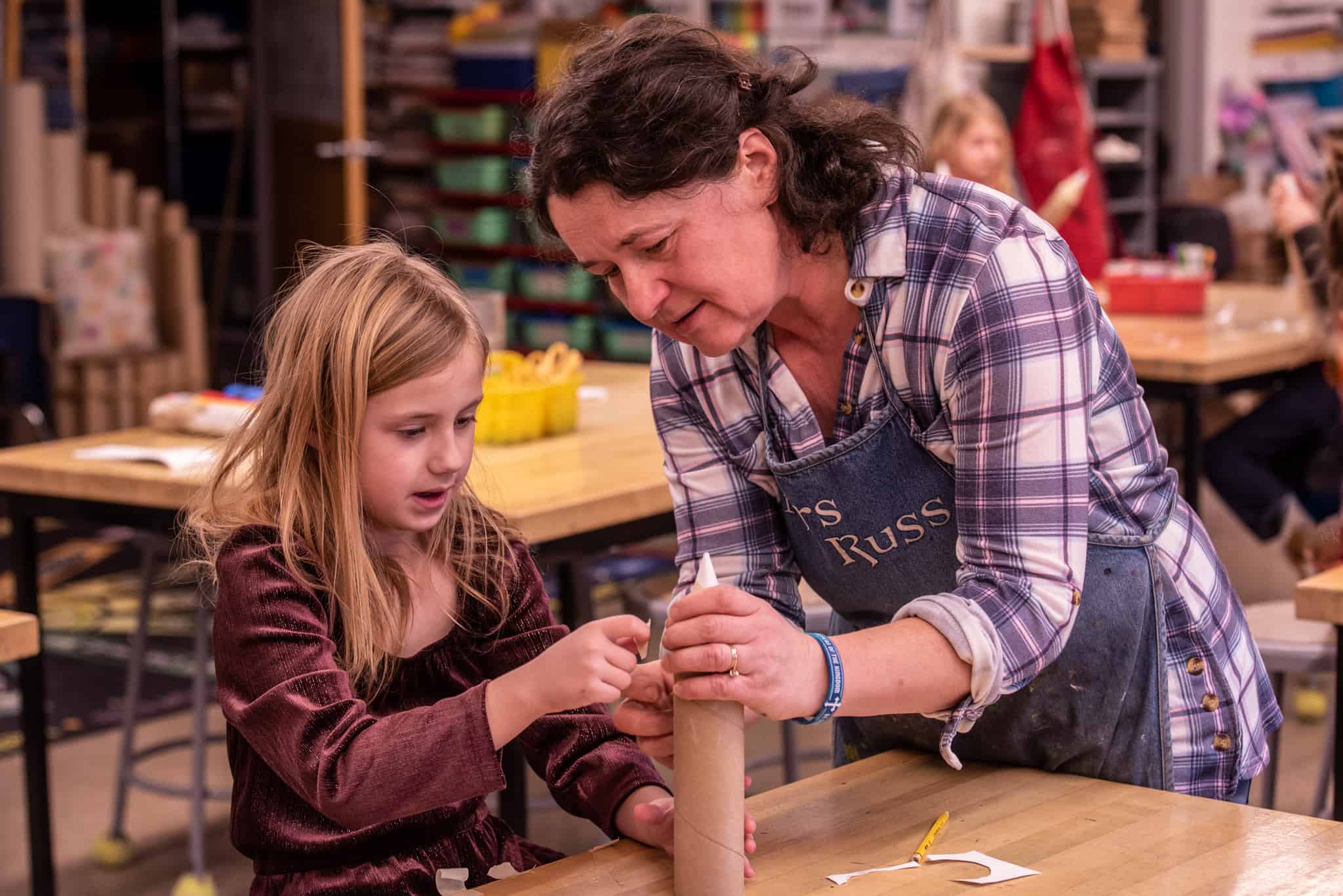
Art teacher Mrs. Russ is standing at the end of a tall table with four female 5th grade students sitting at it. The student closest to her is holding onto a cardboard paper towel tube that is resting vertically on the desk. She is applying masking tape to the top. Mrs. Russ is holding the masking tape roll and tearing off a piece for her. Another student sitting next to her is watching.

A phrase that students regularly hear from Russ is, “If it doesn’t challenge you, you’re not learning.” This sentiment encapsulates her approach to teaching, instilling not just artistic skills but resilience, growth, and self-expression in her students. “My goal is to inspire my students. I start my art units with inspiration, giving them a vision, a purpose, and a joy,” said Russ. “I want my classroom to be a safe place that they enjoy and look forward to coming to, where everyone is respectful, and where they’re challenged to think, learn, grow, and try.” 

In Russ’s classes, students have learned about more than just art. They’ve grasped the significance of self-expression and the idea that effort is more important than perfection. “I like that even if you’re not the best at art, Mrs. Russ makes you feel really good about it and makes you feel like you can do anything,” said fifth-grader Lumin Plaster. Russ’s students embody her philosophy, illustrating her belief that everyone has the potential for creativity and personal development. “She’ll always help you if you need help and if your artwork doesn’t look the best, she still loves it and she doesn’t care if it’s perfect,” shared fifth-grader Carys Ballagh. “She just wants you to work hard and try.” 

Primero Youth Leadership Summit flashes a bright horizon

St. Vrain Valley Schools, or SVVSD, played host to the Primero Youth Leadership Summit on Saturday with a youth leadership conference designed to empower first-generation students towards college and career opportunities. 

The event, held at the Innovation Center, served as a meeting place of support for students seeking guidance, resources and connections for navigating the often-challenging path to higher education and professional success.

WTV Unplugged: Behind the Scenes of Westview’s Student-Run TV Channel

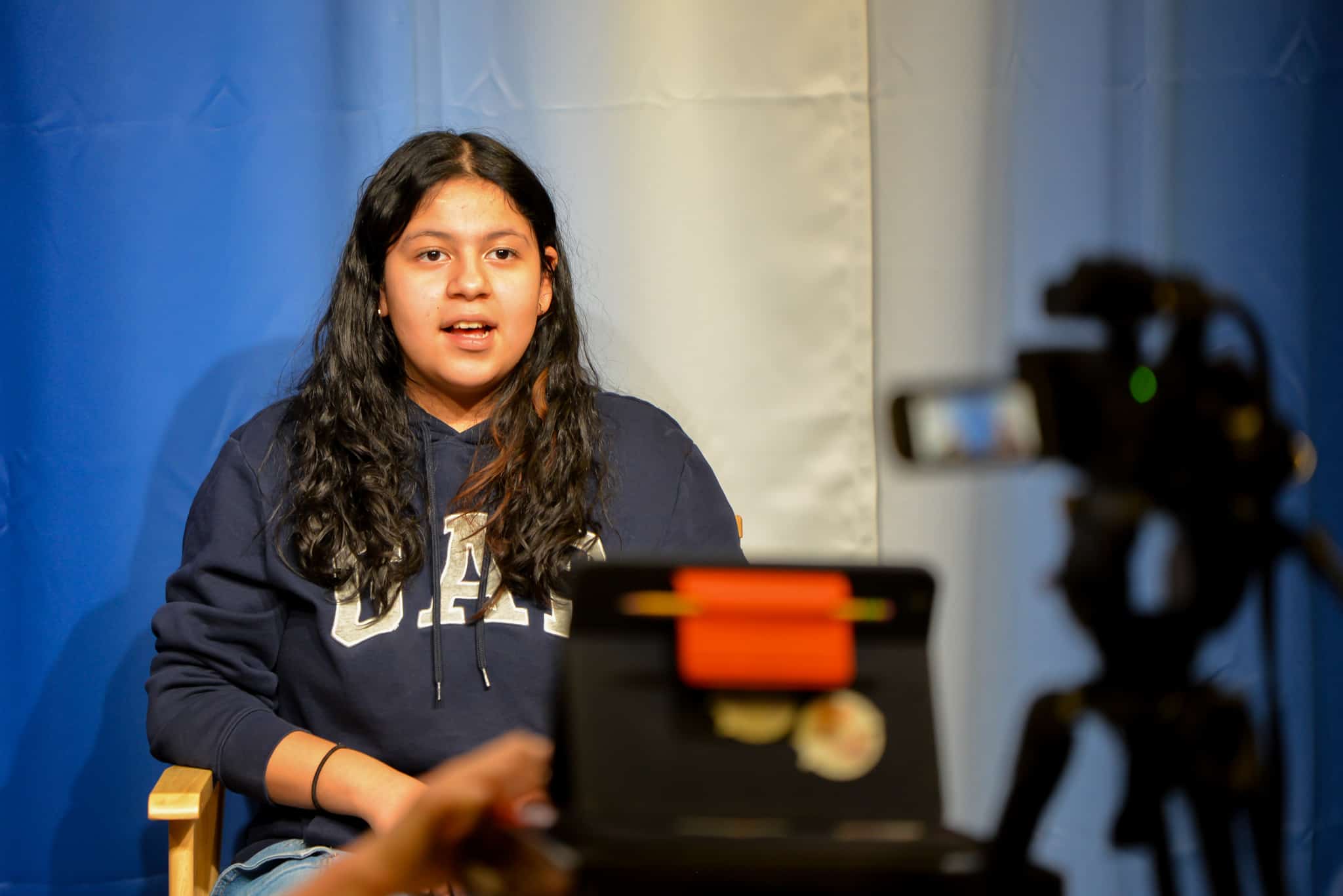
Westview Television (WTV) is a student-run television program that has been an integral part of Westview Middle School since its inception in 2015. Programs, which air biweekly in classrooms, are produced, directed, and anchored by student journalists who develop the same skills used in professional television production. They learn to solve problems quickly and communicate effectively while working together in the studio. The goal of WTV is to keep staff and students informed about school events and news in a fun and engaging manner.

Students are actively involved in all aspects of content creation and technology operations. They share roles, take turns filming and editing each segment, and provide input during the content creation process. “We produce regular segments such as Principal’s Corner, where our principal gives a message to everyone, and we have other rotating segments that we cycle through,” shared School Counselor Cherie Kanemoto. “Each episode has a unique intro, news anchors, a message from the principal, and a bad joke. The rest of the time is filled with other things going on in the school. We might introduce new teachers, show what clubs are doing, highlight sports, and even showcase student talents.”

WTV is offered as a STEM class for seventh and eighth graders. Sixth graders are invited and encouraged to participate in the segments themselves. According to Media Specialist Lisa Herrmann, “We try to get a wide variety of student involvement, including students from each grade level. It is an opportunity for students to shine outside of traditional core-classroom learning.”

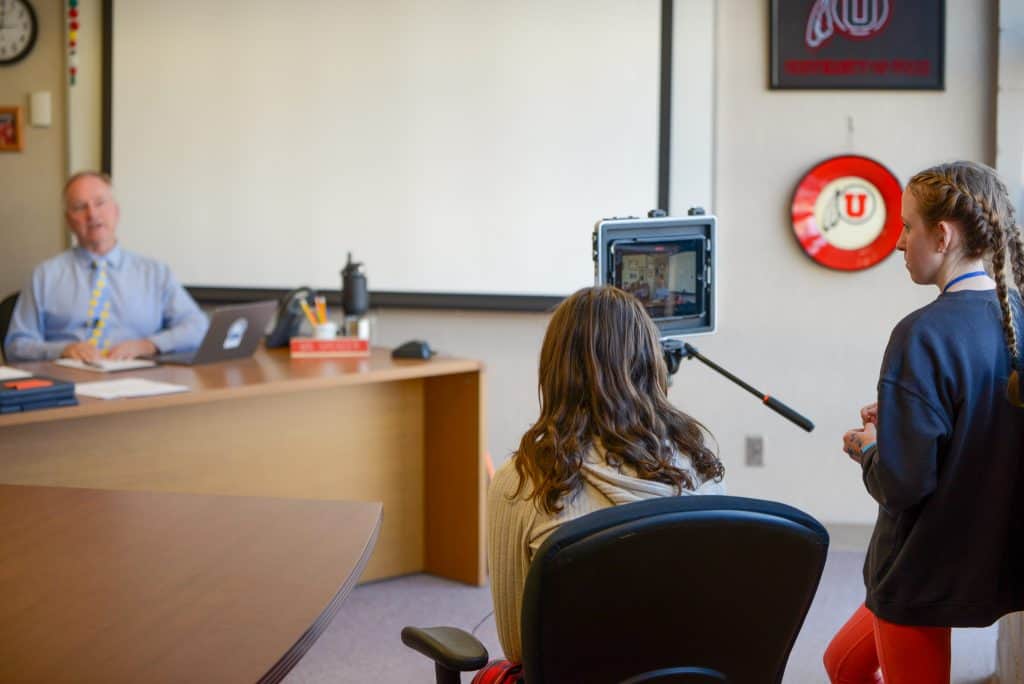
Two female middle school students standing behind an iPad on a tripod while they are filming their principal, who on the left side of the photo sitting at his desk.

Through their participation in WTV, students develop skills such as leadership, time and project management, planning, organization, and public speaking. “I’ve learned a lot of stuff about communication and leadership while having to film things and take charge in a situation where I need to talk to people,” shared eighth-grader Wren Heron. Students also gain hands-on experience with various technologies, including iPads, digital cameras, a padcaster, microphones, green screens, teleprompters, and video editing software.

Since its inception, WTV has grown to become more student-led and incorporate more responsibility. “It is an evolving process, and we learn more each year and adjust to the needs of our school,” said Kanemoto. “We continually ask staff and students for feedback and incorporate new ideas as we grow.” By providing a platform for information sharing, WTV contributes to building a strong sense of community among students, teachers, and staff. It promotes school culture, sportsmanship, and a sense of pride for all students.

LaunchED Virtual Academy Fosters Strong Teacher-Student Connection in a Fully Online Learning Environment

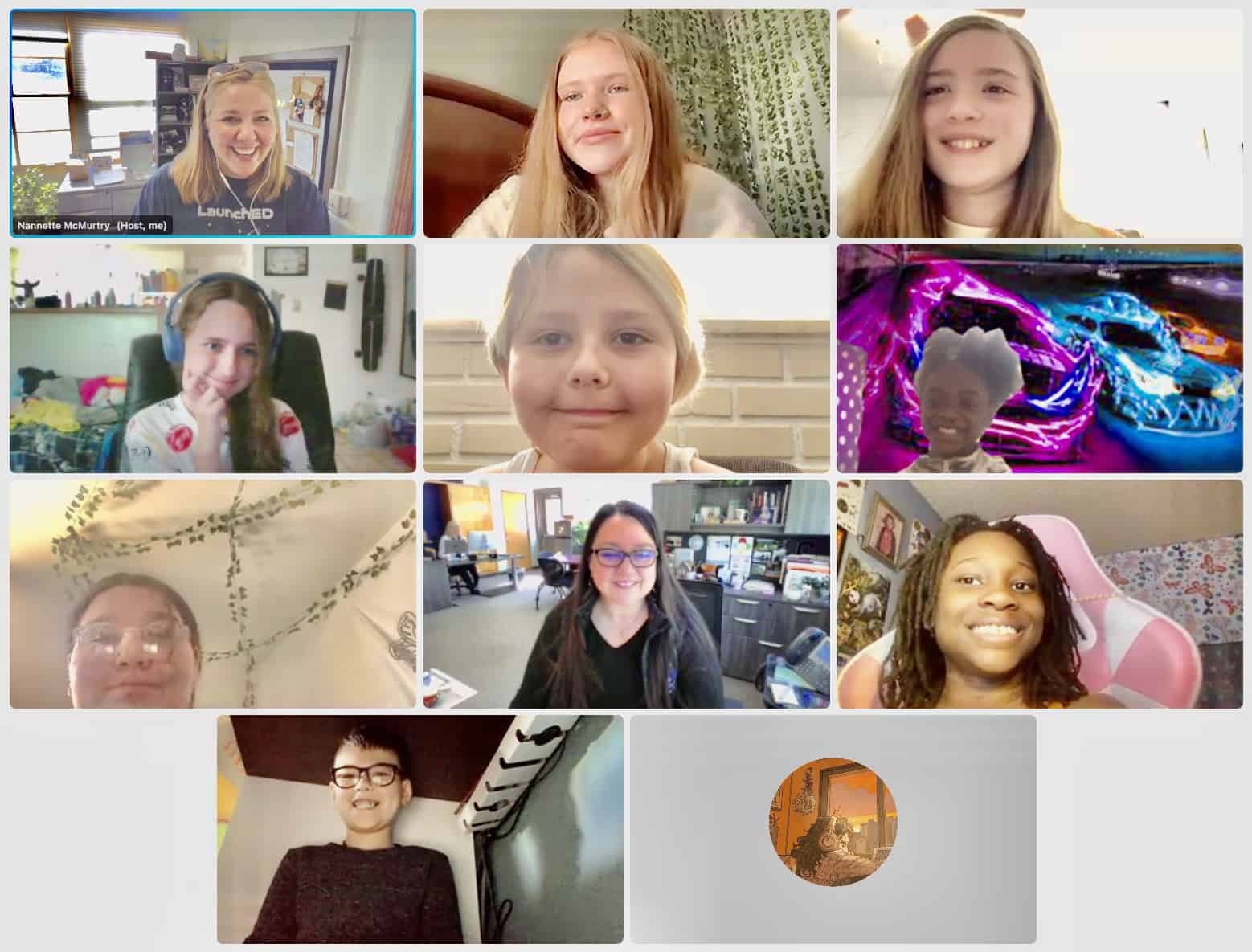
At her kitchen table, junior Maya Juarez powers up her computer in preparation for a day of online classes with LaunchED Virtual Academy. As she logs into Schoology, the digital platform instantly connects Maya with her teachers and peers, demonstrating how technology forms personal connections for a more engaging learning experience.

In the LaunchED virtual environment, teachers, students, and families have discovered innovative ways to stay connected and build strong relationships despite physical distance. Communication channels, including personalized emails, virtual conferences, and digital newsletters, ensure that parents and guardians are well-informed, empowering families to actively participate in their child’s education and stay updated on progress, events, and ways to support learning at home. 

LaunchED understands the importance of involving families in the educational journey. Regular parent/teacher conferences allow discussions about student progress, learning habits, next steps, and overall academic development. “At LaunchED, we recognize that partnering with adults at home is a key indicator of student success,” said Julie Read, Principal at LaunchED Virtual Academy. “Our collaborative approach to education ensures that our teachers play a central role in unlocking the potential of every student.”

Students have multiple avenues to connect with their teachers, including the Schoology Learning Management System, which serves as a comprehensive platform for content delivery, assignment submission, grading, and communication. Teachers are also easily accessible via phone, email, and Webex video conferencing. “I like to communicate with my teachers through chat or email. I’m happy when I hear back from them because they always help me,” shared Maya.

The level of support students receive is comparable to a traditional classroom setting. Through video calls, discussion forums, and interactive assignments, teachers create a sense of belonging and provide individualized attention for each student. Additionally, technology allows teachers to provide timely feedback, address student concerns, and offer academic assistance. “I love that my teacher can always make time for us during the day if we need help with something,” shared fifth-grader Clara Jozovich-Queen. 

At LaunchED, teachers are dedicated to developing meaningful connections with students. By engaging with them on a personal level, teachers gain a deeper understanding of each student’s learning style, strengths, and challenges, enabling them to provide more personalized and effective instruction. This also creates a positive learning environment, where students feel a strong sense of belonging and are comfortable actively participating in class. “I’ve been able to connect with our students at an even deeper level than I expected,” said STEAM Teacher Sherry Legrand. “There’s something about seeing them on the screen every day, sharing what’s happening in our lives, and visiting with them, and sometimes their pets and family members, that makes these relationships special.”

Altona Middle School Students Win NASA TechRise Student Challenge

A group of five Altona students were selected as this year’s NASA TechRise Challenge winners. The NASA TechRise Challenge is a STEM competition tailored for students in grades sixth through 12th designed to inspire global discovery. By participating in the challenge, students create and test their innovative solutions for space exploration and Earth study. Additionally, they gain hands-on experience in payload design and the flight test process, getting a deeper understanding of space exploration, Earth observation, coding, electronics, and the significance of test data.

Stephanie Basile, Altona Middle School Technology Teacher, selected the NASA TechRise challenge for the school’s Design for a Better World course so that students could have the opportunity to engage in an authentic opportunity that emphasized collaboration. Approximately 50 seventh and eighth grade students from Altona Middle School worked together in groups of four to craft their proposals for the NASA TechRise challenge. “The students’ enthusiasm for presenting their lander idea reflects their belief in its potential impact on future missions and public awareness of lunar exploration,” shared Basile.

The NASA TechRise Challenge tasked students with designing a science or technology experiment that would be suitable for testing on a NASA-sponsored high-altitude balloon flight or a rocket-powered lander. Their experiment, named “Full Model Moon Mission,” was chosen for testing on a rocket-powered lander.

During the proposal process, students delved into the intricacies of the moon’s surface, studying existing human discoveries and ongoing astronaut and scientific research. They gained insights into microcontrollers, sensors, and the diverse types of data they can record and provide. Engaging in the design process, the students developed a scientific question and honed their experiment to study the moon.

“The students’ ability to work together seamlessly, ask insightful questions, and go above and beyond in their efforts has left me immensely proud, and excited for the next phase of the journey,” expressed Basile.

St. Vrain Virtual High School’s Social and Emotional Learning Curriculum Enhances Community and Well-Being

The team at St. Vrain Virtual High School has embarked on a journey to develop and implement the Social and Emotional Wellness class. “Our goal is to provide better support to our students in their everyday lives,” shared Becky Olson, Counselor at St. Vrain Virtual High School. “We want to teach them strategies that could be used in any situation.” The curriculum has been thoughtfully designed to provide students with the understanding of their well-being and to develop essential skills for navigating daily challenges.

Currently, the class takes place on Tuesdays and Wednesdays with a morning and afternoon option available, and all 82 students enrolled at St. Vrain Virtual High School participate in one of the sessions. It covers a variety of topics promoting social and emotional well-being, including understanding the adolescent brain, developing skills and habits, and interpersonal and intrapersonal skills.

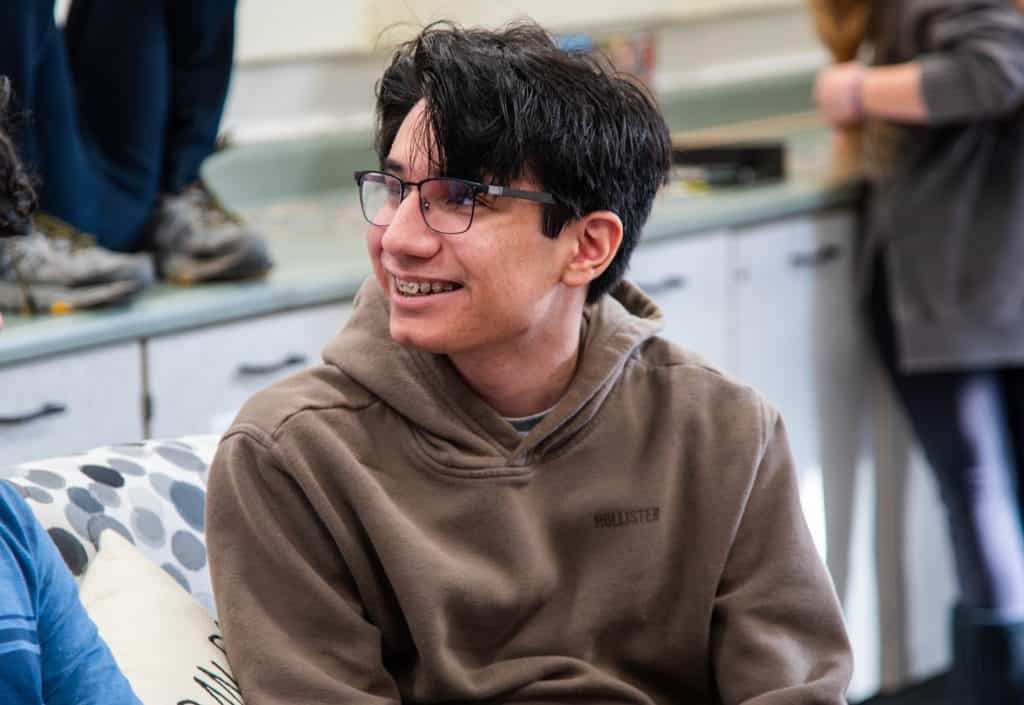
St. Vrain Virtual High School student smiling in class

Initially, the curriculum was based on the Seven Mindsets model and later transitioned to Sources of Strength, incorporating approaches such as mindfulness, Collaborative for Academic Social and Emotional Learning (CASEL) framework, 7 Mindsets, and Dialectical Behavior Therapy (DBT). “Each month, the team looks for information and activities that they feel will be helpful to students, by focusing on one theme that we plan together,” stated Olson. “For instance, in August and January, the focus is on ‘New Beginnings’, incorporating concepts such as Everything is Possible from 7 Mindsets, and Foundations from DBT.”

The Social and Emotional Wellness curriculum, has offered strategies for students to navigate challenges and prioritize self-care. “The activities in class provide insights into our own personality, learning style, and socialization, which all aid in our personal growth,” shared junior Yellow Butterfly Rios. “This class kindles connections with other students by showing mutual traits and interests.”

Guidance provided by the school’s counselor, interventionist, and teachers has fostered an environment where students feel heard, understood, and valued. This personalized support has not only enhanced their academic performance but has also contributed to their overall well-being.

“Both Ms. Olson and Ms. Miller have been instrumental in creating a positive environment where we can have discussions about mental health topics within the class,” shared sophomore Kelly Turner. “Their detailed explanations and empathetic support have significantly enhanced our understanding of the lessons and encouraged us to prioritize mental health in alignment with our personal goals and well-being.”

Ritzenhein receives Gatorade National Girls Cross Country Player of the Year Award

Addison “Addy” Ritzenhein, a standout sophomore and reigning National Cross Country Champion at Niwot High School, experienced a monumental surprise winning the coveted 2023-24 Gatorade National Girls Cross Country Player of the Year Award.

The highly anticipated moment unfolded on Tuesday at 9:00 a.m. as Ritzenhein was completely unaware of the tremendous honor that was being handed to her by none other than Katelyn Tuohy, a four-time Gatorade National Player of the Year, the winningest Gatorade Player of the Year in history, delivering a heartwarming spectacle.

Mead High School to Receive National Banner Recognition as Special Olympics Unified Champion School

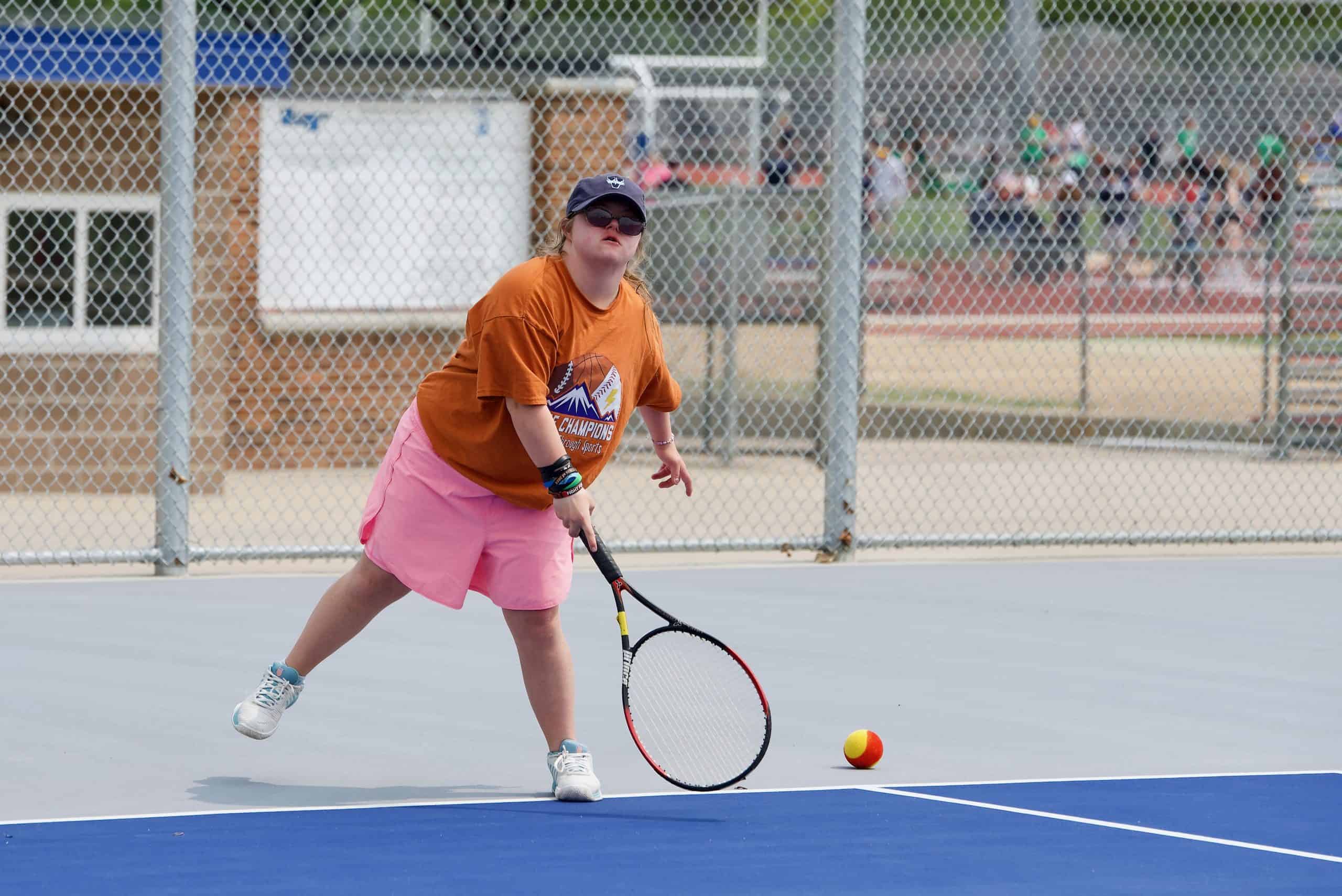
Mead High School will be recognized as a Special Olympics National Banner Unified Champion School for its dedication to offering inclusive sports and activities for both students with and without disabilities. The banner presentation will take place on Thursday, January 25, during halftime at the boys’ basketball game. The game begins at 7:00 pm. 

Recognition as a National Banner School is the highest honor Special Olympics affords to schools participating in the Unified Champion Schools Program. Mead High School is among 205 schools across the country, and one of eight in Colorado, selected for the 2023 Class of National Banner Unified Champion Schools. 

“We are incredibly proud to be recognized as a Special Olympics Unified Champion School for the second time,” said Principal Brian Young. “This honor is a reflection of the heart and soul of our school community, where inclusivity, diversity, and the unique strengths of each and every student are celebrated.”

To achieve this recognition, schools must demonstrate commitment to inclusion by meeting 10 standards of excellence established by the Special Olympics Organization. These standards require schools to offer Unified sports programs, where students with and without disabilities train and compete as teammates. They also must provide opportunities for inclusive youth leadership and promote school-wide engagement to create an accepting and inclusive school environment. 

Additionally, Banner Unified Champion Schools must have a plan in place to sustain these activities into the future. To ensure this sustainability, schools are required to reapply for banner status every four years. This is the second time Mead has received recognition for its commitment to inclusivity and fostering a Unified Champion School environment. They were initially designated in 2019.

A variety of Unified activities and programs are offered at Mead including track, basketball, bowling, Unified PE, and percussion. The school also has a Best Buddies Club where students with and without disabilities socialize, share interests, and participate in activities together. “I am thrilled to see the impact of our inclusive sports programs and activities at Mead High School,” said Special Education Teacher Amber Vanzant. “This recognition reaffirms our school’s dedication to providing a wide variety of opportunities for students with and without disabilities to come together, compete, and form lasting friendships.”

SVVSD teacher receives Fullbright US Distinguished Teaching Award

Jayme Sneider is a biosciences teacher at the St. Vrain Valley School District Innovation Center and was selected for the Fullbright U.S. Distinguished Teaching Award.

Sneider is among 20 U.S. citizens traveling to 14 countries across the world this year. The award winners will collaborate in school projects, teacher training, government ministries and educational non-governmental organizations, according to a news release from SVVSD. Sneider’s project will introduce STEAM project-based learning to a high school in Vietnam over the summer. 

St. Vrain Valley Schools