Photos from our 2026 graduation ceremony taken by the St. Vrain Valley Schools Communications Department are now available for you to download and share to celebrate this momentous occasion for you and your student.
2026 SHS Graduation Photos
Photos from our 2026 graduation ceremony taken by the St. Vrain Valley Schools Communications Department are now available for you to download and share to celebrate this momentous occasion for you and your student.
2026 NHS Graduation Photos
Photos from our 2026 graduation ceremony taken by the St. Vrain Valley Schools Communications Department are now available for you to download and share to celebrate this momentous occasion for you and your student.
2026 FHS Graduation Photos
Photos from our 2026 graduation ceremony taken by the St. Vrain Valley Schools Communications Department are now available for you to download and share to celebrate this momentous occasion for you and your student.
2026 Erie High School Graduation Photos
Photos from our 2026 graduation ceremony taken by the St. Vrain Valley Schools Communications Department are now available for you to download and share to celebrate this momentous occasion for you and your student.
2026 NMHS Graduation Photos
Photos from our 2026 graduation ceremony taken by the St. Vrain Valley Schools Communications Department are now available for you to download and share to celebrate this momentous occasion for you and your student.
St. Vrain Valley high schools celebrate successes of 2026 graduates
About 2,400 receive diplomas
Longmont High School graduating senior Adalee Mathias kept track of each step of her high school experience.
“It took 1,375 days, and hopefully a few less tardies, to get to this field with these caps and gowns on and so many amazing memories,” Mathias told her fellow graduates.
Superintendent’s Update: Congratulations Class of 2026
St. Vrain Valley Schools is grateful for the outstanding educators who inspire curiosity, build meaningful relationships, and empower students to reach their full potential. Our teachers are the heart of the St. Vrain Advantage, and we thank them for their dedication and lasting impact across our communities. View Full Video Library.
Superintendent’s Update
Our Graduates Are Proof of the Public School Advantage
Graduation is my favorite time of year, and this spring, as I have the privilege of celebrating my first graduation season as Superintendent of St. Vrain Valley Schools, I am overwhelmed with pride for the approximately 2,400 graduates who will walk across the stage to receive their diplomas. Standing alongside our Board of Education, our teachers and staff, families, and the business and community partners who have invested so deeply in these students, there is no moment in education more powerful than watching a graduate step into their future. The Class of 2026 has earned every bit of the celebration they are about to receive.
I have spent my entire career in public education because I believe that public schools are the greatest pathway to opportunity in America. In a time when public education faces no shortage of criticism and political headwinds, I want our community to know that what is happening inside St. Vrain Valley Schools should make everyone very proud. Our public schools are doing extraordinary work, and our graduates are living proof. They have been educated in a system that prioritizes opportunity through both rigorous academics and real-world relevance, tradition and innovation, and high expectations and genuine care for every child. This is the St. Vrain Advantage, and it is something we will continue to champion loudly and unapologetically.
St. Vrain Valley Schools has achieved a 96.8% on-time graduation rate, the highest in the Denver Metro Area, while maintaining among the most rigorous graduation requirements of any school district in the region and the lowest dropout rate. Our students are meeting and exceeding expectations that would challenge students anywhere in the country, and that combination of high completion and high standards reflects the commitment our teachers, counselors, and staff make to every student who walks through our doors.
This graduating class has shattered records in enrollment in Advanced Placement, International Baccalaureate, and concurrent enrollment college-level courses, earning thousands of college credits before receiving their high school diplomas. Those credits save families millions of dollars in future tuition costs and give our graduates a running start on their postsecondary journeys. Our seniors have also earned millions of dollars in scholarships, including some of the most prestigious awards in the state and nation. Daniels Scholars, National Merit honorees, and students accepted to highly competitive universities, military service academies, and sought-after apprenticeship and skilled trades programs are all represented in this graduating class.
From their earliest years in our high-quality preschool programs through their final days of high school, these graduates have had access to an educational experience that is unmatched. They have thrived in our instructional focus academies spanning Biomedical Sciences, Engineering and Aerospace, Leadership, STEM, Visual and Performing Arts, P-TEACH, P-TECH, and dozens of workforce pathways that connect classroom learning to careers in cybersecurity, artificial intelligence, advanced manufacturing, healthcare, aerospace, and beyond. They have logged countless hours in internships and community service, and competed on athletic fields and performed on stages across the country. They have built world-championship robots, earned industry certifications, conducted original medical and scientific research, and in many cases, completed associate degrees before picking up their high school diplomas. Our world-class facilities like the Innovation Center and Career Elevation and Technology Center have given these students hands-on experience with emerging industries that most young people do not encounter until college.
At the heart of everything we do in St. Vrain is a commitment I hold deeply: that each and every student will be recognized for their unique talents and aspirations, and receive an exceptional educational experience so they graduate with a strong, competitive advantage. The Class of 2026 embodies that commitment. They are creative thinkers and problem solvers, who are collaborative, resilient, and prepared to contribute to their communities and to our country in meaningful ways. Whether they are heading to a four-year university, a community college, a technical program, the military, or directly into the workforce, they leave St. Vrain ready.
To our graduating seniors, I want you to know how incredibly proud I am of each of you. You are stepping into a world that needs your energy, empathy, brilliance, creativity, and your willingness to lead. The education you have received in St. Vrain Valley Schools has prepared you well, and the community that raised you will be cheering you on every step of the way. Congratulations, Class of 2026.
With pride,
Jackie Kapushion, Ed.D.
Superintendent, St. Vrain Valley Schools
Featured Stories

Meet Some of St. Vrain’s 2026 Outstanding Grads
Meet just a few of our approximately 2,300 outstanding graduates who will walk across a stage this week to receive their St. Vrain Valley Schools diploma. Congratulations to all students in the Class of 2026.

St. Vrain 4.0+ Grads Around the World
We are preparing our students for their future by giving them a strong competitive advantage and cultivating a drive for learning and continued growth. See where our 4.0+ graduates are attending college in the fall.

St. Vrain’s Unframed Art Show Celebrates Student Creativity Across the District
Community members packed the Boulder County Fairgrounds Exhibition Hall for St. Vrain Valley Schools’ annual Unframed Art Show, a districtwide celebration of student creativity and artistic expression.

“All the World’s A Stage”: St. Vrain Elementary Students Perform Shakespeare in the Park
Fifth grade students from across St. Vrain Valley Schools gathered at Thompson Park in Old Town Longmont on a sunny spring Friday for the annual Shakespeare in the Park program.

Behind the Wheel: The Roads That Lead to St. Vrain
Meet the dedicated professionals driving excellence and connection every day across St. Vrain Valley Schools.

Safety, Security, and Care
St. Vrain Valley Schools takes a comprehensive approach to safety and well-being so every child can thrive.
In the News
Early Learning & Elementary
- More Than Music: Erie Elementary Students Build Confidence and Connection Through Band
- Just Keep Swimming: Legacy Elementary Students Perform Finding Nemo
- Mountain View Elementary Earns Tree Campus Recognition with Arbor Day Celebration
- From Caterpillars to Butterflies: Kindergarten Classes Watch Transformation Unfold
- Eagle Crest Families Experience Student Learning Through Coding Showcase
- Prairie Ridge Elementary Celebrates 25 Years of Community and Connection
Secondary Schools & Student Experiences
- Soaring Heights PK-8 Students Bring Shoe Designs to Life with Crocs, Inc.
- Silver Creek Orchestra Takes Center Stage with Spinphony
- Erie High Engineering: A Year of Excellence
- Sunset Middle School Community Celebrates IB Eighth Grade Showcase
- Students Take the Lead at SMART Team Symposium
Programs & Opportunities
- Innovation Center Students Design Their Own Instruments
- Niwot High School Student Builds a Future with Salesforce
- Innovation Center Welcomes Astronaut, Sparks Student Inspiration
- Student’s “Drones for Dreams” Inspires $25,000 OtterCares Grant for Innovation Center’s New Philanthropy Initiative
District Highlights
- Innovation Center Educator Advances in Presidential AI Challenge
- St. Vrain Valley Schools Earns National Recognition as a Best Community for Music Education for Sixth Consecutive Year
- Columbine Elementary, Soaring Heights PK-8 Highlight Innovation as Apple Distinguished Schools
- Frederick High SRO Andrew Fairbanks Named Colorado School Resource Officer of the Year
- Longmont Estates Elementary Kitchen Manager Recognized with School Nutrition Award
Important Reminders, Events, and Opportunities

2026 Graduation Schedule and Livestreams
St. Vrain Valley Schools is proud to celebrate the many accomplishments of our Class of 2026 and invites the entire community to join the celebrations virtually through the livestreams of our graduation ceremonies.

Parent Teacher Conference Advice Column: Supporting Your Student with Dyslexia
The Parent Teacher Conference podcast and blog shares thoughtful, research-based guidance to support your child’s learning, growth, and well-being.

Register for 2026-2027 Transportation Services
If you are interested in having your child ride the bus for the 26-27 school year, please apply for transportation services as soon as possible. We make every effort to accommodate as many eligible riders as possible.

Now Hiring: Experience the #StVrainAdvantage
You will be joining a highly effective and supportive team of professionals who are having a significant impact in the lives of students and families within our community.
2026 Grad Walks Inspire the Next Generation
This week the Class of 2026 revisited their former elementary and middle schools to reflect on how far they’ve come and the educators who believed in them from the very beginning.
Soaring Heights PK-8 Students Bring Shoe Designs to Life with Crocs, Inc.
Sixth grade students at Soaring Heights PK-8 recently combined creativity and business strategy through a classroom economics project in partnership with Crocs, Inc., designing custom shoes while exploring key principles of economics. As part of the experience, the winning design created by Olivia Sanders and Taylor Wharry was later manufactured and presented to the students and their teachers.
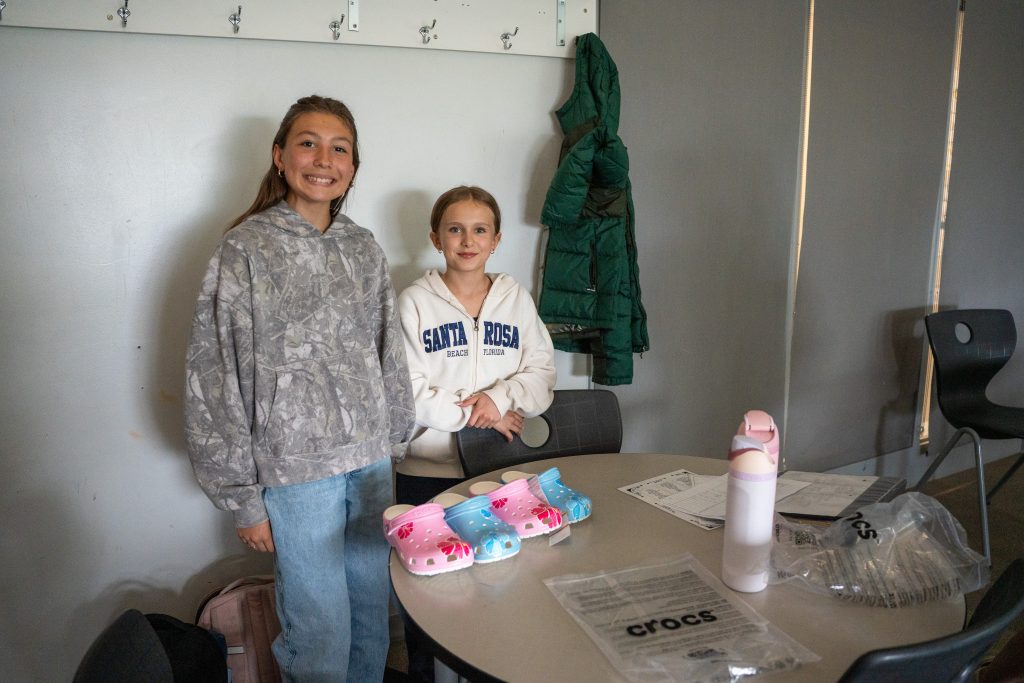
Before the winning shoe design was chosen, students explored supply and demand, marketing, and pricing strategies. Working collaboratively in teams, they researched buyer trends and considered what kinds of designs would appeal to specific audiences. The students discussed how much their shoes should cost, what features would make their designs stand out from competitors, and how innovation can influence consumer interest.
The project challenged students to think beyond the classroom by combining creativity with real-world business concepts. Melissa Layton, Vice President of Global Communications at Crocs, said the company was impressed by the thoughtful way students approached the process, from identifying their target audience to collaborating on designs that stood out. “Being able to bring the winning design to life and sharing the final product with the students made the experience even more meaningful and fun, and we look forward to creating with them again in the future,” she shared.
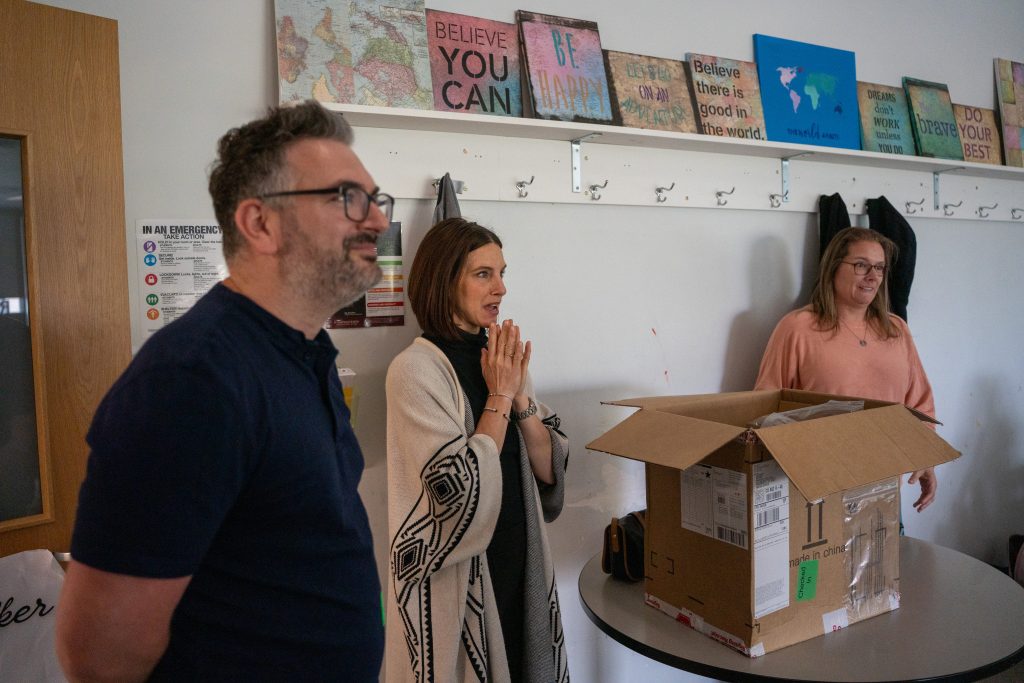
As students received the final shoe designs, the partnership highlighted how hands-on learning opportunities can connect classroom lessons to real-world experiences. Through collaboration and problem-solving, students gained a deeper understanding of economics while seeing firsthand how an idea can grow from a concept into a finished product.
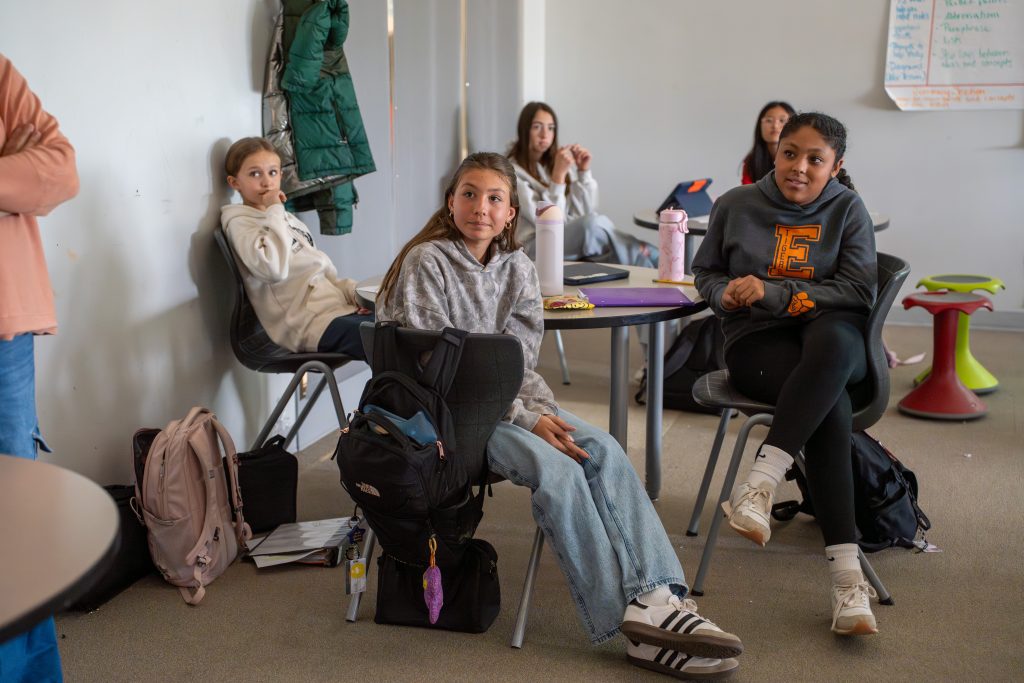
More Than Music: Erie Elementary Students Build Confidence and Connection Through Band
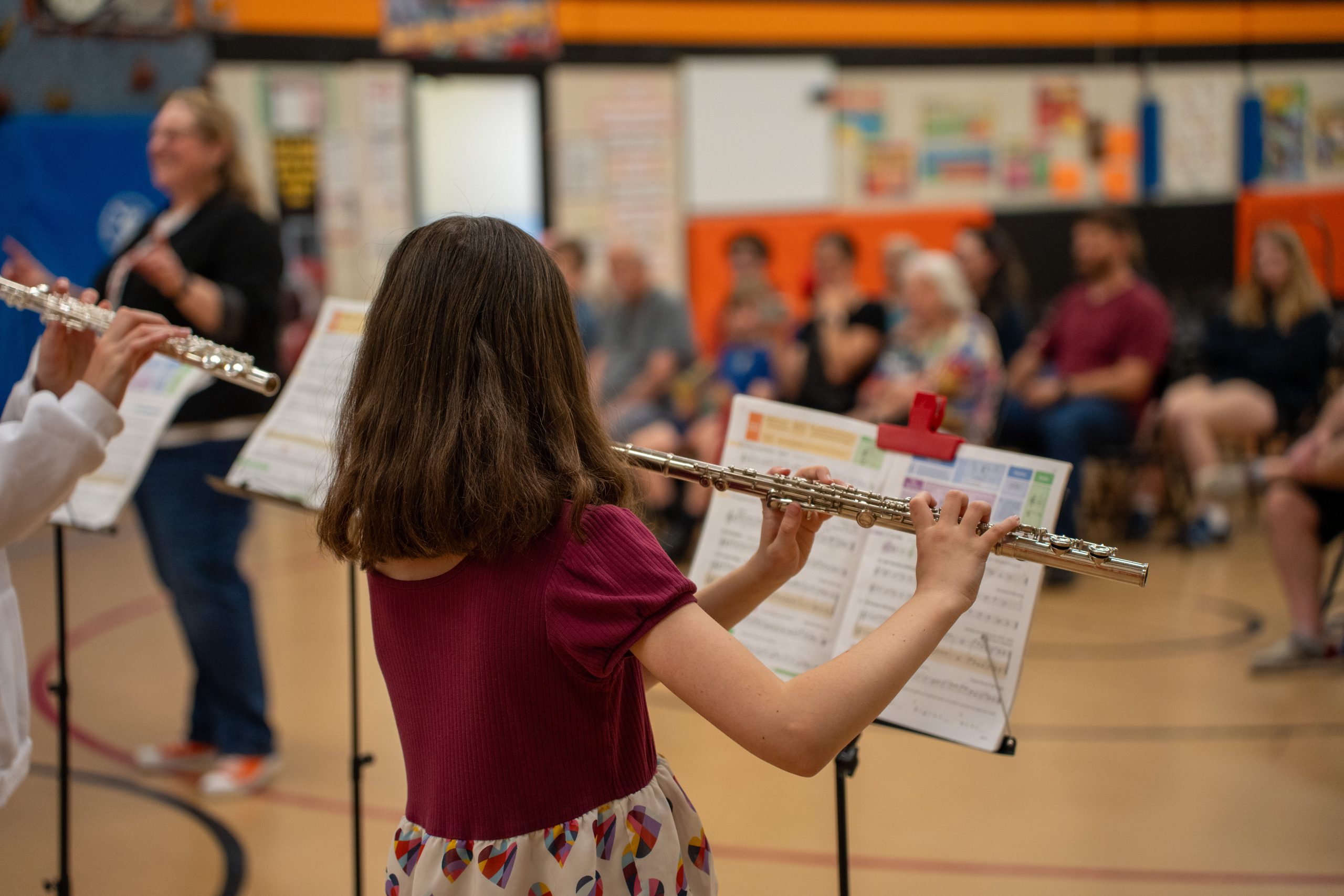
Fourth and fifth grade students at Erie Elementary file into the music room with anticipation, eagerly pulling their instruments from their cases as they prepare for their final performance of the year. The sounds of trumpets, trombones, clarinets, flutes, and even a saxophone quickly fill the room as students warm-up. While a handful of students are returning for their second year in band, for many, this marks the very first time they have ever picked up an instrument.
Since starting the program in 2013, band director and music teacher Anna Schultz has watched the program continuously grow each year. She believes introducing students to music at a young age gives them an opportunity to discover new interests while building confidence and connection with their peers. “At this age, there are a lot of opportunities for clubs and physical activities, but not as many for music,” Schultz shared. “Starting at a younger age provides them with a community to be a part of, and a chance to find an instrument that they enjoy playing.”
At Erie Elementary, band has become more than just learning notes and rhythms. It has created a space where they can challenge themselves, collaborate with classmates, and build friendships as they prepare for performances throughout the year. Each student brings their own interests and inspirations to the program, creating a band community filled with different personalities and musical goals.
For Aaron Farnsworth, a fourth grade saxophone player, music has always been part of his life. Growing up surrounded by family members who play instruments, such as the flute and clarinet, inspired his interest in music. However it was seeing a character play the saxophone in the Super Mario Brothers video game that convinced him to give the instrument a try. “If another student asked me about band, I would tell them they should do it and it’s really cool,” he shared.
Fifth grade clarinet player Nora Mauck also found band to be a meaningful way to connect with others while further exploring her love of music. With previous experience playing the ukulele, she decided to join band and quickly discovered how much she enjoyed being part of the group. “Band is really fun, and you get to know a lot of people before middle school,” Nora shared. “My brother was in band and that’s where he met his best friend, and they’re still friends.”
As the school year comes to a close, the excitement filling the music room reflects more than just preparation for a performance. For Erie Elementary students, band has become a place to discover new talents, gain confidence, and create lasting friendships through music.